 |
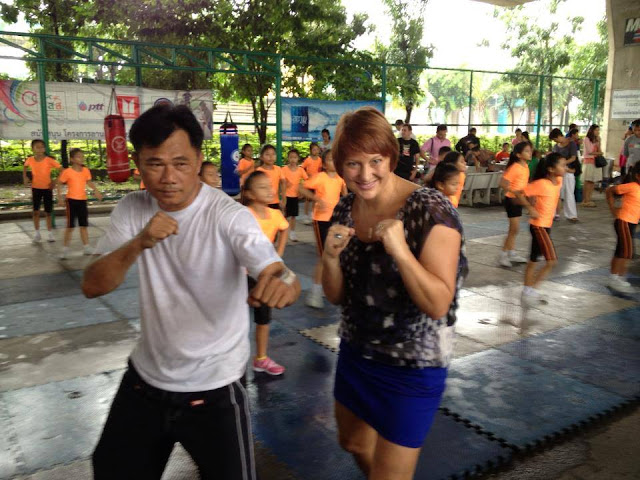
| Sue in 2014 with IFMA’s children in Bangkok classes |

The stark contrast between the pugilistic side of our sport and the depth of caring and compassion that seems to be typical of Muaythai athletes and participants has always fascinated me.
Q: You’re head of the IFMA Female Commission - why did you take that on?
Gaining an international title was close to impossible. The female fight pool was small and promoters were more interested in promoting male athletes as they received more coverage.
Q: How have attitudes to women fighters changed in your time?
The growth of women’s Muaythai has increased so significantly over the last 15 years that in some countries the participation is higher amongst their female athletes.
But it’s the respect given to our female athletes amongst the Muaythai community that makes me most proud. Women and girls are described as ‘a talented fighter’ or ‘a skilled athlete’ rather than being wholly defined by their gender as used to happen.
 |
| New Zealand team for IFMA Championships 2007 |
I’m really proud of the federation itself.
My dream was to participate as an equal in a male dominated sport; to be respected as an educated woman and retired athlete. Now I’ve been given the task of building the International Female Commission. This allows me to help women around the world both within the sport and in collaboration with the UN Women and their UNiTE campaign to stop violence against all women and girls.
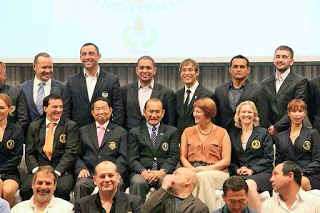 |
| Sue representing on the IFMA Committee |
It is my greatest desire to help empower woman and IFMA has given me the opportunity to realize this dream.
What more could I want?
Read more about women’s amateur MuayThai on the IFMA Female Commission facebook page.
(*Updated to reflect Sue’s full list of achievements)


Speak up! Leave a Comment: