
It seems to me that the traditional roles simply have to shift a bit in order for the mom to continu...more
posted Friday, July 9, 2010 at 3:22pm PDT on Do we need a mommy track in pro sports? (Or at least a better career path?)

|

|

|

|

|

| ||
|
| |||||||




|
posted by Balanced Health and Nutrition Food, nutrition and exercise information blended with a dash of opinion. |

|

|
|
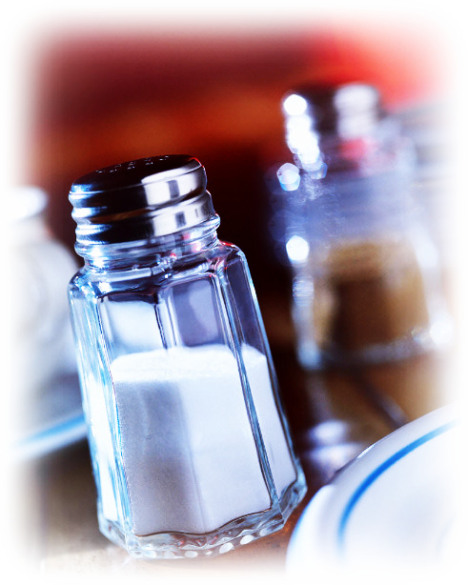
It’s no secret that salt is a flavor enhancer. Chefs far and wide use salt to give their culinary creations that special finish. But the reality is, minor flavor enhancement is not what is putting millions of Americans at risk of high blood pressure. Salt shakers on the table, grotesque amounts of sodium in some restaurant meals, and overconsumption of many of the processed foods in the supermarket.
According to the Department of Agriculture, processed foods are the culprit of 80% of salt in American diets. This means all prepackaged meals, snacks, and most convenience items! And with such busy lives, Americans tend to look for the quick-fix meals, but in this case that means a whole lot of sodium.
The recommended daily allowance of sodium is 2400 milligrams, while many American’s are easily eating double that every day. What’s more, there’s a good chance the new Dietary Guidelines for Americans will decrease the sodium limit to 1500 mg/day. Do the math, that’s no more than 500 mg a meal.
Increased intake of salt leads to health risks such as hypertension (high blood pressure) which can lead to heart disease and stroke. It is important to start prevention early, and we can start by cutting out unnecessary salt in our diets.
I’m sure more and more companies will reduce sodium in their products, but in the meantime, there are other ways to cut back:
- Frozen meals contain a lot of preservatives and salt; read labels and use frozen meals sparingly as “emergency back up meals”
- Fresh, frozen, and canned fruit and vegetables contain low or no sodium at all; munch on a handful of carrots for a snack, include them in healthy summer salads, or make them as a side dish.
- Go out to eat less often. You’ll save money and you won’t have to be a “detective sleuth” to uncover the amount of sodium in the meal. If you do go out, share a meal with your dinner buddy and add a garden salad.
Other than making changes to your food choices, regular exercise, reduced stress, healthy weight maintenance and lower alcohol consumption can also help to reduce high blood pressure.
Remember, although an excess of salt is bad, not enough is also bad! Our bodies do need sodium to function properly so you don’t have to get rid of all of it. Spread it out between meals or make sure you only have one “high salt” meal a day.
Read this recent New York Times article that discusses sodium in American’s eating habits.
View Original Post at rebeccascritchfield.wordpress.com
|
|
|
|
MOST POPULAR POSTS
posted by MsAkiba 10/11/09 at 11:40am
posted by WTA Women's Tennis 10/07/09 at 12:14pm
posted by They're Playing Basketball 07/08/10 at 9:49am
posted by From A Left Wing 07/02/10 at 11:06am
posted by They're Playing Basketball 07/04/10 at 1:03pm
posted by AnnGaff 06/30/10 at 10:40pm
posted by Bike Diva 10/12/09 at 12:15pm
posted by MarQFPR 07/04/10 at 4:16am
posted by HoopFeed.com 07/06/10 at 10:20am
posted by Laura Landgreen 04/23/09 at 10:45pm
LATEST WTS POSTS
posted by All White Kit
Today at 8:27pm
posted by Alison M. Starnes Blog
Today at 8:21pm
posted by Pleasant Dreams - An Atlanta Dream Blog
Today at 3:55pm
posted by Swish Appeal
Today at 12:51pm
posted by Jayda Evans: Womens Hoops Blog
Today at 12:49pm
posted by They're Playing Basketball
Today at 11:40am
posted by C and R's Stanford Women's Basketball Blog
Today at 11:24am
posted by All White Kit
Today at 10:32am
posted by They're Playing Basketball
Today at 10:27am
posted by Pretty Tough
Fri at 6:44pm
RECENT COMMENTS
It seems to me that the traditional roles simply have to shift a bit in order for the mom to continu...more
posted Friday, July 9, 2010 at 3:22pm PDT on Do we need a mommy track in pro sports? (Or at least a better career path?)
UPDATE - Stephanie ran 9:48 in Barcelona tonight to qualify for the European Championships! Congrats...more
posted Friday, July 9, 2010 at 2:26pm PDT on Quick Chat with Steeplechic Stephanie Reilly
It has been proven that women who have given birth can take more pain than males, and a lot of women...more
posted Thursday, July 8, 2010 at 9:06pm PDT on Do we need a mommy track in pro sports? (Or at least a better career path?)
I was somewhat shocked, when reading Cappie Pondexter's Twitter, that in the aftermath of this incid...more
posted Thursday, July 8, 2010 at 3:50pm PDT on Liberty-Mercury fight: some writers need to take a chill pill
Thanks for the update, it's so exciting to see so many women fighters. Didn't know that MMA is still...more
posted Thursday, July 8, 2010 at 7:28am PDT on Women's MMA - Busiest Two Months in Women's MMA History





No one has commented on this yet. Be the first!