







Surfing: Longboard vs. Shortboard
|
posted by Westbound Boarder Snowboard, surf, skate and wakeboard your way through the Web - this blog is about all things boardsports related; for flippin’ chicks! |

|

|
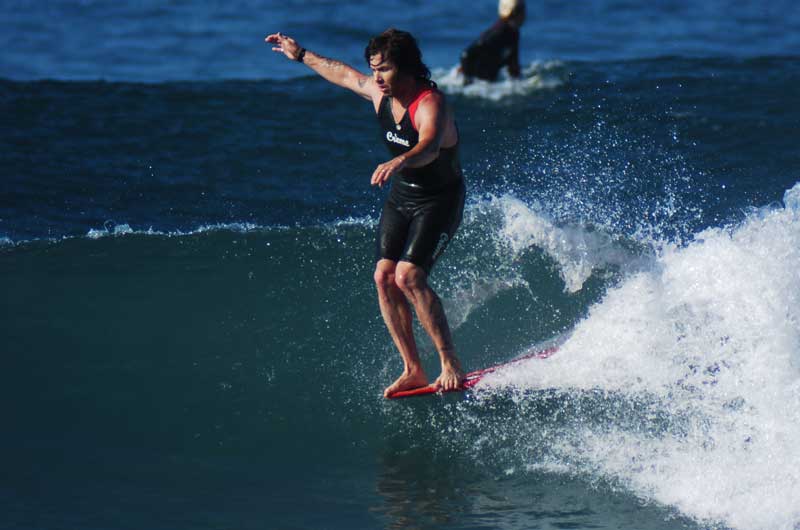 Before I started surfing on a regular basis, I naively asked myself, “long board versus short board; what’s the difference?” Obviously I knew they were different, but I didn’t know why. There is, in fact, a world of difference, and in this post I’ll attempt to explain why.
As the name suggests, longboards are much longer than shortboards, often 8 feet in length or more, and are typically a bit wider. The average longboard stands about 3 feet above its rider. Given the greater surface area a longboard possesses, it tends to be a better board for beginners, with most beginning shortboard hopefuls gradually working their way down to a shortboard, inch by inch. Long boards are more stable and easier to pop up on, and also easier to catch waves (especially smaller ones), which is why they are ideal for beginners.
Longboards were the first type of board created back in the 1500’s, and therefore they became and still remain a staple of surfing culture. However, many surfers nowadays don’t actually ride longboards the way they are truly supposed to be ridden. - in fact, it is fairly rare that you see a person riding a longboard in true longboard style. Most of the time you’ll see riders riding a longboard as if it were a shortboard, carving in and out of the wave. Because longboards are easier to stand on and control, traditional longboard style involves intricate footwork, with the rider essentially walking around on the board. One of the most famous and hard-to-master longboard tricks is called “hanging ten,” where the rider walks to the very front edge of the board and stands with his/her toes just over the edge. Other longboard tricks include nose-riding and hanging 5.
Shortboards, on the other hand, are the modern rendition of the longboard. They are much shorter in length - usually 5 to 7 feet or so - and though they are harder to get up on (they don’t catch the wave as easily so you have to paddle harder to get up) they are easier to maneuver. Therefore, instead of just riding straight and playing around with fancy footwork, you can carve throughout the wave, making it more fun and active.
As I mentioned above, if you’re just starting out, I’d recommend going with a longboard and gradually working your way down to a shortboard (that is, if you even want to ride a shortboard at all). My first time surfing several years ago was on a shortboard, and I was so discouraged that I didn’t surf again until just last year. Once I tried longboarding, I was set. A foamtop longboard is a great beginning board for first-year surfers, because they are even more buoyant than your typical surfboard, and they’re also a lot cheaper so they give you the opportunity to try the sport with less of a monetary investment.
View Original Post at westboundboarder.com
|
|
|
- Filed Under:
- Surf, Sports, Boardsports







No one has commented on this yet. Be the first!