

Great article but really not true; there are many players involved in the NPF that are not from the ...more
posted 08/26/14 at 1:28pm
on Softball Standouts Plourde and Prezioso Represent Atlantic 10, Exemplify Mid-Major Potential at Next Level





posted by Fast at Forty
Thursday, March 22, 2012 at 1:40pm EDT
Fast at Forty was born while I was in the emergency room after crashing defending my title at the 70.3 World Championships in Clearwater, FL. In the midst of my anger over not being able to finish the race and being somewhat delirious from the pain, I decided that in 2010 I would start a campaign to be the first 40 year old woman to win a triathlon World Championship and it would be called “Fast at Forty”. During my recuperation from my injuries, which included shoulder surgery, I realized that this was a fantastic opportunity to inspire women in their 40’s to work through their challenges, overcome obstacles and attain new goals.
Support women's sports and SHARE this story with your friends!
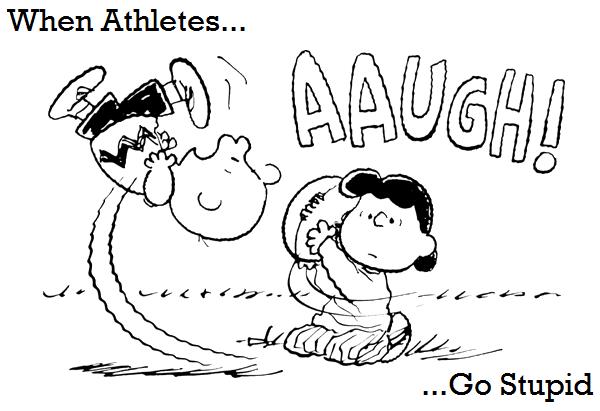
“Greatness is never rewarded to the stupid.” This quote was texted to me by a good friend on the heels of a discussion we had about athletes who have a bad race and decide they have to go home and train harder. It got me thinking about all of “stupid” things we do as athletes that hinder our ability to be great, or at least be the best we can be.
1. Training with insecurity
I put this one first because I believe this is the biggest impediment to improvement. Athletes who lack confidence in their training make detrimental mistakes, such as logging too many miles, going too hard, and deviating from their plan. It is the gateway to all of the other things that prevent athletes from success.
2. Never taking a rest day
Look, I hate taking a zero as much as anyone. However, rest days are imperative for mental and physical restoration. And, sometimes you just need to get other stuff done.
3. Keeping up with Joneses
Social media has given everyone the opportunity to post their workouts; pros and amateurs bombard Twitter, Facebook and blog sites with intricate tales of miles logged and meters swum. It is very intimidating realizing your competition is training 50 hours a week with a full time job and a family. My advice: cut it all in half and then lop off a few more hours. It doesn’t matter what anyone else is doing. Stick to your own plan.
4. Training beyond your means
If your goal run pace is a 7 minute mile, should you really be on the track hammering out mile repeats at 5:50? Enough said.
5. Unrealistic expectations
I would love to run a sub 2:30 marathon. How cool would that be? Alas, even if I was 10 years younger, that is not a pace I am capable of running. Athletes often have expectations that exceed their ability. Before you lambast me on this, let me explain. I am all about setting goals and reaching for the stars; it is, to me, the cornerstone of training and racing. But, we all have our limitations and those need to be recognized.
6. Doing the same thing and hoping for different results
It is easy to get stuck in a training rut. Long sessions on the weekend. Group rides on certain evenings. Long steady distance. Intervals all the time. Going too hard. Going too easy. Training that worked for you a few years ago may not work anymore. Plateaus happen. Take a close look at how you are training. There are probably ways to change things up that will boost you to the next level. You can start training with power on the bike. Running different types of intervals – how about 1K repeats instead of mile repeats? Challenge yourself in the pool by swimming in a swim meet.
7. Ignoring the little things that are really big things
Triathletes are very focused on swim, bike run. Training takes up a lot of time leaving little room for things like strength training, massage, focusing on technique and eating better. I always tell the athletes I coach, it is better to miss a recovery workout and go to the gym to lift than to skip the gym altogether. Swim, bike, run is predicated on having a healthy body and this can only be achieved by doing things that are not necessarily swim, bike, run.
8. Chasing races
You missed your goal in a race so you turn around and sign up for another. You miss your goal in that race so you turn around and sign up for another. And so on. Sometimes a bad race is just a bad race. Most of the time, though, there is a reason. Take a close look at what happened and rectify the problem before rushing into another race.
I have fallen victim to each and every one of these mistakes in my years of racing. Fortunately, I have spaced them out and not incorporated them into my regime all at once. Thankfully, the passage of time has made me a smarter athlete and less vulnerable to the blunders listed above. I hope.
Support women's sports and SHARE this story with your friends!
MORE ABOUT THIS AUTHOR:
Fast at Forty was born while I was in the emergency room after crashing defending my title at the 70.3 World Championships in Clearwater, FL. In the m...
full profile
For more, visit joannazeiger's Full Profile
LATEST ARTICLES & POSTS
Fri at 1:53pm
Fri at 1:51pm
Fri at 1:45pm
Fri at 1:44pm
Thu at 1:53pm
Thu at 1:52pm
Thu at 1:48pm
Thu at 1:47pm
Wed at 12:52pm
RECENT COMMENTS
Great article but really not true; there are many players involved in the NPF that are not from the ...more
posted 08/26/14 at 1:28pm
on Softball Standouts Plourde and Prezioso Represent Atlantic 10, Exemplify Mid-Major Potential at Next Level

What she did I'd fantastic but she was still a good 14 seconds behind the winner and, really, the Ke...more
posted 07/22/14 at 4:04am
on 2 seconds, no finish clock picture, but satisfaction: Molly Huddle breaks her own AR

Does money make champions ! History have taught us that money does not means success overnight . Mos...more
posted 06/20/14 at 8:25pm
on Sparks need a change, but what kind?
congrats to Maria on her French Open win!!...more
posted 06/11/14 at 10:06pm
on Maria Sharapova Named The Face Of Avon Luck Fragrances
| SAUCUONY 500 MILE CHALLANGE |
| Daily Workout |

No one has commented on this yet. Be the first!