
Great article but really not true; there are many players involved in the NPF that are not from the ...more
posted 08/26/14 at 1:28pm
on Softball Standouts Plourde and Prezioso Represent Atlantic 10, Exemplify Mid-Major Potential at Next Level





posted by Fast at Forty
Monday, February 4, 2013 at 1:52pm EST
Fast at Forty was born while I was in the emergency room after crashing defending my title at the 70.3 World Championships in Clearwater, FL. In the midst of my anger over not being able to finish the race and being somewhat delirious from the pain, I decided that in 2010 I would start a campaign to be the first 40 year old woman to win a triathlon World Championship and it would be called “Fast at Forty”. During my recuperation from my injuries, which included shoulder surgery, I realized that this was a fantastic opportunity to inspire women in their 40’s to work through their challenges, overcome obstacles and attain new goals.
Support women's sports and SHARE this story with your friends!
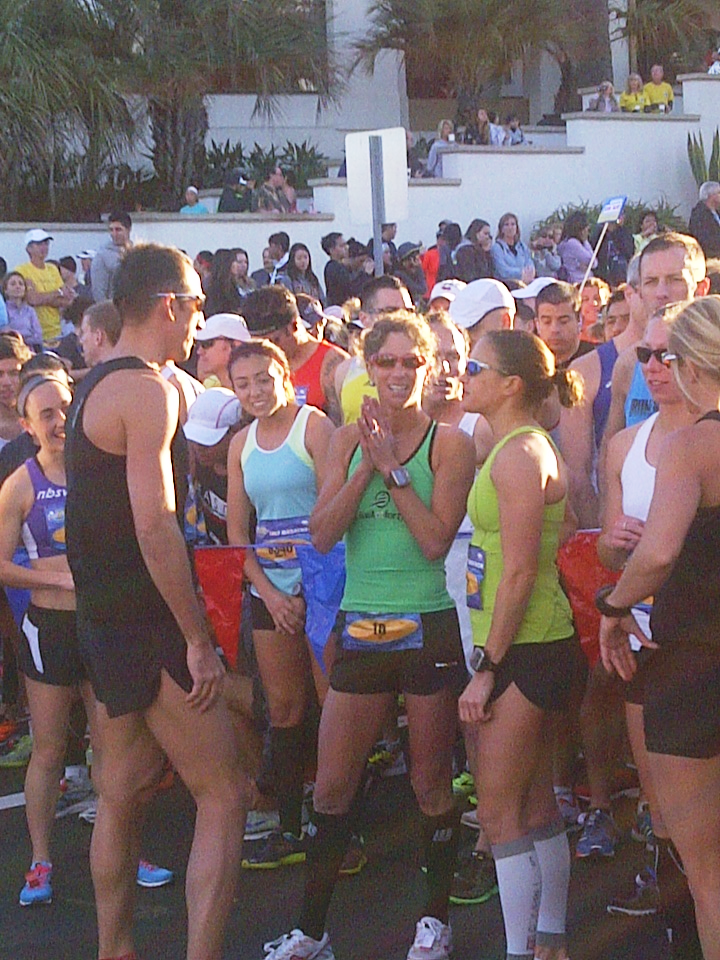 In December I wrote a blog about number anxiety and pacing. The post focused on managing the numbers and not letting them mentally rule you during training or racing. There are often situations where you come up with a perfectly reasonable plan where the numbers (i.e. pace or watts) align with your training but for whatever reason when you get to the race you are unable to execute the plan. In this instance, you have to throw the numbers out the window. This happened to me yesterday at the Surf City half marathon.
Several athletes I coach also ran the race. I gave everyone this advice: run your goal pace through 5k and at that point re-evaluate how you feel. If things are going well, you can maintain the pace. If it feels too hard, back off.
I am usually terrible at heeding my own instructions, but yesterday, at 5k I heard myself loud and clear: BACK OFF, BACK OFF.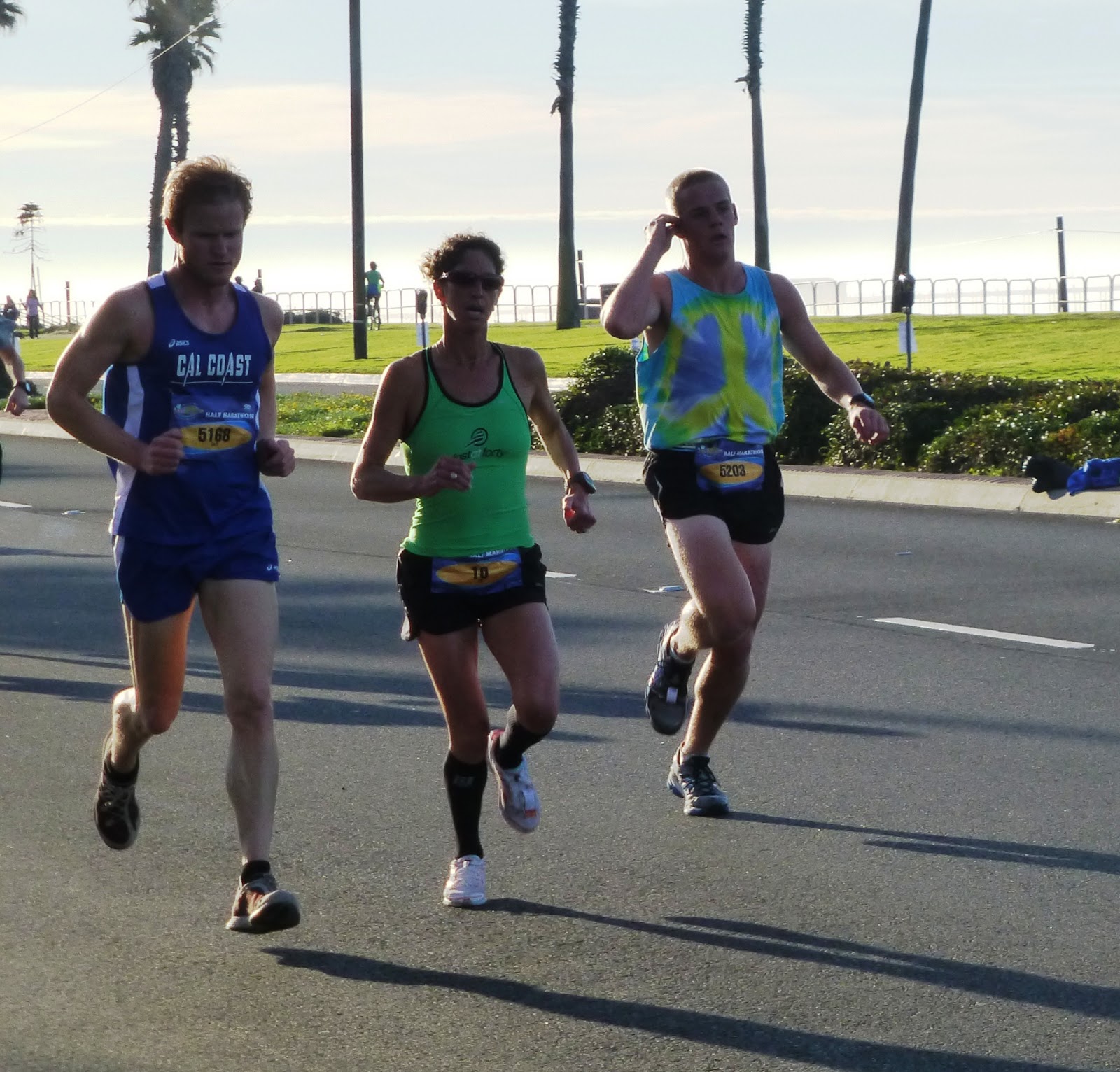 My goal for the race was to dip under 1:18. My main concern was that the bronchitis I had been dealing with for four weeks might have an effect on my race. The constant coughing irritated my lungs exacerbating my asthma symptoms and my diaphragm and abdominal muscles have been incredibly sore making breathing hard quite uncomfortable. I optimistically imagined that sea level would magically make all of those things non-issues and I would run the race as if I was floating through the oxygen-rich air.
During my warm-up run I knew I was in for a tough day. I felt like crap had just crapped on crap. My breathing was already labored making me feel sluggish. I opted to stick to my plan, though, so when the gun fired, I set off at 5:55 pace. I continued with that pace through 5k at which point I knew I was running too fast. I was wheezing terribly and I had a sharp pain in my abdomen.
Making a concerted pacing change in the middle of race is not an easy task because it is not something we do on a regular basis. Normally a pacing change occurs un-willfully – you’ve gone too hard and you blow up and end up in survival mode just putting one foot in front of the other. Yesterday, I was in the rare situation of deciding on the fly, what pace should I run? Did I want to back off 5 seconds per mile? 10? 20? Just cruise it in?
Ultimately, I decided to back off 10 -15 seconds/mile and try to maintain that through the halfway point and then back way off and finish the race comfortably without further taxing my lungs. I went through the halfway in 39 minutes, and then I slowed dramatically to 6:25 pace for the next 3 miles. This allowed me to regroup and get my breathing under control.
By slowing down for those few miles I was able to drop the pace the last few miles and salvage the race with a second place and a 1:20.14. While I missed my goal by a lot, I learned a very important lesson about pacing and making changes to the race plan during the race: it is far better to consciously alter the pacing when not feeling good then trying to push through it and having a very negative outcome. By making the decision to back off, I was still in control of the pacing and ultimately I was able to pick up the pace again.
Think about a longer race – a marathon, half Ironman or Ironman. Making pacing changes in a race of that duration can have huge repercussions on the outcome of the race. If you are struggling at some point and slow the pace to recover, you may add only 5 minutes or even 10 minutes to your time. If it is a particularly bad day, you may never bring the pace back down, but at least you can race more comfortably. But, if you keep pushing until you blow up, you can easily add an hour or even worse you may not finish.
Sometimes it is hard to distinguish between “Gee, I hurt, but I can keep pushing” and “Gee, I hurt, I need to back off.” In both instances, give yourself a small break and then reassess whether you can go back to goal pace. Endurance racing is more than just a physical challenge. Being able to think quickly and make adjustments under pressure are also important for success.
Support women's sports and SHARE this story with your friends!
MORE ABOUT THIS AUTHOR:
Fast at Forty was born while I was in the emergency room after crashing defending my title at the 70.3 World Championships in Clearwater, FL. In the m...
full profile
For more, visit joannazeiger's Full Profile
LATEST ARTICLES & POSTS
Thu at 1:53pm
Thu at 1:52pm
Thu at 1:48pm
Thu at 1:47pm
Wed at 12:52pm
Wed at 12:50pm
Wed at 12:17pm
Wed at 12:16pm
RECENT COMMENTS
Great article but really not true; there are many players involved in the NPF that are not from the ...more
posted 08/26/14 at 1:28pm
on Softball Standouts Plourde and Prezioso Represent Atlantic 10, Exemplify Mid-Major Potential at Next Level

What she did I'd fantastic but she was still a good 14 seconds behind the winner and, really, the Ke...more
posted 07/22/14 at 4:04am
on 2 seconds, no finish clock picture, but satisfaction: Molly Huddle breaks her own AR

Does money make champions ! History have taught us that money does not means success overnight . Mos...more
posted 06/20/14 at 8:25pm
on Sparks need a change, but what kind?
congrats to Maria on her French Open win!!...more
posted 06/11/14 at 10:06pm
on Maria Sharapova Named The Face Of Avon Luck Fragrances
| SAUCUONY 500 MILE CHALLANGE |
| Daily Workout |

No one has commented on this yet. Be the first!