
Title 9 has no integrity to begin with so to say something threatens it's integrity to begin with is...more
posted 04/26/11 at 10:01pm
on Deceptive roster management threatens integrity of Title IX
|
Sign up for the FREE Association of Women in Sports Media (AWSM) webinar featuring Ann Meyers Drysdale, Kristie Davis, Loretta Hunt, Justine Siegal and Lindsey Van discussing "Women Breaking Gender Barriers" on Wednesday at 1pm ET. More information HERE. |




posted by LostCentury, a Women Talk Sports blogger
Sunday, April 24, 2011 at 2:16pm EDT
About LostCentury:
Media reports about the pioneers of American women’s sports & fitness originally published over 100 years ago....more
Support women's sports and SHARE this story with your friends!
| Tweet |
(Ed. Note: This is part of a continuing series of posts about articles and illustrations originally published over a century ago, depicting a burgeoning American sports scene and a keen interest in women’s physical fitness. Although often sexist by modern standards, the posts are indicative of their era and provide the social context for the limitations imposed upon athletic women of that period.)
September, 1902 – Outing magazine
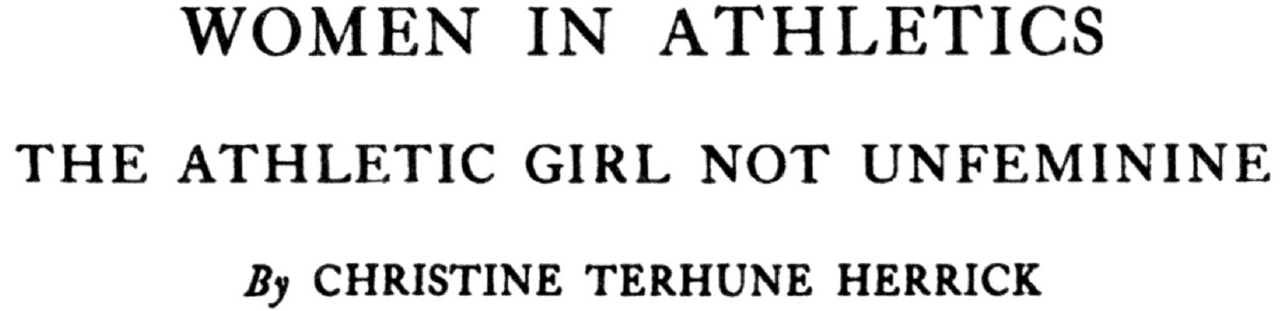
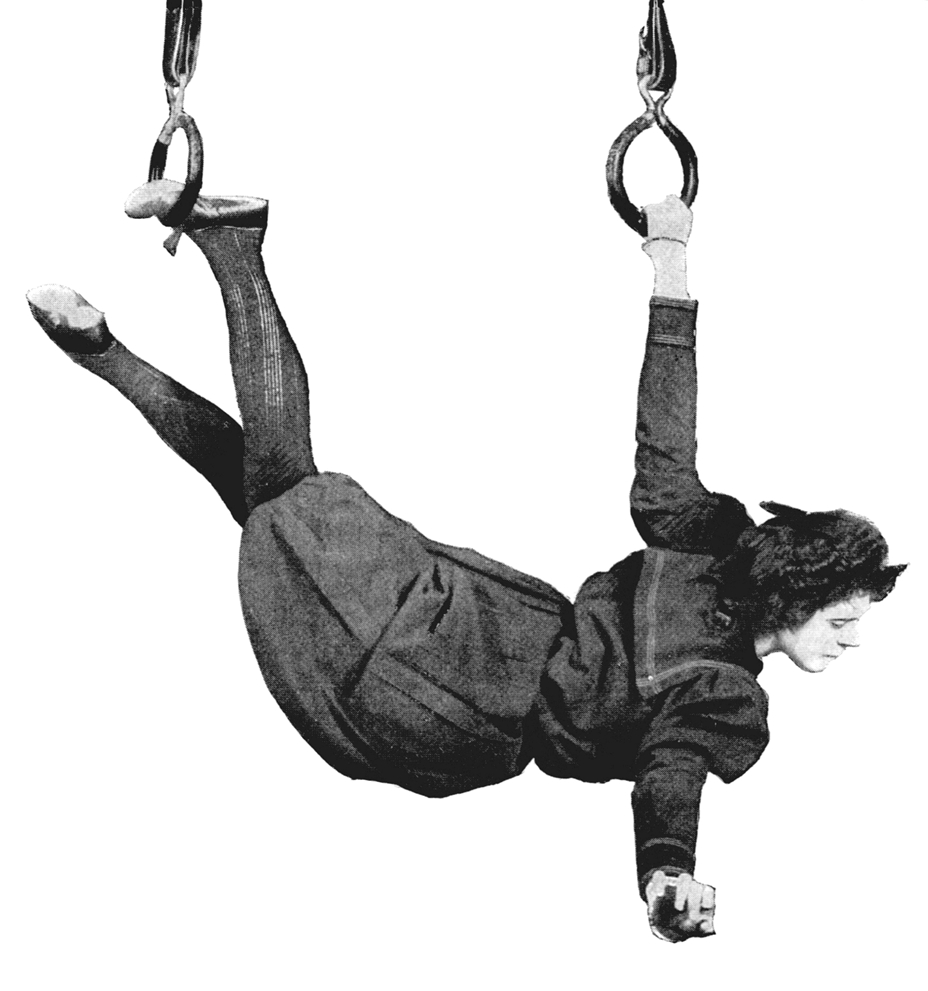
The tide of comment has for some time been swirling about athletics for women. Whatever arguments the opponents of the movement may have to bring against it, it is a significant fact that the private schools for girls are everywhere introducing athletics into their course. This means far more than does any amount of athletics in women’s colleges, which might be simply imitating prominent features of the colleges for men.
That the exclusive “Finishing Schools for Young Ladies” should include a systematic course in athletics in their curriculum goes to show that the movement is something more than a mere fad. Its advocates declare that the physical features of such a course, great as they undoubtedly are, are little compared with the moral results wrought in the girl by her athletics.
…One of the facts that most impressed me in studying girls who are proficient in athletics is their ease of carriage. As a girl finds herself physically, she acquires grace of movement. This is altogether different from that which she had been taught by admonition and by dancing lessons. That was artificial—an assumed manner. This comes from the perfect control of the muscles and limbs and is as great a contrast to the other as a natural flower to one made of wax. The assumed grace may be forgotten; this other is a part of the girl and will be a part of the woman.
Another physical point gained by the girl is the ability to use her strength so as to secure the best results with the least expense. Women all over the country are suffering to-day because they were never taught how to use their muscles, how to put forth their force. Women stand wrong, walk wrong, lift wrong, work wrong. The girl who has learned in a gymnasium what her muscles are and how to get the good of them will be a healthier woman than her predecessors. The good athlete is not of necessity the man who has the most strength, but the man who knows how to use what strength he has.
According to this definition, any tolerably healthy girl may hope to be an athlete or to have an athlete’s knowledge, even if she does not make his record. It goes without saying that it is impossible for a girl to have this training in things physical and moral without her mental powers reaping the benefit.
…The woman of the past generations was not such a shining success in the matter of physical health that we of this day may be willing to put away lightly the chance of making a better thing of the girl who is growing up. If she becomes wife and mother, housekeeper and homemaker, she will need all the strength she can accumulate in school days. Should she follow the example of many young women of this time and take care of herself, she will require a share of the physique a man require to win success.
No matter what her work in life may be, I firmly hold that she is far better fitted to fill it with satisfaction if she has laid in a store of physical strength and mental and moral balance than if she is turned loose, equipped with only such a share of these as she has been able to collect for herself.
The woman who by her athletics has learned respect for others, and for herself logic, proportion, accuracy, self-control, patience, conscientiousness, honor, moderation, and the ability to make the best of what bodily powers she possesses, has acquired more from this method of culture than she is likely to gain from any other one branch of training.
From “Daughters of the Lost Century”
Support women's sports and SHARE this story with your friends!
| Tweet |
View Original Post at womentalksports.com | View LostCentury's Full Profile
MOST POPULAR POSTS
posted by Women Undefined
07/31/10 at 10:26pm
posted by anngaff
04/25/11 at 10:20am
posted by mhueter
03/27/11 at 12:47pm
posted by LostCentury
04/24/11 at 2:16pm
posted by MsAkiba
10/11/09 at 2:40pm
posted by Coach Dawn Writes
04/25/11 at 10:17pm
posted by The Glowing Edge
04/26/11 at 10:27am
posted by Cheryl Ragsdale
04/10/11 at 11:05am
posted by A Glam Slam
04/22/11 at 9:12pm
posted by After Atalanta
04/20/11 at 3:38pm
LATEST WTS POSTS
posted by SkaterGirl
Today at 3:32pm
posted by After Atalanta
Today at 3:27pm
posted by Swish Appeal
Today at 3:14pm
posted by HoopFeed.com
Today at 2:55pm
posted by Run Girl Run
Today at 2:52pm
posted by Title IX Blog
Today at 2:49pm
posted by Britney Henry - Olympian in Progress
Today at 11:28am
posted by They're Playing Basketball
Today at 11:14am
posted by Women in Sport International
Today at 11:13am
posted by Sports Girls Play
Today at 12:59am
Media reports about the pioneers of American women’s sports & fitness originally published over 100 years ago....
full profile
For more, visit LostCentury's Full Profile
RECENT COMMENTS
Title 9 has no integrity to begin with so to say something threatens it's integrity to begin with is...more
posted 04/26/11 at 10:01pm
on Deceptive roster management threatens integrity of Title IX

Thanks, Ann! It means a lot in particular coming from you with all your fight background, too. I had...more
posted 04/26/11 at 1:03pm
on Fight Night: Winning and Losing in Atlanta

Lisa, your account is so intriguing. I relate it to running a distance race because that's what I kn...more
posted 04/26/11 at 12:39pm
on Fight Night: Winning and Losing in Atlanta
What is that saying? " We have come a long way baby!"...more
posted 04/26/11 at 11:02am
on 1900 Woman's Physical Development and Emile Zola

Leslie's Weekly was quite handy for women's fitness stories in the 19th century; here's a link to an...more
posted 04/25/11 at 12:54pm
on 1896 article - Regular Exercise for Girls


No one has commented on this yet. Be the first!