
Great article but really not true; there are many players involved in the NPF that are not from the ...more
posted 08/26/14 at 1:28pm
on Softball Standouts Plourde and Prezioso Represent Atlantic 10, Exemplify Mid-Major Potential at Next Level





posted by LostCentury, a Women Talk Sports blogger
Monday, April 25, 2011 at 10:23am EDT
About LostCentury:
Media reports about the pioneers of American women’s sports & fitness originally published over 100 years ago....more
Support women's sports and SHARE this story with your friends!
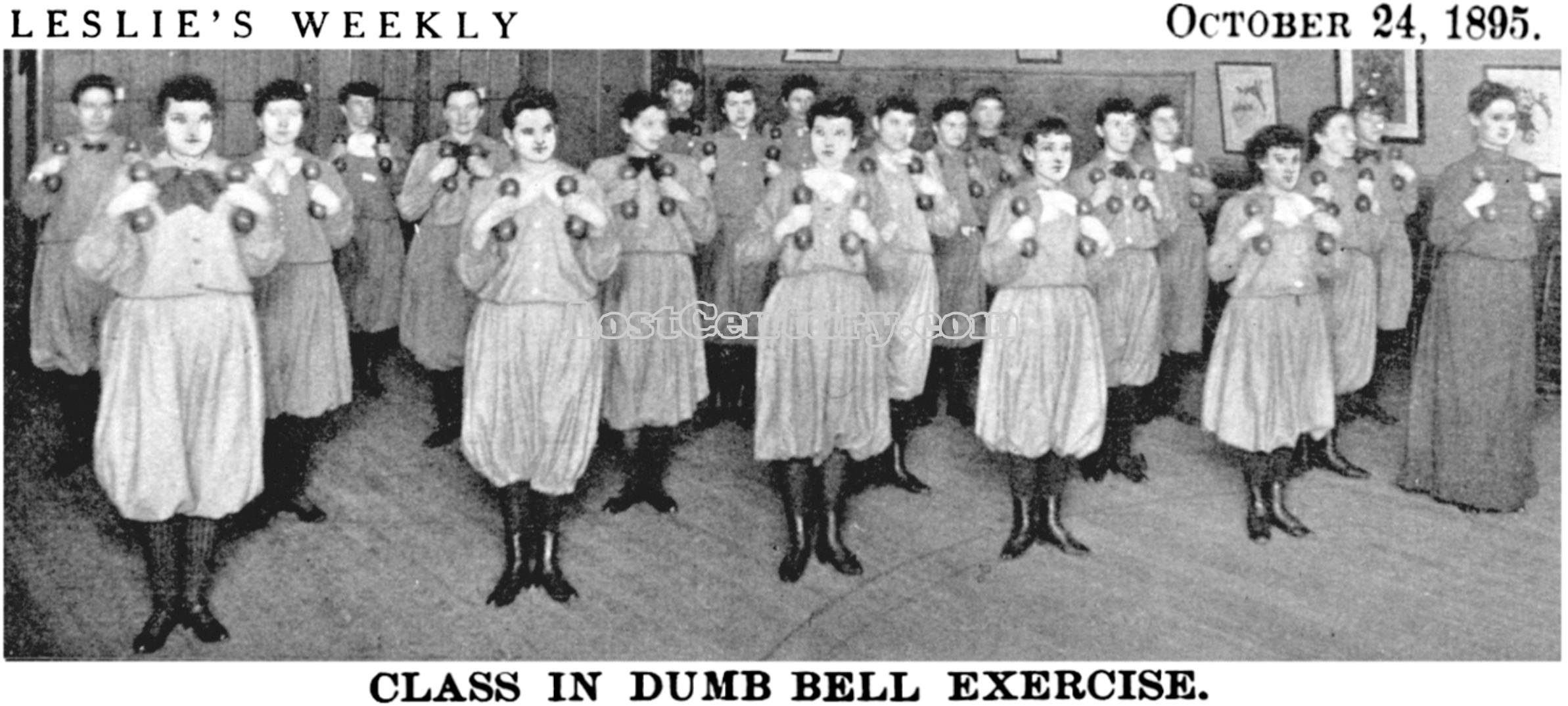
January 14, 1896 – Harper’s Young People

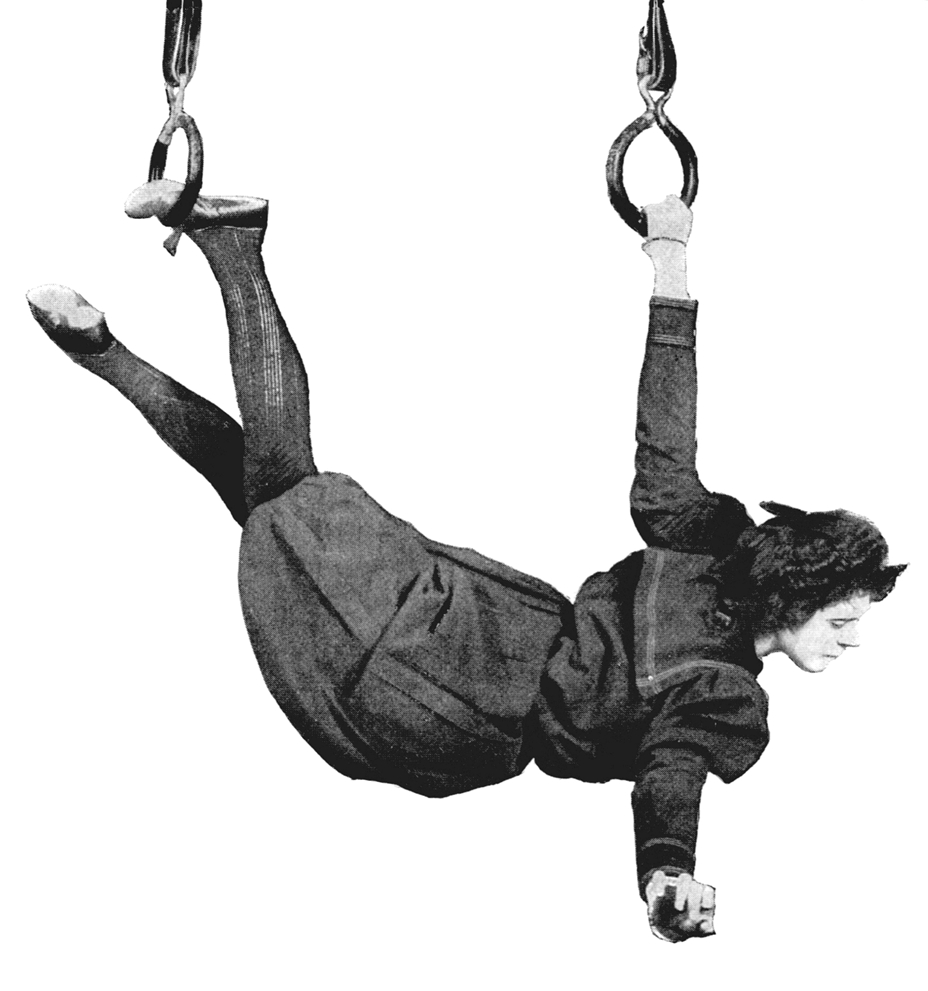
Regularity in bodily training is the “golden rule” of all physicians and gymnasium teachers. “A little exercise every day, taken at a certain time,” is worth more than all the spasmodic exertion in the world. It accomplishes more in play and work. Nor need such exercise become monotonous. The work of to-day may call into use one set of muscles, and that of to-morrow another. It is well not to develop our arms and neglect our legs, or vice versa. The pleasure accompanying them makes out-door sports more beneficial to the health; but in-door training, according to fixed rules, has a great value in teaching you how to use your limbs and joints easily and well. The practice it gives helps you to learn anything quicker than you would without it.
Any girl knows how easy it is to “fall out of the way” of doing things, whether the “thing” is a kind of fancy-work or a school task. So it is easy to “fall out of the way” of making use of your bodily powers. Your arms and legs and back and body were all given you to use, just as well as your lungs and other organs. And it is clearly your fault if you do not get the best service out of them by keeping them in practice. You must teach them to be supple, agile, and quick to respond to any calls you may make upon them to contribute to your good or amusement. Suppose you suddenly decide to play tennis, and have never learned to run! What will happen to you is that you will be an awkward and unlucky player until you learn to use your legs. Therefore regular daily exercise is good all round—for health and for pleasure.
Our first impulse on waking in the morning is to yawn, to push out the arms, to throw out the legs, to stretch and twist and roll about the body, and so gradually work off the cramped feeling induced during sleep. These natural gymnastics, in which even babies indulge when they first waken out of a sound slumber, indicate pretty clearly what is the best time to take a regular daily dose of gymnastic work.
During the night the respiration has been slower, the heart-beats less frequent, and the muscles have become contracted from remaining too long in certain positions. We know, without being told, that our bodies need shaking, stretching—some exercise, in fact, to get us into shape for the day’s work. The blood must circulate quicker, and mind and body partake of the bright, brisk feeling which helps us to do everything easily. For those who spare the time, fifteen minutes, or even ten, on first rising is the best time to select for gymnastics.
But many persons, young as well as old, must rise quickly and dress hastily, and have no minutes to spare for such morning exercise. They must choose some other time. Just before the daily bath is another opportune moment. The exercise taken induces perspiration, and this waste matter is removed by the bath following, leaving the skin in a clear, healthy, and normal condition. We feel wonderfully refreshed and full of vitality after the process.
At night, before retiring, certain exercises of the muscles can be used with good effect. If we are tired or have overused one set of muscles, we do not exercise those already used too much, but others in opposite directions. For instance, if we have stretched our arms up until over-tired, it is rest and relief to stretch them down—again and again, and again, so making the strain upon the muscles equal.
Or if we have used our arms too much, we rest ourselves by giving our legs a good amount of exercise—just as a long walk rests you after rowing, or as a good game of ball rests you after hard study. In the first case it is exercise in an opposite direction which gives the needed relaxation. In the second the same result comes from exercising the body after too much exercise of the mind.
This “law of opposition,” as it is called, is a big subject. But the rule holds just the same, whether you understand “the reason why” or not. Exercise muscles or parts of the body in opposite directions or in different ways from the motions and actions which have tired you. To do this at night “promotes sleep and helps digestion,” say the physical culture teachers.
And who should know better than those who have studied up on the subject and who can give you the “reason why”?
From “Daughters of the Lost Century”
Support women's sports and SHARE this story with your friends!
This article was written by a WomenTalkSports.com contributor. Sign up here to start publishing your own women's sports content.
MORE ABOUT THIS AUTHOR:
Media reports about the pioneers of American women’s sports & fitness originally published over 100 years ago....
full profile
For more, visit LostCentury's Full Profile
LATEST ARTICLES & POSTS
Fri at 1:53pm
Fri at 1:51pm
Fri at 1:45pm
Fri at 1:44pm
Thu at 1:53pm
Thu at 1:52pm
Thu at 1:48pm
Thu at 1:47pm
Wed at 12:52pm
RECENT COMMENTS
Great article but really not true; there are many players involved in the NPF that are not from the ...more
posted 08/26/14 at 1:28pm
on Softball Standouts Plourde and Prezioso Represent Atlantic 10, Exemplify Mid-Major Potential at Next Level

What she did I'd fantastic but she was still a good 14 seconds behind the winner and, really, the Ke...more
posted 07/22/14 at 4:04am
on 2 seconds, no finish clock picture, but satisfaction: Molly Huddle breaks her own AR

Does money make champions ! History have taught us that money does not means success overnight . Mos...more
posted 06/20/14 at 8:25pm
on Sparks need a change, but what kind?
congrats to Maria on her French Open win!!...more
posted 06/11/14 at 10:06pm
on Maria Sharapova Named The Face Of Avon Luck Fragrances
| SAUCUONY 500 MILE CHALLANGE |
| Daily Workout |

There is 1 comment on this post. Join the discussion!
Leslie's Weekly was quite handy for women's fitness stories in the 19th century; here's a link to an image of women medical students in the Woman's Medical College of Pennsylvania gym, 1888 (and there's lots more there on changing attitudes to women's exercise):
http://xdl.drexelmed.edu/item.php?object_id=3048andsearch_param=keywordandsearch_by=leslieandt=womanmd
Monday, April 25, 2011 at 12:54pm EDT