


What you've most likely accomplished here is offered up to the Wiggle's management people a welcome ...more
posted 10/30/12 at 11:25am
on Wiggle Cycle Store: Men and Sluts Only!






posted by stephaniemp, a Women Talk Sports blogger
Tuesday, June 19, 2012 at 9:51am EDT
About stephaniemp:
Media pro; @womentalksports podcasts co-host; National Champ steeplechase runner; fun haver....more
Support women's sports and SHARE this story with your friends!
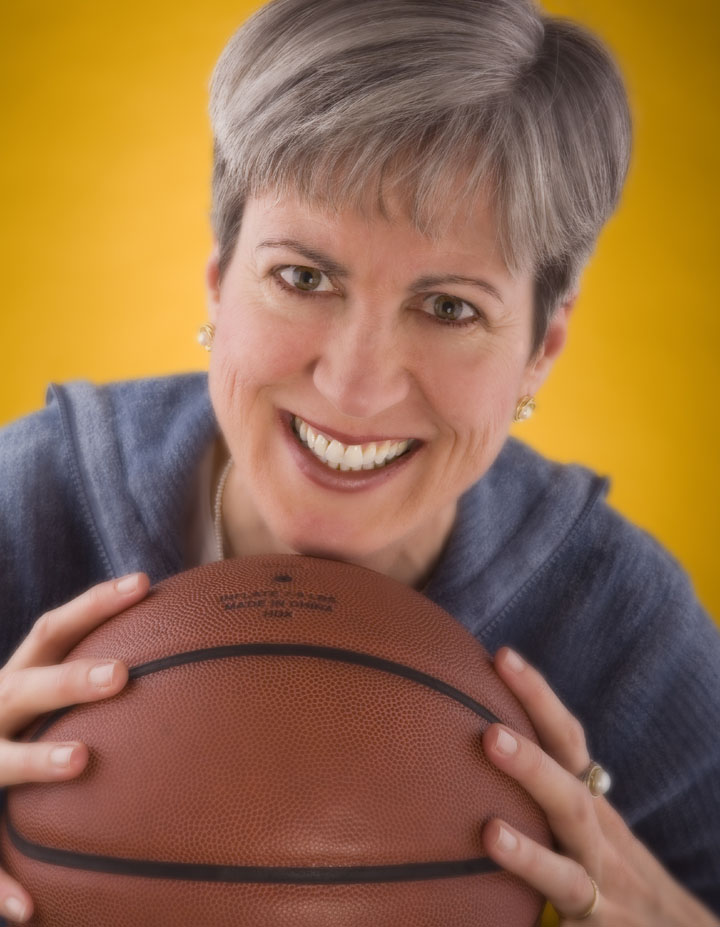
I attended the NCAA Women’s Basketball Championships in Indianapolis in 2011. The highlight of the trip was listening to the amazing panel Women Talk Sports lined up to discuss the media coverage of women’s sports (particularly basketball). The panel consisted of sports professionals including a WNBA coach, a former athlete and several journalists. One of the panelist shared a story that stuck with me.
Mariah Burton Nelson was a member of the Stanford women’s basketball team from 1974-1978. She has gone on to become an author and motivational speaker who focuses on gender equality in sports. She is currently the Executive Director of the American Association for Physical Activity and Recreation.
Just two years after Title IX passed, Burton Nelson got a call from Stanford’s Dean of Admissions. He asked her to play ball as a Cardinal. She was planning on attending a different university, which had an established basketball team, but decided to help “build the [Stanford] program,” as the Dean put it. Maybe she understood what he meant when he said said that. Maybe she didn’t. Either way, she went on to play.
During the WTS panel discussion, Burton Nelson shared her experience playing basketball at Stanford in the 1970s. She started by holding up her old uniform. It was a small, red “penny” that resembled an apron. She explained that the style of this “uniform” symbolized where women were supposed to be at the time: cooking in the kitchen. She and her team practiced in a small gym on campus. The larger gym was for the men. Whereas the men’s coach had experience and was paid, the women’s coach was inexperience and volunteered. None of the women were granted athletic scholarships to play.
(Photo courtesy of Women Talk Sports)
Fortunately, Burton Nelson and her teammates knew about the brand new law called Title IX. They were determined to get their institution to take it seriously. They wanted better uniforms and a coaching staff with experience. They wanted scholarships and to play in a facility that allowed them and their fans ample space and equipment.
They made their point. With every spare moment, she and her teammates parked themselves in the Athletic Directors office. They performed sit-ins until their demands were made.
The pay off came just two years later (1976). The red apron “pennies” were no longer their game-wear. Real uniforms and paid coaches were provided. They moved into the big gym, which they shared with the men. The year after Burton Nelson graduated, the entire women’s squad had scholarships. They made progress.
Although I have read stories about pioneers of Title IX, what struck me about Burton Nelson’s story was that she was a post-Title IX pioneer. Many people believe the work stopped once June 23, 1972 hit. Burton Nelson proves that it didn’t.
Sometimes I wish that I could go back to the days when huge changes were erupting. I would have liked to sit at the Athletic Directors office demanding equality with the Stanford team. I didn’t get my chance to do that, but Mariah’s story taught me something: You don’t have to be the “first” to make a difference.
There was blatant disregard for women’s equality in sports before 1972. That’s why a group of women’s advocates fought to establish Title IX. They broke through barriers and made legal change, a very difficult task. Despite their hard work, things didn’t instantly change once that bill was put into action. The following group, the 1974 Stanford basketball team and many others, were there to enforce the progress previously made. They were there to follow it through.
Today, there are still instances where Title IX is not enforced. Inequality may not rear its head in red, apron like “pennies” or a lack of quality coaches (although, it might). By now, these blatant injustices have been called out and made better. It’s the job of this generation, the third and fourth groups, to find the injustices that are covered up or disguised as being normal and stop them.
My experience in high school and collegiate sports was a positive one. My only regret was being an uninformed third group/post-Title IX athlete. I didn’t fully understand what the law demanded of institutions. I probably missed a few things along the way. But, Burton Nelson’s story inspired me to learn more about Title IX today so I can spot the blatant and not so obvious issues within the institutions I am now in contact with. I urge you to understand the basics of this law too. When you know, you can share. When you share, people know. That’s when we will see action. That’s how Title IX started and that’s why we're celebrating its 40th year.
Our stories may not be the same at the Stanford women’s basketball teams'. We may not have been on the picket line or organized sit-ins, but we can continue to make progress in our own way. Go out, and do it.
 Disclosure: Compensation was provided by Nike via Glam Media. The opinions expressed herein are those of the author and are not indicative of the opinions or positions of Nike.
Support women's sports and SHARE this story with your friends!
This article was written by a WomenTalkSports.com contributor. Sign up here to start publishing your own women's sports content.
MOST POPULAR ARTICLES & POSTS
December 21, 2012 at 12:57pm
December 19, 2012 at 7:42am
November 28, 2011 at 1:35am
September 28, 2012 at 4:19pm
LATEST ARTICLES & POSTS
Thu at 5:48pm
Thu at 2:52pm


Media pro; @womentalksports podcasts co-host; National Champ steeplechase runner; fun haver....
full profile
For more, visit stephaniemp's Full Profile

RECENT COMMENTS
What you've most likely accomplished here is offered up to the Wiggle's management people a welcome ...more
posted 10/30/12 at 11:25am
on Wiggle Cycle Store: Men and Sluts Only!
In response:When you write, often you adopt a position of hyperbole to make a lesser point. As you ...more
posted 10/30/12 at 10:49am
on Wiggle Cycle Store: Men and Sluts Only!

While I don't mean to interrupt the channeling of your inner Dworkin a few observations seem to be i...more
posted 10/30/12 at 10:36am
on Wiggle Cycle Store: Men and Sluts Only!
Ooh, the trapeze looks like tons of fun. :) Puma gear would be AWESOME too. ...more
posted 10/30/12 at 7:32am
on GIVEAWAY: Sweat Pretty with Puma and Boxer Cara Castronuova
I appreciate your comment, and I understand that your position on the calendar - that it's not reall...more
posted 10/30/12 at 5:51am
on Wiggle Cycle Store: Men and Sluts Only!

Women Talk Sports Podcast - November 2012
This is the fourth edition of the Women Talk Sports podcast (November, 2011). This is a special podcast because of a special guest! WTS co-founder Ann...[Listen/Download for iTunes]
Women Talk Running Podcast - November 2012
This is the fourth edition of the Women Talk Running podcast (November, 2011). Cara and Stephanie discuss the New York City Marathon fall-out after hu...[Listen/Download for iTunes]
Women Talk Sports Podcast - October 2012
Stephanie and Cara bring you the October edition of the Women Talk Sports podcast. The two start off by talking about Cara's NACWAA trip. Then they gi...[Listen/Download for iTunes]
No one has commented on this yet. Be the first!