
She is one of the best player in basket ball and is really good.
http://www.coomberlaw.com/bu...more
posted 04/30/13 at 3:56am
on The Chicago Sky Selects Elena Delle Donne Second Overall in 2013 WNBA Draft





posted by One Sport Voice
Thursday, December 1, 2011 at 1:02pm EST
Dr. Nicole M. LaVoi: This blog reflects my critical eye and voice on all things sport. I am a critical thinker, scholar, and researcher in girls & women in sport, youth sport, and coach & sport parent education.
Support women's sports and SHARE this story with your friends!
As I posted previously, I’ve had the opportunity to participate in a host of stimulating conferences and conversations in the past eight weeks related to girls and women in sport. I’m still musing about many things, but here are three I’m ready to share.
 1. As a wrote about in my last blog post, the current model of “sport” (i.e., meaning the male model of win at all costs, big business, professionalization) is broken. If you believe this statement to be true and you also believe in a “growing sense of crisis in college sports“, then who is responsible for changing the current model or changing the course of big time, revenue pursuant, entertainment style college sport? Why hasn’t the The Knight Commission, whose mission is to advocate for a “reform agenda that emphasizes academic values in an arena where commercialization of college sports often overshadowed the underlying goals of higher education” and The Drake Group whose mission is to “is to help faculty and staff defend academic integrity in the face of the burgeoning college sport industry” been more vocal or got more traction lately in the wake of some major scandals?
Relatedly, given the historically abysmal patterns of media coverage for female athletes, who is responsible for creating socially responsible images of college female athletes? (Colleagues Sally Ross at Memphis and Vikki Krane at Bowling Green are thinking & writing about this concept). Shouldn’t athletic departments be held to a higher standard of marketing female athletes? Why does a “sex sells” narrative and images still persist (see image) 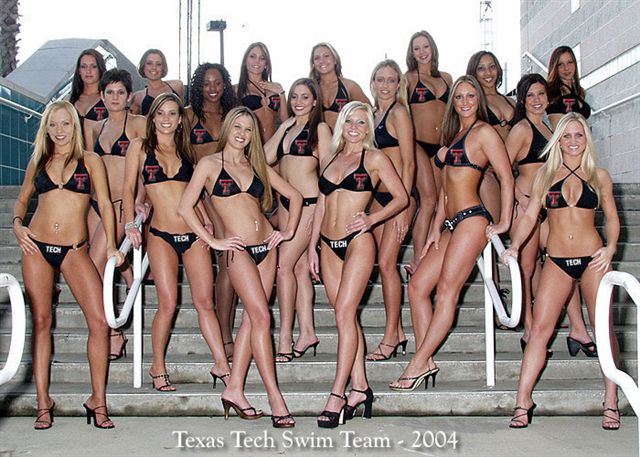 in college athletics where the purpose is about education, not highlighting the physical appearance or making female athletic bodies into “sexy babe” objects? Doesn’t a university have an obligation and responsibility to ensure the health, well-being, integrity and respect of female athletes, just as it also has an obligation and responsibility to put the well-being of children ahead of potential scandal and shaming high profile men’s programs and their coaches?
2. Head Coach for the WNBA Championship Minnesota Lynx, Cheryl Reeve, stated in her keynote at the Alliance of Women’s Coaches workshop held at Macalester College, that sometimes a team gains, by subtracting players in what she calls “addition by subtraction”. I think this is what college athletics needs…take football and men’s basketball out of D-I and II college athletics altogether and a great deal can be gained. However, despite recent dialogue by NCAA President Mark Emmert that radical reform is needed, yet some argue real reform for football and men’s basketball is not possible. Think of many of the issues currently facing college athletics administrators and university presidents would go away, be diminished, or never occur if football and men’s basketball were removed from institutions of higher education. The Arms Race, rule violations, academic fraud, eligibility problems, booster and recruitment violations, pay for play, the $2K stipend, discussions of athlete unions and revenue sharing with athletes, athlete exploitation, and cover-ups of egregious coach and player behavior might be reduced. Those sports could be affiliated with a school, but athletes would not be required to attend class, but given the opportunity to earn their degree for free once the player retired from sports or desired to focus on academics. To hear colleague and Professor Allen Sack discuss these issues in depth, click here. I’m not sure college sport can or ever will be truly reformed…
Given that much of my work focuses on the youth level, where I feel I might be able to make a real difference somehow, I have come to believe the problems in college sport are related to problems at the youth sport level.
3. The current youth sport model emulates Big Time College Sport and Pro Sport…specialization, year round training, pay to play, transferring based on playing time and winning, athletes as commodities to help a franchise win, children training away from their families at elite sport academies, kids viewed as “return on investments”, development and experience are downplayed as winning and performance are center stage, team loyalty and playing with friends are sacrificed to play on elite travel teams focused on securing college scholarships, a great deal of money is spent on ensuring the right equipment and experiences, highly specialized training (e.g., strength and conditioning, agility, sport psychology) to increase the likelihood of optimal performance, and the growing number of chronic and acute injuries due to overuse and over training. The youth sport model is never going to change unless college sport is reformed. If athletics were taken out of institutions of higher education and full ride scholarships were not the “end all, be all” goal of athletes and their parents, youth sport would look a LOT different. Youth sport might just start to resemble something better…where athlete development, fun, enjoyment, positive relationships, learning, skill development, and being active and competing are fun in and of itself, rather than being a means to an end. Imagine it.
While reform in college sports may be unlikely, don’t we have a social responsibility to help ensure youth sport retains some semblance of being athlete-centered?
Support women's sports and SHARE this story with your friends!
Today on the Women's Sports Calendar:
| NCAA DI Tennis Championships May 16 - 27: Khan Outdoor Tennis Complex |
MOST POPULAR ARTICLES & POSTS
LATEST ARTICLES & POSTS
Mon at 8:35am
Mon at 8:29am
Sun at 8:17pm
Sun at 8:16pm


Dr. Nicole M. LaVoi: This blog reflects my critical eye and voice on all things sport. I am a critical thinker, scholar, and researcher in girls & wom...
full profile
For more, visit Dr. Nicole M. LaVoi's Full Profile

RECENT COMMENTS
She is one of the best player in basket ball and is really good.
http://www.coomberlaw.com/bu...more
posted 04/30/13 at 3:56am
on The Chicago Sky Selects Elena Delle Donne Second Overall in 2013 WNBA Draft

The worst kept secret in all of professional sports is that the majority of WNBA ballers are lesbian...more
posted 04/24/13 at 11:41am
on Brittney Griner's way of coming out is progress in the sports world
In terms of sport figures, I'm sure a Pat Summitt statue is in the works.
...more
posted 04/15/13 at 10:11pm
on Statues of Female Leaders?

I'm not a big Stanford fan, but at least they have a legitimate program and did it largely without t...more
posted 04/10/13 at 5:50pm
on Why Cal is my new favorite team

Ooh, is that bitterness I smell wafting up from Palo Alto? It almost seems like you are bashing Cal...more
posted 04/10/13 at 4:20pm
on Why Cal is my new favorite team

Women Talk Sports Podcast - March 5, 2013
In the March edition of the "Women Talk Sports" podcast, Cara and Stephanie use their running background to explain the Dayton 500 and break down the ...[Listen/Download for iTunes]
Women Talk Running Podcast - March 5, 2013
In the March edition of the "Women Talk Running" podcast, Cara and Stephanie wrap up the Millrose Games, give you more Mary Cain news, give our respon...[Listen/Download for iTunes]
Women Talk Sports Podcast - January 28, 2013
In the January 2013 episode of the Women Talk Sports podcast, Cara and Stephanie share several points that will leave you feeling hopeful about the Na...[Listen/Download for iTunes]
There are 4 comments on this post. Join the discussion!
Egad, where to start with this. Well let's start with this loaded quote:
"I think this is what college athletics needs%u2026take football and men%u2019s basketball out of D-I and II college athletics altogether and a great deal can be gained."
1) D-II? really? What have the likes of Albany State and North Greenville ever done to contribute to the corruption of college football?
2) I assume what you really meant was FBS ad FCS, becasue D-I football dissolved many years ago, but what do details matter to someone with an agenda. And back to point 1, FCS? what have the likes of North Dakota State and Lehigh ever done to contribute to the corruption of college football?
3) I'm guessing your motivation is directed at the transgressions of a handful of FBS schools, of which there are 119 teams. Add FCS 124 and D-II 282, and you basically want to eliminate 525 football teams because of the sins of a small group of individuals.
4) A great deal can be gained? By who? I'm sure the President of the University of Michigan would be delighted to see his 110,000-seat stadium collect dust all year. And I'm sure the local business owners of Ann Arbor would gladly part ways with tourist revenue knowing that D-II "criminals" like Doane college have been eradicated. And what about the tens of thousands of young men who participate in the two most popular sports? ah, screw em, I'm sure they'd just grow up to sell helmets for tatoos. And of course I'm sure the millions of fans would just smile and readily move their allegiance and spending to the swim and track teams.
5) That's a lot of men's scholarships you propose cutting (98 between football and basketball). Even adjusting for some current imbalances and adding a couple minor sports for the men, you're still looking at slashing numerous women's scholarships to bring Title IX into balance. Given any thought to that?
Friday, December 2, 2011 at 10:30pm EST
Let's continue:
"Doesn't a university have ... an obligation and responsibility to put the well-being of children ahead of potential scandal and shaming high profile men's programs and their coaches?"
- Well, yes. But unfortunately for your sad argument, only one school is guilty of such matters, that would be singular, not plural. but I guess you may as well throw the other couple hundred "men's" programs into the guilt pool while the opportunity is hot. Let Penn st football burn for what they did, no one will apologize for them, but to say the entire sport needs to go away as a result reeks of lack of perspective and pre-determined agenda.
Saturday, December 3, 2011 at 2:07am EST
Thanks for the counter points. My purpose was to stimulate dialogue, and provide one perspective. I know there are holes in the argument, and it isn't meant as a "solution" but to consider reform of college sports in general, much of which is needed. I didn't know about the "bikinigate" so thanks for pointing that out! Finally, where other's perspectives are called "propaganda" that does little to forward dialogue, collegiality, or promote critical thinking. I always value other's perspectives, am willing to admit if I have something wrong, but to attack and call names is unproductive. Finally, to discuss only the transgressions of one (or two) big time men's programs as bad decisions made only by a few men within a few teams, is to ignore and erase the entire structure of college sports which creates a climate in which those "decisions" are made, and at worst protected and covered up. My big picture point is that college sport as it currently exists is broken and is in need of reform...and that starts with the sports that are most highly visible, valued, and promoted. -nml
Saturday, December 3, 2011 at 6:42pm EST
Fair enough. We agree that reforms are needed, just think removing football and men's hoops all together is quite extreme.
To me, basketball would be the easiest to fix. If the NBA structured itself as MLB does, i.e. create a minor league system. This would give those players who have no interest (or quite frankly, don't belong) in higher education a differnt path to pursue their professional goals. In fact, it would probably improve play on both levels as it would eliminate many of the the one-and-done players in college and allow the NBA to more fully groom its youth.
Football, much more difficult. I do think we're heading in the direction where the top 60 or so programs set off on their own, leave the ncaa, and form their own governing body. This won't solve the corruption at the larger programs (in fact, perhaps exacerbate them) but it would largely separate the smaller programs from that type of culture and structure. It wouldn't necessarily "solve" the issues, as much as just "isolate" them.
Sunday, December 4, 2011 at 12:16am EST