 Twitter
Ann: Agreed. Natalie has the fierce but regal bearing you'd expect from a heroine who is demigoddess...more
posted Friday, November 19, 2010 at 8:11am PST on Vote for the new Wonder Woman!

|

|

|

|

|

|
 |

|

| |
|
| |||
"In all my years traveling around the world, I have witnessed soccer as the one thread that many cultures and people have in common," -Doug Band.
Help bring the World Cup to the United States in 2018/2022! Please visit gousabid.com for more ways you can support the sport- and the country- that you love.





|
posted by One Sport Voice Dr. Nicole M. LaVoi: This blog reflects my critical eye and voice on all things sport. I am a critical thinker, scholar, and researcher in girls & women in sport, youth sport, and coach & sport parent education. |

|

|
|
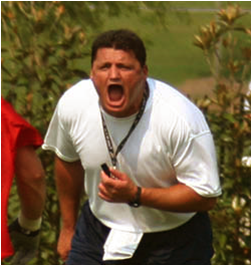 I get many calls and questions from coaches about the use of punishment in youth sport. Punishment from a sport psychology perspective is adding something an athlete perceives as negative or aversive.
Examples of commonly used punishments yelling, exercise including push-ups & running, and sitting on the bench (adding bench time).
Punishing mistakes is not an effective way to shape behavior, teach life skills (i.e., being on time, listening, focusing attention when the coach is talking) or develop skill. Researchers have proven that positive approach to coaching involves strengthening desired behaviors by recognizing them when they occur and giving information about training and instructions that helps an athletes improve or do it differently is the most effective way to communicate. A “negative approach” to coaching involves attempts to eliminate a behavior based on criticism and the use of punishment. While punishment can help eliminate an undesired behavior in the short term, it does little for teaching skills that develop over time.
Punishment also has a number of potential negative consequences including:
I hope this short piece helps coaches think about their use of punishment in their coaching praxis.
View Original Post at onesportvoice.wordpress.com
|
|
|
|
MOST POPULAR POSTS
posted by HoopFeed.com 11/06/10 at 8:43pm
posted by Women Undefined 07/31/10 at 7:26pm
posted by Jayda Evans: Womens Hoops Blog 11/17/10 at 7:43am
posted by HoopFeed.com 11/06/10 at 7:38pm
posted by MsAkiba 10/11/09 at 11:40am
posted by ...Because I Played Sports 11/12/10 at 6:12am
posted by Pretty Tough 02/17/09 at 10:57am
posted by MarQFPR 11/15/10 at 2:14am
posted by HoopFeed.com 11/11/10 at 10:10pm
posted by heather77 09/02/10 at 7:33pm
LATEST WTS POSTS
posted by MMARising.com
Today at 7:36am
posted by Balanced Health and Nutrition
Today at 7:31am
posted by Swish Appeal
Today at 7:27am
posted by All White Kit
Today at 7:26am
posted by A Glam Slam
Today at 7:23am
posted by Chic Runner
Today at 7:20am
posted by Sports, Media & Society
Today at 7:19am
posted by Game On! Sports Camp 4 Girls
Today at 7:14am
posted by Coach Dawn Writes
Today at 7:11am
posted by Byline to Finish Line
Today at 7:09am
RECENT COMMENTS
Ann: Agreed. Natalie has the fierce but regal bearing you'd expect from a heroine who is demigoddess...more
posted Friday, November 19, 2010 at 8:11am PST on Vote for the new Wonder Woman!
This is SO upsetting! I had an interaction with and prevented some COLLEGE track and field runners (...more
posted Thursday, November 18, 2010 at 6:17pm PST on How a Gawker video instigated embarrassment among female athletes
Have to say I much prefer the UA ad - stronger, tougher and less skin on view! But both are inspirin...more
posted Thursday, November 18, 2010 at 1:40pm PST on Two Thumbs Up for Brands Emphasizing the Hard Work Female Athletes Put In
I think Natalie would make a great Wonder Woman! She has that fierce look and attitude. She gets my ...more
posted Thursday, November 18, 2010 at 12:17pm PST on Vote for the new Wonder Woman!
I wouldn't normally comment on my own post, but I am curious how many here, on WTS, think Natalie Co...more
posted Thursday, November 18, 2010 at 9:44am PST on Vote for the new Wonder Woman!






No one has commented on this yet. Be the first!