
Great stuff Lisa - first timers should also know that they will be REALLY sore the next day!!...more
posted 09/15/11 at 1:37pm
on What You Should Know Before You Spar






posted by mhueter, a Women Talk Sports blogger
Sunday, March 27, 2011 at 12:47pm EDT
About mhueter:
I'm one of the co-founders of WomenTalkSports.com. I'm also a full-time digital public relations professional at Catalyst Public Relations in New York. I played basketball my entire life, and am a pro...more
Support women's sports and SHARE this story with your friends!
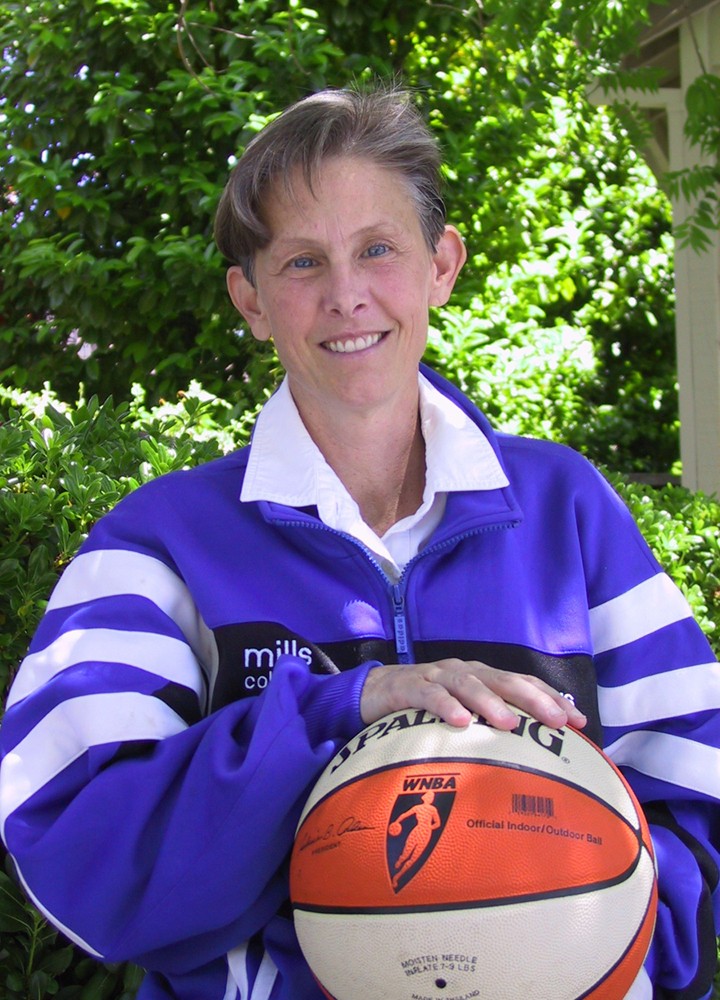 Following is an exclusive interview with Helen Carroll, who leads the Sports Project at the National Center for Lesbian Rights. She is well known in the sports world as an acclaimed national championship basketball coach from the University of North Carolina-Asheville.
This interview serves as part 3 of a series on homophobia and women's basketball, in honor of WomenTalkSports' support of The Fling, an event taking place on Saturday, April 2nd in Indianapolis, which seeks to bring together fans of women's sports and combat homophobia.
1) Can you tell me a little big about your job at the NCLR, and why you work at this organization?
The National Center for Lesbian Rights added the Sports Project to this non-profit legal organization in 2001 with a mission to create and ensure a sports culture where individuals may participate, free from sexual orientation and gender identity discrimination. As the director, I have had the opportunity to work with my colleagues in representing student-athletes, coaches and administrators who have found themselves losing jobs, scholarships and even the opportunity to participate as a highly skilled athlete. We have been of assistance in bringing to light that the law protects all of us and that LGBT sports people do not have to take being discriminated against. We are the place to come, if out LGBT collegiate sports athletes and coaches need help. It feels good to be a part of an organization that will stand up for LGBT student athletes and, as a former coach and athletic director, I often feel I become these athletes coach after they have lost their team.
2) You spent many years at the University of North Carolina-Asheville. What were your favorite parts about working as a NCAA basketball coach?
Coaching student-athletes is always rewarding. We like to think that, as coaches, we can teach the offense and defense and if it is the best then we will bring home the championship. I learned that in reality, we only guide the our student-athletes and that they are the ones who really decide what directions the team will go-it is their experience on the court. They certainly taught me to listen and learn who they are as individuals, encourage them to bring their entire experience of life to the court-and when that happens a team can form that will play beyond their potential.
3) Are you a lesbian, and if so, were you out when you were a coach?
I am a lesbian and as a coach tried to bring honesty to my student athletes and trust they would feel safe enough to be honest with me. My public coming out was a process in stages over my career. I certainly spent years feeling people ‘knew’ but not having the words to express my sexual orientation. In North Carolina, our team had the support of the LGBT community and of the athletic director plus our entire athletic dept. I can remember doing a television show from an LGBT Community center venue and another time, the men’s tennis team helped us celebrate winning the national championship by dancing the night away with our women at a local lesbian club. I have always felt that being out, open and honest-both myself and some team members-helped us win overtimes….
4) Did you ever have any openly lesbian players, and if so, as a coach, could you discuss sexuality? If so, how? If not, why not?
As the head coach I discussed situations in private that would effect the play of my athletes. I knew when a player may be having girlfriend or boyfriend issues and we discussed that candidly. I hope that I was able to provide some guidance. We fostered a team atmosphere that was accepting of lesbian athletes and valued their contributions to the team as well as who they were as individuals. We did the same for all of our differences and, I like to think, that all of the athletes on my teams felt that value. There was one team value we all took very seriously. If anyone outside of our team discussed teammates in a negative way, whether that was being critical of sexual orientation or any other ‘difference’, we would stop that talk in the moment and tell the person how much we support each other. We simply did not allow anyone to put us down in our presence for any reason.
Sheila Ford, who played for Helen Carroll from 1980-1984, holds the UNC-Asheville's points record having accumulated 2,442 points and averaging 20.7 PPG.
5) For quite some time, you've been dedicating your efforts to fighting homophobia in sports. Why do you do this?
Homophobia in sport is a barrier that can keep women-as coaches or athletes- from reaching the goals they work to attain. Negative recruiting is a practice that is harmful to women’s basketball and all sports. For anyone who doesn’t know what this means, negative recruiting occurs when coaches tell prospective athletes and their parents negative things about other coaches and teams who are also trying to recruit that athlete rather than focusing on the positive qualities of their own school and team.
In women’s sports negative recruiting based on perceived sexual orientation can be used against any woman coach, regardless of her sexual orientation. In a report authored by Pat griffin and myself, The Positive Approach, sponsored by NCLR and the NCAA, we have tried to work to eliminate this practice. For me, approaching the issue of sexual orientation in a professional manner, using education, dialogue and researched reports can certainly make a difference in the experience and lives of many, many student-athletes. I fear we lose many women coaches as homophobia can drive women to choose other careers. I will always work to make sure LGBT coaches, administrators and athletes have their rightful place as leaders in sports.
6) Can you define transphobia to me? Is this a big issue in women's basketball?
Transphobia is the fear or hatred of transgender people.. I find in the athletic world that transphobia can occur when leaders do not understand the transgender athlete. Transgender describes an individual whose gender identity (one’s internal psychological identification as a boy/man or girl/woman) does not match the person’s sex at birth. For example, a male-to-female (MTF) transgender person is someone who was born with a male body, but who identifies as a girl or a woman. A female-to-male (FTM) transgender person is someone who was born with a female body, but who identifies as a boy or a man.
Some may fear that a male transitioning to female will have an athletic advantage while research shows that as the MTF athlete has treatment that blocks male levels of testosterone and adds estrogen to the level of the women on the team, muscle mass is lost and the athletic advantage dissipates after a year of treatment. This is documented in the report, On the Team, I see this as another difference in our athletes that we should learn about and understand in case one of the transgender athletes happen to be on the team.
There are younger and younger children and their parents beginning to recognize that the child is transgender, so, though there are not large numbers of transgender athletes in women’s basketball that we know about, I believe there will be an opportunity for coaches to meet and learn about the courage that that athlete will bring to our teams.
Helen Carroll co-authored the publication On The Team, which provides advice to high school and collegiate athletic programs about how to ensure transgender athletes fair, respectful and legal access to school sports teams. Download it here.
7) What do you think about Kye Allums decision to play at George Washington University this year? Is this a significant step for women's basketball?
Kye Allums is a courageous young man and his resolve to be exactly who he is in life sets an example for other young people. He allows all of us to understand the difficult challenges he has endured being closeted as a transgender man and witness the happiness in which he embraces his life now. This is significant as his example will serve as a role model for young transgender boys and girls while we watch his playing career at GWU. Hopefully, he will get well from the concussions he suffered this season and be out on the court his senior year.
I do believe the manner in which GWU held their pre-season press conference supporting Kye and explaining that he is eligible under NCAA eligibility rules, the way they provided education for the athletic department, coach and teammates is extremely commendable. Once they did that-then it was time to get on with their season and just play ball.
8) Some people say that women's basketball has a bad "image" because of the amount of lesbian women who participate. What do you have to say about that statement?
I believe that is an archaic statement that belongs way in the past. In this century it is expected that every girl/woman have an opportunity to participate in organized athletics. Of course there are lesbians, straight women, transgender women and bisexual women that comprise our teams. The majority of people in this country know that and I believe the climate is changing to accept role models like Coach Sherri Murrell , her partner and their twins from Portland State. I say you need a combination of all those women to win even one ball game-and that is a good thing!
9) What's the one thing you wish the women's basketball community could do to help the gay and transgender community?
Since this is a wish-I would wish that we had one day this year where every lesbian, transgender, bisexual woman associated with basketball in any way could be out with their straight men and women allies standing by their side and that they, from that moment forward, be able to live, work and participate in an atmosphere that fully accepts that person as a valued member of their athletic family. The question becomes: whose responsibility is it to set such an atmosphere? That is the work we must strive to accomplish-helping leaders see the how setting such an atmosphere in their departments would be beneficial for all their programs..
10) Why do you support The Fling, and what are you looking forward to about this event?
The Fling sets an exciting venue to celebrate women’s basketball at the NCAA Final Four. It is a place where coaches, athletes, advocates and fans can kick-off the celebration and recognize the value of lesbian gay, bisexual and transgender leadership in the realm of women’s sports. We have needed such a great party and Jody Sims has accomplished this in the 2nd annual Fling! NCLR is deeply appreciative to be a beneficiary of the event. This helps us continue to fight for the equality of LGBT people in sports. I look forward to seeing friends, meeting new people and explaining the great strides forward our Sports Project has accomplished for this year. Here we come, Indianapolis!
Thank you, Hellen, for your open and honest interview. If any of our readers are headed to Indianapolis and would like to go to The Fling, get information here.
Support women's sports and SHARE this story with your friends!
This article was written by a WomenTalkSports.com contributor. Sign up here to start publishing your own women's sports content.
MOST POPULAR ARTICLES & POSTS
September 11, 2011 at 2:20pm
September 12, 2011 at 10:16am
July 31, 2010 at 10:26pm
September 13, 2011 at 12:08am
September 14, 2011 at 1:51am
September 14, 2011 at 10:45am
August 5, 2011 at 4:32pm
September 10, 2011 at 1:16pm
LATEST ARTICLES & POSTS
Fri at 12:49am
Fri at 12:46am
Thu at 11:30pm
Thu at 6:24pm
I'm one of the co-founders of WomenTalkSports.com. I'm also a full-time digital public relations professional at Catalyst Public Relations in New York...
full profile
For more, visit mhueter's Full Profile
RECENT COMMENTS
Great stuff Lisa - first timers should also know that they will be REALLY sore the next day!!...more
posted 09/15/11 at 1:37pm
on What You Should Know Before You Spar

If the football superconfernces do indeed form (and all indications are that is imminent) then one c...more
posted 09/14/11 at 5:57pm
on Another season of college sports scandals--and now what?
Thanks Liz!...more
posted 09/05/11 at 12:36pm
on Meggan Franks Race Recap: 3rd overall, 1st female at Ridgeland 5K Run for St. Jude

Hey! Congratulations on the race!! Awesome job, Meggan! ...more
posted 09/05/11 at 10:53am
on Meggan Franks Race Recap: 3rd overall, 1st female at Ridgeland 5K Run for St. Jude
Thanks for the response. With Women's hockey in it's infancy, was curious how the proponents of the ...more
posted 09/04/11 at 2:46am
on Is Hockey Becoming Football?


No one has commented on this yet. Be the first!