
Great article but really not true; there are many players involved in the NPF that are not from the ...more
posted 08/26/14 at 1:28pm
on Softball Standouts Plourde and Prezioso Represent Atlantic 10, Exemplify Mid-Major Potential at Next Level





posted by JoelJohn, a Women Talk Sports blogger
Thursday, November 21, 2013 at 6:54pm EST
About JoelJohn:
...more
Support women's sports and SHARE this story with your friends!
Almost everyone will experience back pain at some point in her life. It can come with the normal aging process, poor workstation ergonomics, an accident or a sports injury. Exercise-induced back pain can derail an athlete, and coming back from it may seem daunting. Whether you are an amateur or a pro, you'll need a strong will, a love of the sport and a solid exercise plan to get you back into your sport.
The human body is a miracle of physics. One muscle pulls a body part in one direction while another counters the movement, holding the whole system together. Pay attention to how your injury affects the entirety of your body. The large core muscles of your back and abdomen maintain the stability of your body and help protect your spine from harm. If these muscles are hurt due to tearing or surgical stress, all the surrounding muscles are affected. They become weaker and lose flexibility.
Start back with your exercise routine by taking care of these core muscles. Walking, stretching, and planking will build strength in the surrounding muscles, protecting the damaged area from re-injury. Several online resources, such as video tutorials at Laser Spine Institute and similar websites, exist to demonstrate proper techniques for a variety of back-strengthening exercises.
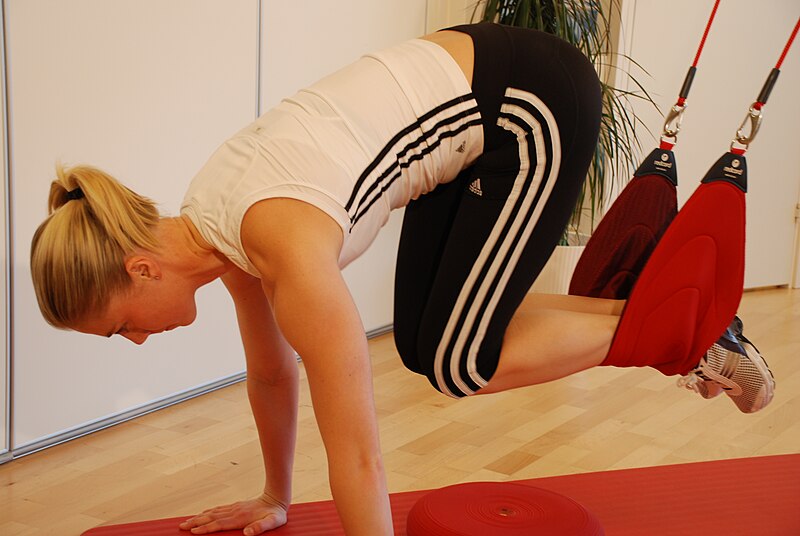
Photo by Slyngebehandling via Wikimedia Commons
Yes, you want to push yourself, but you don't want to hurt yourself. Increasing the intensity of your exercise routine too quickly is one of the significant causes of injury, reports the sports training advocacy organization Stop Sports Injuries. Hitting the gym hard is a sure way to sideline yourself even longer. Take it slow and steady.
Back and neck injuries are often linked to nerve irritation or damage. If a spinal disk has moved, it can put pressure on a nerve and cause intense pain. Unlike muscles that can repair themselves, nerve damage cannot be repaired. Honestly assess the extent of your damage. A person who has suffered a slipped disk (called spondylolithesis) of 50 percent or more forward slippage should find a less aggravating sport, according to KnowYourBack.org. Comprehensive testing and a good heart-to-heart with your doctor may be called for before you can return to your sport.
Photo of Spine and Nerves by planetc1 via Flickr
The British Journal of Sports Medicine reports on three key psychological factors to returning to your sport. The first is autonomy. People with higher motivation and positive perception are more likely to successfully return to their sport. Next is competence. This is not just how good you are at the sport—it is also how much you love the sport. Last is relatedness, which is your social network within the sport. This is your support group. If you are motivated to return to your sport after a back injury—if you truly love your sport—then tell people you are coming back. This is what a team is all about.
Support women's sports and SHARE this story with your friends!
This article was written by a WomenTalkSports.com contributor. Sign up here to start publishing your own women's sports content.
MORE ABOUT THIS AUTHOR:
For more, visit JoelJohn's Full Profile
LATEST ARTICLES & POSTS
Thu at 1:53pm
Thu at 1:52pm
Thu at 1:48pm
Thu at 1:47pm
Wed at 12:52pm
Wed at 12:50pm
Wed at 12:17pm
Wed at 12:16pm
RECENT COMMENTS
Great article but really not true; there are many players involved in the NPF that are not from the ...more
posted 08/26/14 at 1:28pm
on Softball Standouts Plourde and Prezioso Represent Atlantic 10, Exemplify Mid-Major Potential at Next Level

What she did I'd fantastic but she was still a good 14 seconds behind the winner and, really, the Ke...more
posted 07/22/14 at 4:04am
on 2 seconds, no finish clock picture, but satisfaction: Molly Huddle breaks her own AR

Does money make champions ! History have taught us that money does not means success overnight . Mos...more
posted 06/20/14 at 8:25pm
on Sparks need a change, but what kind?
congrats to Maria on her French Open win!!...more
posted 06/11/14 at 10:06pm
on Maria Sharapova Named The Face Of Avon Luck Fragrances
| SAUCUONY 500 MILE CHALLANGE |
| Daily Workout |

No one has commented on this yet. Be the first!