



Great article but really not true; there are many players involved in the NPF that are not from the ...more
posted 08/26/14 at 1:28pm
on Softball Standouts Plourde and Prezioso Represent Atlantic 10, Exemplify Mid-Major Potential at Next Level




posted by Pretty Tough
Monday, April 26, 2010 at 10:03pm EDT
Pretty Tough is the premier brand and media property providing high-quality, specialty content, products and services for girls who love sport, life & style.
Support women's sports and SHARE this story with your friends!
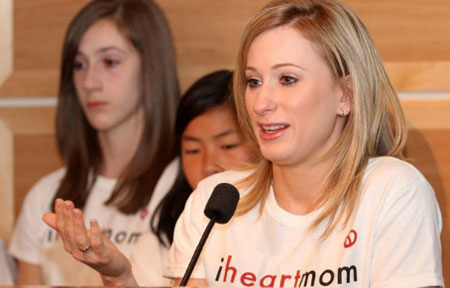
Just in time for Mother's Day comes this heart-filled piece of news:
One of the most memorable, and inspirational, stories from the recent Winter Olympics involves Canadian figure skating Joannie Rochette who took to the ice in Vancouver only days after her mother Therese, 55, died of a massive heart attack. Rochette, a petite, blond 24-year-old from Ile-Dupas, Que., won admirers the world over when she skated way to a bronze medal just days after her mother’s death.Rochette may not have won the gold medal in figure skating but she won the hearts of fans around the world with her incredible performance.
Rochette is now joining forces with the University of Ottawa Heart Institute to fight heart disease in women.
After her mother died, Joannie Rochette found a small, handwritten note in her purse. On that scrap of paper, her mother had jotted down the aches and pains she’d been feeling in the days leading up to her fatal heart attack.
Rochette’s mother had told no one her symptoms; perhaps she put her own troubles aside, feeling that nothing else was as important as her daughter’s fast-approaching Olympic figure skating competition.
“I just wish she would have talked to me about it,” Rochette said Saturday, when she spoke at the launch of the University of Ottawa Heart Institute’s new campaign for women’s heart health.
“She didn’t have time to talk to her doctor about it. She just ignored those symptoms. And when I read that, it just makes me so mad, that she kept it all to herself.”
Saturday, Rochette told more of her mother’s story at the launch of the “I Heart Mom” campaign, an initiative meant to raise awareness about the lifestyle habits that can lead to heart disease, as well as to raise funds for research and treatment.
Rochette spoke of how her mother picked her up after school to drive her to figure skating lessons; helped her with her homework afterward; and grilled her in spelling while she took her evening bath.
“My mom and I were really a team,” she said.
But while her mother encouraged good health habits for her daughter — nixing trips to McDonald’s, making her get enough sleep at night, and lecturing her on the perils of tobacco — she failed to adopt a healthy lifestyle for herself.
Dr. Robert Roberts, CEO of the Heart Institute, said he hopes to extend the legacy of Rochette’s Olympic performance to inspire all women toward greater heart health.
He said that, with current breakthroughs in genetic research, doctors and patients will soon be able to modify genetic risks, as well as lifestyle choices, to stave off cardiovascular problems.
Rochette said she hopes to continue to be a spokeswoman for the campaign for several years to come. And she is considering medical school after she finishes her CEGEP (first step of Quebec post-secondary education) this year.
She said that becoming a doctor has been a dream since she was a child, but one that she put on hold while she pursued competitive figure skating.
“I’m still very passionate and curious about the human body. It’s definitely something I’m very interested in, especially with the events that happened,” she said. “My mother always wanted to help others, but she never had the opportunity to study.”
The I Heart Mom campaign will also raise funds for projects related to womens heart health, including research, treatment and education. This week’s launch included the announcement that anonymous donors had contributed $100,000 to kick off the campaign.
Signs of Heart Attack in Women:
Women often experience the classic signs of heart attack. However, they may not respond in the same ways. The classic signs of a heart attack are:
• Chest discomfort or pain
• Pain in the arm, neck, jaw, or back
• Sweating and/or cool, clammy skin
• Nausea, indigestion, or vomiting
• Shortness of breath or difficulty breathing
For some women, chest pain may not be the first sign of heart trouble. These women report fewer common symptoms, such as unusual tiredness, trouble sleeping, indigestion, and anxiety up to a month before the heart attack. Women with diabetes often have more atypical symptoms.
Source: University of Ottawa Heart Institute
Related Posts:
Support women's sports and SHARE this story with your friends!
MORE ABOUT THIS AUTHOR:
Pretty Tough is the premier brand and media property providing high-quality, specialty content, products and services for girls who love sport, life &...
full profile
For more, visit jschonb's Full Profile
LATEST ARTICLES & POSTS
Fri at 1:53pm
Fri at 1:51pm
Fri at 1:45pm
Fri at 1:44pm
Thu at 1:53pm
Thu at 1:52pm
Thu at 1:48pm
Thu at 1:47pm
Wed at 12:52pm
RECENT COMMENTS
Great article but really not true; there are many players involved in the NPF that are not from the ...more
posted 08/26/14 at 1:28pm
on Softball Standouts Plourde and Prezioso Represent Atlantic 10, Exemplify Mid-Major Potential at Next Level

What she did I'd fantastic but she was still a good 14 seconds behind the winner and, really, the Ke...more
posted 07/22/14 at 4:04am
on 2 seconds, no finish clock picture, but satisfaction: Molly Huddle breaks her own AR

Does money make champions ! History have taught us that money does not means success overnight . Mos...more
posted 06/20/14 at 8:25pm
on Sparks need a change, but what kind?
congrats to Maria on her French Open win!!...more
posted 06/11/14 at 10:06pm
on Maria Sharapova Named The Face Of Avon Luck Fragrances
| SAUCUONY 500 MILE CHALLANGE |
| Daily Workout |

No one has commented on this yet. Be the first!