



Great article but really not true; there are many players involved in the NPF that are not from the ...more
posted 08/26/14 at 1:28pm
on Softball Standouts Plourde and Prezioso Represent Atlantic 10, Exemplify Mid-Major Potential at Next Level





posted by Pretty Tough
Tuesday, March 3, 2009 at 3:10pm EST
Pretty Tough is the premier brand and media property providing high-quality, specialty content, products and services for girls who love sport, life & style.
Support women's sports and SHARE this story with your friends!
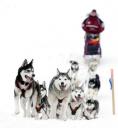 March 7 - 17, 2009. Since 1973, the world’s top mushers have gathered in Alaska to tackle the Iditarod’s 1,150-mile trail, which stretches from Anchorage to Nome, across mountain ranges, frozen rivers, dense forests, desolate tundra and windswept coastline.
The Iditarod Trail Sled Dog Race, known as the “Last Great Race”, is an annual dog sled race in Alaska, where mushers and teams of dogs cover more than 1,000 miles in less than two weeks, frequently through blizzards causing whiteout conditions, and sub-zero weather and gale-force winds which can cause the wind chill to reach minus 100 F.
This year, seventy-three mushers have signed up to run the race including 18 women. Keep an eye on some of the veteran female competitiors including DeeDee Jonrowe who has been mushing for over 20 years; Judy Currier, a member of the Two Rivers Dog Mushers; Aliy Zirkle winner of the Yukon Quest in 2000; and Oregonian http://www.rachaelscdoris.com/">Rachel Scdoris who is legally blind.
The youngest woman to compete in the Iditarod is 19 year old Melissa Owens and the oldest is 58 year old Nancy Yoshida. A Junior Iditarod was run last week for mushers 14 -17 years of age and this year the field boasted more girls than boys.
On the trail, every musher has a different tactic. Each one has a special menu for feeding and snacking the dogs. Each one has a different strategy — some run in the daylight, some run at night. Each one has a different training schedule and his own ideas on dog care, dog stamina and his own personal ability.
Some mushers spend an entire year getting ready and raising the money needed to get to Nome. Some prepare around a full-time job. In addition to planning the equipment and feeding needs for up to three weeks on the trail, hundreds of hours and hundreds of miles of training have to be put on each team.
The adventure starts this Saturday. Follow along at the official site of the Iditarod.
Fast Facts
Did You Know?
Iditarod dogs are not driven with reins, but by spoken commands. The leader of the team must understand all that is said to him and guide the others accordingly. An intelligent leader is an absolute necessity. At times it appears that there is ESP between musher and lead dog. Don’t be surprised if you hear a musher have an in-depth conversation with her lead dog.
Support women's sports and SHARE this story with your friends!
MORE ABOUT THIS AUTHOR:
Pretty Tough is the premier brand and media property providing high-quality, specialty content, products and services for girls who love sport, life &...
full profile
For more, visit jschonb's Full Profile
LATEST ARTICLES & POSTS
Thu at 1:53pm
Thu at 1:52pm
Thu at 1:48pm
Thu at 1:47pm
Wed at 12:52pm
Wed at 12:50pm
Wed at 12:17pm
Wed at 12:16pm
RECENT COMMENTS
Great article but really not true; there are many players involved in the NPF that are not from the ...more
posted 08/26/14 at 1:28pm
on Softball Standouts Plourde and Prezioso Represent Atlantic 10, Exemplify Mid-Major Potential at Next Level

What she did I'd fantastic but she was still a good 14 seconds behind the winner and, really, the Ke...more
posted 07/22/14 at 4:04am
on 2 seconds, no finish clock picture, but satisfaction: Molly Huddle breaks her own AR

Does money make champions ! History have taught us that money does not means success overnight . Mos...more
posted 06/20/14 at 8:25pm
on Sparks need a change, but what kind?
congrats to Maria on her French Open win!!...more
posted 06/11/14 at 10:06pm
on Maria Sharapova Named The Face Of Avon Luck Fragrances
| SAUCUONY 500 MILE CHALLANGE |
| Daily Workout |

No one has commented on this yet. Be the first!