

I got into Rugby because Track and Field was giving me compact injuries (stress fractures).
...more
posted 08/28/11 at 10:42pm
on Why did you start your sport? Answer & Win from Sport Science!





posted by All White Kit
Monday, August 8, 2011 at 1:27am EDT
All White Kit offers coverage of women's soccer around the world from a fan's perspective. AWK will feature the latest news, analysis, and commentary on the women's game. Match reports, scores, schedules, standings and opinion pieces will be on share. We aim to become a resource for any follower of women's soccer.
Support women's sports and SHARE this story with your friends!
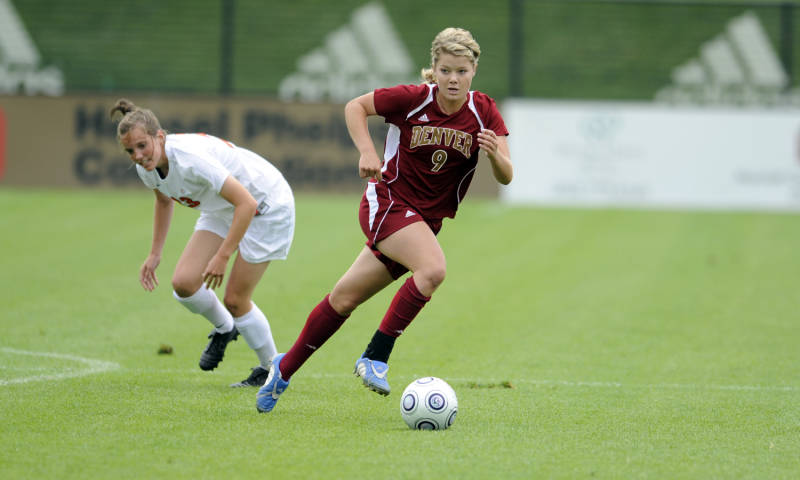
Denver Sharpshooter Kaitlin Bast - Aiming for More Trophies in 2011
The 2011 Sun Belt season effectively represents the end of an era in the league, as Denver prepares to sign off to head for the more lucrative clime of the WAC beginning next season. The Pioneers have ruled the Sun Belt with an iron fist for much of the past decade but were left stinging last year by likely being the last team left out of the Big Dance after losing on penalties to Middle Tennessee State in the Sun Belt Tournament final. It was a painful blow to such a proud program and one that should have the rest of the league on high alert as the Pioneers will undoubtedly have a point to prove heading into their last Sun Belt campaign.
While the Pioneers should open up as overwhelming favorites to retain their league title, the focus may shift to who the power will lie with once Denver is gone after this season. Last year’s Sun Belt Tournament champions Middle Tennessee State are a good bet with a powerful offense and some strong international recruiting ties. But other sides like North Texas, Western Kentucky, and Florida International also hold hopes of becoming the new power team in the Sun Belt. It should make for no shortage of compelling viewing this season, especially in the conference tournament where the unexpected has become commonplace in recent editions of the eight-team showpiece event.
But the road to a title undoubtedly goes through Denver this season, and it’s going to take something to knock a motivated Pioneers team off their perch in 2011.
(Teams listed in order of final 2010 RPI ranking.)
A lack of penalty taking nous has the derailed the NCAA Tournament hopes of countless teams over the years, but never so cruelly as it did DENVER in last season’s Sun Belt Tournament. Having won every match in Sun Belt play, no mean feat in a league of twelve teams, Denver had proceeded to dispatch its first two opponents in the Sun Belt Tournament. But despite battering Middle Tennessee State in the final, Denver couldn’t hit the back of the net in one hundred ten minutes and was forced to the lottery of penalties. The Pioneers’ winning ticket to that lottery didn’t come in. Selection Monday would bring more frustration to Head Coach Jeff Hooker and his team as they were left hanging by the committee.
It was the first setback in a long while for a program that has been soaring in recent seasons. Denver has undeniably been the Sun Belt’s flagship program over the past decade, with four league titles and seven Sun Belt Tournament crowns under their belt going into last season. The Pioneers were coming off four straight Sun Belt Tournament titles while also winning two of the last four league titles. Thanks to some treacherous regional draws though, Denver had found advancing past the opening round of the NCAA Tournament difficult, with only one appearance in the second round, after a 2006 win against Kentucky in round one.
But with a talented team returning in 2010, there was the hope that the Pioneers could once again give themselves an opportunity to shine on the brightest stage in November. The year started out with a close defeat at Loyola Marymount in a result that would loom much larger at the end of the season. But the Pioneers knew none of that as they went on a five match winning streak. They also likely didn’t know that two of those defeated foes, Colorado and Washington State, would slump to poor seasons. The Pioneers would taste defeat again on September 17 to UCLA despite a brave performance, falling 4-2 to the might of the Bruins.
It was the last time DU would lose in 2010. Denver would claim what they thought was another noteworthy scalp two days after the UCLA loss when they topped Purdue, 2-1. The Pioneers would run the table in the Sun Belt, winning all eleven league matches and shutting out nine of their eleven opponents. Denver would won two more matches in the Sun Belt Tournament before the shootout defeat to MTSU. The Pioneers would ultimately be left disappointed after the bubble contracted with a few upsets on Conference Tournament Title Sunday, likely knocking Denver out of the field.
Judging solely on the statistical profile Denver put together through the season, you might say the Pioneers’ resume was a bit thin, no doubt weighed down by the dregs of the Sun Belt. But judging with a little more common sense, it seems pretty astonishing that the Pioneers could have been left out at 19-2-1 (the best mark in program history), going 11-0-0 in league play, and coming a few penalty kicks away from winning the Sun Belt Tournament as well. Denver didn’t lose to a team ranked worse than #58 on the season in the final RPI.
The Pioneers weren’t even ducking anybody in non-conference play, with matches against four major conference teams and two more from the formidable WCC. How was Head Coach Jeff Hooker supposed to know three of those major conference teams were about to have truly wretched seasons? The contracts had likely been signed well in advance, when said teams had been in much stronger positions. Examining their case, it’s hard to think that the system didn’t fail the Pioneers last year. How can anyone justify leaving out a team whose biggest failing in fourteen league/conference tournament matches was losing a penalty shootout?
The end of 2010 should provide ample fuel to the fire for Denver coming into the new season, something that should send a shiver down the spine of every Sun Belt team. The Pioneers were likely already motivated by 2011 being their last season in the league before departing for the WAC, but they’ll now be extra incentive to right the wrongs of last season. Denver is quite simply a side overflowing with talent on both sides of the ball.
In particular, the Pioneers’ offense, already a lethal force last season, basically returns intact, a scary proposition for foes this season. Hooker boasts a lethal trio up front with Kaitlin Bast, Kalie Vaughn, and Kristen Hamilton all back to slice and dice opposing defenses this year. Bast has been nothing short of phenomenal in two seasons in Denver thus far and has a chance to rewrite the Pioneers’ record books before she leaves after next season.
After announcing her presence to the college soccer world in 2009 with twelve goals and seven assists, Bast was even better last year with fourteen goals and four assists. What’s remarkable is that Bast was able to do that despite taking twenty-four less shots last year. The junior hit the back of the net one in every four shots, a tremendous ratio at this level. Bast is just sixteen goals behind Kathly Conklin and Taryn Hemmings on the program’s all-time list and has an outside shot of breaking that record this year. The overall points record for Denver could fall next season. Bast brought home the Sun Belt’s Golden Boot with nine goals in the league, and the biggest threat to her repeating that feat this season could be one of her teammates.
Vaughn blossomed as a sophomore last year hitting double digits with ten goals and also adding eight assists. Vaughn would be a fine #1 option for most teams up front but is an excellent second banana behind Bast. Five goals in league play was a fine return for Vaughn, and she should be eager to improve on that haul this year.
If that wasn’t enough, the team also returns sophomore Kristen Hamilton, who had a star turn of her own last year with seven goals and eight assists, with four of those strikes being match winners. Hamilton took a bit of a backseat to her teammates in league play last season but was still second on the team in league assists with six. This tridente of Pioneer forwards could be one of the most prolific units in the league, or the country for that matter. The group also adds freshman Nikki Pappalardo to their ranks who was very impressive for the San Diego Surf club in ECNL action in the Fall, adding even more depth to stacked frontline.
That should be music to the ears of one of the budding great playmakers in the country, sophomore Nicholette DiGiacomo. DiGiacomo was very highly regarded coming to Denver, but even Hooker probably didn’t expect her to start dishing out assists in so comprehensive a manner as a freshman. The Golden, Colorado product was second in the nation with fifteen assists, including twelve in Sun Belt action. That former number is tied for most in a single season by a Sun Belt program. DiGiacomo went and added four goals to boot, making many wonder what she could possibly do for an encore. One thing’s for sure, she surely won’t have a shortage of targets to aim for with her precise passing.
Senior Bria Beardsley, a three year starter for Denver, also returns and should be part of the glue that keeps the Pioneers midfield together this year. Jessy Battelli, another member of Denver’s great freshman class of a season ago, also returns to the midfield for Denver. Kelsey Quinn, who started for much of the conference season, is the only loss in midfield but could be replaced by a big wave of talented newcomers. Chief among them is Boulder product Caitlin Higgins, who’ll be fighting for time with last year’s freshmen and senior reserve Kari Storslett.
It’s a good thing the offense basically returns intact, because the same cannot be said about Denver’s defense. A rough and rugged group that ruled the roost over most teams takes some big hits this year, with the biggest being the loss of Jessie Rogers. A three-year starter and four-year contributor for Hooker, Rogers has been one of the steadiest defenders in recent program history, and her leadership and composure will be missed along with her talent. Also departing are Megan Flannery and Alexis Hanks, leaving a major hole to fill on the backline for Hooker.
At least Denver can still call upon the vast talents of junior Katy Van Lieshout, one of the league’s very best defenders. Van Lieshout may be counted on to be the rock at the back this season for Denver, but she also showed an ability to get involved in the offense as well last season. The junior scored three goals with three assists on top of that, and all three of those strikes went down as match winners, showing Van Lieshout certainly has a flair for timeliness.
Beyond Van Lieshout, it’s likely to be anybody’s guess as to who’s on the backline. Sophomore Taylor Sims saw seventeen matches of action as a reserve, but it remains to be seen if she can make the step up to full-time starter. Pleasanton Rage product Paige Diamond is the jewel of this recruiting class, and if Denver’s recent recruiting form can be trusted, should be a big star in the Sun Belt this year and the WAC the next three years. Jacey Birtcher is another defender with big-time potential, coming from the same San Diego Surf team that brings the Pioneers Pappalardo.
If all else fails, at least the Pioneers can count on one of the best last resorts in the Sun Belt, with junior Lara Campbell patrolling the goal for Denver. Campbell has been excellent in her first two seasons with DU, and the junior keeper could pop up on some WPS radars for the 2013 Draft with another strong season or two. This year, Campbell figures to be a little busier than in past seasons though with a less settled backline in front of her. With that in mind, it’ll be more vital than ever for Campbell to be on form between the pipes for Hooker’s side this year. Junior Maria Khan has seen action in ten games, including three starts as a freshman, but is clearly Campbell’s understudy at this point.
Denver’s move to the WAC was met with something of a mixed reaction from many quarters. Some wondered aloud whether taking in a non-football school was a step in the right direction, while others closer to soccer wondered if the move from the Sun Belt was something of a lateral move. The WAC isn’t exactly known for being a soccer powerhouse after all. That move looks a little better with the addition of sleeping soccer giant Seattle to the league, but Denver’s RPI still isn’t likely to get a big boost by the move of leagues. What the smaller league will allow though is more schedule flexibility for the Pioneers in non-conference play. The move to the WAC also makes much more sense geographically for Denver, who always seemed like an odd fit for the Sun Belt.
All that aside, Hooker’s team will be ready and eager to go out as champions and lift the Sun Belt league and tournament titles one last time. It’s hard to envision many of their league opponents being able to stop Denver’s offense, meaning the Pioneers should be considerable favorites in the league despite the questions about their defense. If DU makes it into the Big Dance after a one year absence, they could be big trouble for teams with defensive holes or a lack of healthy respect for the Pioneers. And let’s hope if Denver is in the at-large pool and on the bubble going into Selection Monday they get the benefit of the doubt. Their fate after such a great season in 2010 was a shame. That fate turning into a trend would be even more of a shame.
Sometimes, it’s better to be lucky than good in the world of college soccer. That and having a knack for converting penalties in shootouts. Just ask MIDDLE TENNESSEE STATE who rode their proficiency at spot kicks to a first ever ticket in the Big Dance under Head Coach Aston Rhoden last season. Rhoden, a coach with a sub .500 record at DII North Alabama, certainly didn’t seem like the obvious choice when Middle Tennessee State were searching for a coach after the 2001 season, but the move has paid off and then some for the Blue Raiders. MTSU soon became a fixture in the top half of the league and brought home a Sun Belt league title in 2004.
Yet for all their regular season success, wins in the postseason constantly eluded the Blue Raiders. Going into the 2010 campaign, the program had failed to reach a Sun Belt conference tournament final and hadn’t won a match in the postseason since 2006. The 2010 season started out in uneven fashion for Rhoden’s side as the team went 3-3-0 in their opening seven matches with wins over regional minnows but also a disappointing loss to Evansville tossed into the mix. The Blue Raiders followed that though with a quality win over UAB on the road to get back on the right track.
A difficult stretch of four matches on the trot saw MTSU lose four straight, including a 7-1 thrashing at the hands of North Carolina and a much closer defeat to league rivals Denver back at home. With less formidable opposition in front of them in league play, MTSU went on a tear, winning nine of their last ten in Sun Belt play to finish in second place in the league. What was most impressive about the Blue Raiders’ late season form was their defense which kept five consecutive clean sheets going into the Sun Belt Tournament.
That streak would end in the Sun Belt quarterfinals against Florida Atlantic, but the Blue Raiders successfully avenged one of their two regular season league defeats by beating FAU, 3-1. Tournament hosts Western Kentucky would be the next to fall, the Hilltoppers going down on penalties after a 1-1 draw. It set up a title game showdown with Denver who MTSU had narrowly lost to in the league opener. Despite being on the back foot for much of the match, the Blue Raiders survived one hundred and ten scoreless minutes and then won the lottery that is penalties to win their first Sun Belt Tournament title and the automatic bid to the NCAA Tournament that went with it. Rhoden’s club were outclassed in the Big Dance by Florida State, but it took nothing away from the fantastic season that MTSU had just completed.
The Blue Raiders scored goals for fun in most of the team’s Sun Belt matches last season and largely rode the goals of leading scorer Vanessa Mueggler to the NCAA Tournament. The Canadian midfielder was a scoring machine in her senior season with twelve goals and seven assists. Twenty points from seven goals and six assists in league play were enough for Mueggler to win the Sun Belt scoring title and the NCAA Tournament berth ensured she ended her collegiate career on a high note. Though Mueggler’s loss is a big one, MTSU has more than enough firepower returning to cope with the loss.
Regina Thomas continued to impress as a sophomore, with five goals and seven assists to finish third on the team in scoring, right behind junior forward Whitney Jorgenson. After a solid freshman season in 2009, Jorgenson seized the moment in her sophomore season with the Blue Raiders, leading the team in assists with eight while finishing in second in goals on the club with seven. Additionally, Jorgenson’s four match winning goals tied her with Mueggler for the team lead. The junior attacker’s sixteen points in league play were good enough for third in the Sun Belt, and Jorgenson is again a threat to win the league’s scoring title.
The offense was so potent last season that Welsh senior Shan Jones wasn’t an automatic first choice for the starting XI despite scoring eleven goals in each of her first two seasons with the team. Mueggler’s departure increases the odds of Jones getting back to being a full-time starter, but even if she comes off the bench, she’s proven to be more than capable of turning a match on its head. Adding depth up front are Colombian Luisa Moscoso and Norwegian freshman Katinka Stenberg, adding to the Blue Raiders’ already healthy international contingent this year.
In midfield, keep an eye on junior Paige Goeglein, who was pointless in non-conference action but scored four goals in league play. Goeglein has developed a mini-reputation as a clutch player for the Blue Raiders with a pair of game winners last year to go with the winning penalties in the Sun Belt Tournament semi-finals and final. Rhoden will be hoping that Welsh midfielder Hope Suominen returns to form this year as a senior after starting just three matches last year. Suominen started every match her first two seasons at MTSU, so the quality’s there. Jessika Oseguera and Laura Lamberth also saw a good deal of starting minutes last season and will be expected to contribute likewise this year. A whole flood of freshmen will aim to provide depth this year for the Blue Raiders.
While the offense of MTSU should have every chance to keep plugging along, it could be a little more complicated on the defensive side of the ball. The backline loses a pair of starters, including Welsh international Fran Howells, who had established herself as a rock at the back over the past four seasons for Rhoden’s team. Juniors Allison Stallard and Charity Blair are the veterans of the defenders that return, while the Blue Raiders will also be hoping for the health of senior Elisabeth Sikes. Sikes was a frequent starter as a sophomore in 2009 and had started eight matches last season before going down to injury against North Texas. Unsurprisingly, most of MTSU’s newcomers this season are defenders, with Ashley Reveiz, a quick and versatile product out of Knoxville, seemingly most likely to make an early impact for the Blue Raiders. Sophomore Maddie Harper will also push for starting time after starting seven matches as a freshman.
Senior keeper Rebecca Cushing was the heroine for last year’s penalty kick heroics and has proven a competent shot stopper in her two seasons with the club. Cushing stopped two penalties in each of MTSU’s penalty kick triumphs last year in the Sun Belt Tournament and is one of the top keepers in the league. The only backup of record is sophomore Jessica Gilchrist, who missed all of last season through injury.
Rhoden has done a fine job in assembling an exciting and diverse squad with players from Wales, Canada, Norway, and Colombia on MTSU’s books. In the mad scramble for Sun Belt supremacy with Denver’s impending departure for the WAC, Middle Tennessee State is in a pretty good position to inherit top billing from the Pioneers. Mueggler and Howells are two big losses to overcome this season, but the Blue Raiders still has plenty of firepower and should be in the mix come the postseason where they showed plenty of ability to grind out results last year.
The frustration surely has to be growing in Denton as supporters of the Mean Green have seen NORTH TEXAS get bonked down the Sun Belt ladder in recent seasons. To be fair, frustration has usually been the order of the day for North Texas supporters with the exception of a dominant stretch in the middle of the decade when the Mean Green did the double in consecutive years in 2004 and 2005. Yes, North Texas has ridden the expertise of Head Coach John Hedlund to an amazing sixteen winning seasons in a row, a marvelous achievement in the turbulent world of mid-major soccer.
At the same time though, the Mean Green have earned themselves the unfortunate tag of being eternal bridesmaids in the Sun Belt. North Texas advanced to a whopping eight Sun Belt Tournament title games, a jaw dropping number when you consider the Sun Belt is a league with a three round tournament with no byes. But Hedlund’s team came up short in six of those tournament finals, losing five times to mortal rivals Denver at the final hurdle, including in three straight seasons from 2001-2003. While North Texas’ rivals have maintained their post near the top of the league in recent years, the Mean Green themselves have slipped away.
A second place finish in the league in 2008 was undermined by a Sun Belt Tournament semi-final loss, while UNT slipped to fourth in 2009 before being upset by eighth seeds Arkansas-Little Rock in the Sun Belt Tournament semi-finals once again. Fans in Denton hoping for a return to the glory days of tournament finals would be left disappointed yet again after 2010.
The Mean Green started out well against overmatched opponents, getting out to a 4-0-0 start before running into a horrific patch of form that saw them go 1-5-1 in their next seven, with that one win being over a poor Lamar team. They did manage to draw against a strong New Mexico team at home though, giving some hope going into Sun Belt play, hope that was tempered after North Texas lost their first two in conference play. Then, something happened to the Mean Green. Something great evidently, because Hedlund’s team reeled off six straight wins, all but one by multiple goals.
They stretched the mark to eight unbeaten before a regular season finale at Denver, where in true typical North Texas fashion, they were edged out by the Pioneers. In the grand scheme of things though, it mattered little as UNT was locked into the #3 seed win or lose, but it would be the Mean Green’s luck that they drew Western Kentucky, conference tournament hosts in the quarterfinals. North Texas ended up getting their doors blown off, losing 3-0 and going home after the first hurdle in the conference tournament for the first time in their Sun Belt history.
While it’s difficult to use the word ‘panic’ when you’re talking about a team that has strung together as many consecutive winning seasons as North Texas has, the general curve of the program is a little disturbing. The Mean Green have dropped in the RPI each of the past five seasons and have gone backwards in the postseason as well, now having gone three seasons without a trip to the Sun Belt final. Stopping the rot this season is key for North Texas, especially as the program tries to establish itself in the Sun Belt pecking order with the imminent departure of great rivals Denver.
But it’ll be a serious surprise if the Mean Green take another step backwards this season thanks to the returning talent that Hedlund has at his disposal for 2011. Specifically, Hedlund should have all but one of his starting field players from 2010 back for another go. This is a very good thing considering North Texas had one of the offenses and one of the best defenses in the league last season. While the Mean Green could be accused of padding their stats against weak competition in non-conference play, they certainly didn’t stop scoring once Sun Belt action rolled around.
The leading lady for the Mean Green is junior midfielder Ellen Scarfone, an equal opportunity scorer and creator for Hedlund’s team in 2010. Scarfone racked up seven goals and nine assists last year with four of each in league play. That goals tally is a little deceptive when you consider three of her goals were from the penalty spot, but there’s no watering down the assist count, and Scarfone should be a contender to hit double digits in assists this season.
Senior Julie Lackey was another who did most of her damage in non-conference play, scoring eight goals total though some came against very dubious opposition. Junior Carly McDowell was the polar opposite to Lackey, scoring all four of her goals in Sun Belt action to help galvanize the team through the grueling conference schedule. Kelsey Hodges scored a hat trick on her collegiate debut and cooled off a little in league play but was still a threat from midfield but may also be called upon in defense this year. The Mean Green must overcome the loss of Loreli Ramsey, who started nineteen matches as a freshman, and a few of the depth players in midfield. Junior Alicia Reyes and the freshmen will compete to fill the vacated minutes.
The rest of the side is overflowing with offense as well. Michelle Young kept up the impressive pace to the beginning of her college career, scoring eight goals and five assists and leading the Mean Green with fourteen points in league play. She tied for the team lead in game winning goals with the team’s overall goals leader, Hodges. Hedlund would love to be able to get senior Kelsey Perlman firing again as well. Perlman had eleven goals and four assists as a freshman but has only been able to hit for seven goals and four assists in the two years since. Another senior, Nikki Crocco, should provide depth. It’s clear that with all that firepower returning that North Texas should be able to outscore almost all of their conference rivals.
The defense should hold up pretty well too with everyone coming back on the backline from a formidable unit. The senior laden unit features Shannon Gorrie, Hannah Crawford, and Kara Brooks all coming back with a whole lot of experience on that backline. The team also adds Houston Baptist transfer Tori Adame, who started thirteen matches for the Huskies in midfield last year. Sophomore Allison Guderian also returns to the fold after being one of the Mean Green’s top subs last year.
North Texas’ Achilles’ heel? Goalkeeper. Reliable Mandy Hall gradautes and leaves a big void in her place. Haley Newsom is the only keeper with any experience on the roster going into camp and has only featured intermittently through two seasons. Recruit Jackie Kerestine figures to challenge her for the spot in camp.
The Mean Green should feel very optimistic about their chances this season with just about every key piece returning. The offense has the potential to be explosive, while the defense should be no worse than last year. The goalkeeping spot is obviously the big worry. If Hedlund can get steady play out of his netminder, North Texas might be in a great position to get back to the Sun Belt Tournament final. And maybe beyond.
Thomas Chestnutt took control of FLORIDA INTERNATIONAL at a point where the once proud program, winners of the double in 2000, had fallen into a real state of disrepair, finishing at a lowly #253 in the RPI in 2006. The first two seasons of Chestnutt’s reign was, quite frankly, not much better. In fact, despite higher finishes in the RPI, the Golden Panthers won fewer games in each year than in 2006′s doomed campaign.
And then stunningly, FIU came out of nowhere to win the 2009 Sun Belt title. Chestnutt’s squad showed some potential in the non-conference season, but few could’ve expected them to finish out Sun Belt play with a 9-0-1 mark after losing their league opener to Middle Tennessee State. FIU had won seven in a row to claim the title at the end of the regular season and entered the Sun Belt Tournament as a good bet to return to the NCAA Tournament by winning the league’s automatic bid.
But things went horribly, horribly wrong. Drawn against Arkansas-Little Rock, the league’s eighth place team, in the opening round, FIU were shocked, losing 1-0 in one of the biggest and most embarrassing losses in the history of the conference. The Golden Panthers had still done well, having won a trophy after all, but that dark cloud hung over them as they entered into 2010.
It looked as if FIU was still feeling the hangover from that shock defeat early on as they lost close matches to both SMU and Arkansas before they woke up and promptly won three of their next four against easier opposition. Any lingering doubts about 2009 were then washed away after a shock draw at Duke. With that momentum, Florida International won their first five league matches, with the first four of those being clean sheet victories.
Against some of the league’s upper echelon though, the Golden Panthers were found wanting, losing three in a row, including a 3-1 loss to Middle Tennessee State at home. FIU rebounded to win two of their final three in the league to seal up fourth spot and a return to the Sun Belt Tournament. They exorcized some postseason demons with a win over Troy before losing their second match of the season to Denver, 1-0. It was a little step back from 2009′s title winning season, but it was also a far cry from the dog days of the seasons prior to 2009.
Chestnutt will have to like his chances of moving the program further still with a great deal of experience and talent returning for the 2011 campaign. In forward Chelsea Leiva, the Golden Panthers boast the reigning Sun Belt Co-Freshman of The Year. Leiva earned that distinction with a double digit haul of goals in her rookie season, including five match winners and six goals in league play. Leiva’s fourteen points in the league season were good enough for a tie for fifth in the Sun Belt. Leiva will likely be the bread and butter going forward for FIU who are lacking in proven options spearheading their attack.
As you might have guessed by the International in the name of the program, the team does attract its fair share of international recruits. One of those internationals, Cayman Islands youth international Ashleigh Shim (by way of Kingston, Jamaica and then Jacksonvillle) should have a good chance of earning minutes in the rotation as soon as she steps on campus thanks to some blazing pace and youth international experience. A wild card could be Brazilian Thaisa Moreno who scored seven goals in 2009 but didn’t play at all last season. If she can find her way back onto the pitch, FIU’s offense figures to perhaps take another step forward. The only other returnee is Deana Rossi who was held scoreless last year.
The team is hit hardest by losses in midfield where the club loses Brazilian hammer Mayara da Fonseca Bordin and Kassandra Sorzano, who tied for second on the team in goals with five. The team does return sophomore midfielder Nicole DiPerna, who, like Leiva, was a big part of FIU’s success last year as a freshman. In addition to being an emerging leader, DiPerna will likely be asked to be a continuing contributor on offense after five goals and three assists last year, with three of those goals coming in Sun Belt play. Another starter in midfield coming back is sophomore Kim Lopez who started in seventeen matches as a rookie and had three assists to boot.
Unless the Panthers move some of their defenders up to the midfield, it may be up to the rookies or reserve Crystal McNamara to take a step up. The biggest worry the team likely faces going into 2011 is over the defense. FIU’s offense was good enough to keep up with the league leaders, but their rearguard was more middle of the road. Most of the group does return intact though and trades one international defender for another. Norwegian Linn Thune departs, but the Golden Panthers add Trinidadian youth international Shante Helwig-Correia to their ranks. Helwig-Correia has plenty of pace and is also a threat to get forward and aid the attack.
The defense is likely to be led by Canadian senior Victoria Miliucci, the best player of a group that kept eight clean sheets last year. Captain April Perry and fellow senior Cortney Bergin also return and give the Panthers a very experienced defense. A wild card could be senior Katrina Rose, a revelation as a sophomore in 2009 at center0back but reduced to being a bit player last year. If she can rebound, FIU might end up with one of the best defenses in the league.
Senior keeper Melanie Raimo was largely responsible for the clean sheet against Duke and will have to be on top of her game if FIU is to contend for another league title in 2011. Raimo got her starting job back after losing it before the 2009 season to backup Kaitlyn Savage. Savage missed all of last season but was the Sun Belt Freshman of the Year in 2009 and is more than a threat to Raimo’s starting job again. Regardless of who ends up between the pipes, this should be one of the best goalkeeping situations in the league.
Florida International’s title hopes largely depend on the broad shoulders of their offensive talisman, Leiva. If she can avoid a sophomore slump and hit double digits in goals again, the Golden Panthers may very well make a run at the league title. If not, FIU still has the capability to finish well up in the league but will probably end up short of silverware.
TROY has come a long, long way since they lost their first two games in program history to UTEP and North Texas, 20-0 and 22-0 respectively. A program that would have to wait until their twenty-eighth match to record victory, the Trojans have essentially been a coaching graveyard for much of their existence, with no coaches having seen more than four years at the post. It appears at long last though that Troy has found the right hand to lead the ship forward.
Current Head Coach Chris Bentley took over before the 2008 season and immediately set about building a solid foundation for the future. Results were slow in coming, but after being as low as #290 in the RPI in 2006, the steady progress was something of a relief. The hard work paid off last year as the Trojans enjoyed their first winning season since 2001. Losing two out of their first three matches, all at home, didn’t exactly reveal the team’s true talent level at the beginning of the season. But then, Bentley’s team promptly reeled off a seven match unbeaten run that featured six wins, including one at a neutral site over Georgia State who finished in the RPI Top 100.
Troy made a positive start to league play as well, winning three of their first four to put themselves right in the postseason race. A tough stretch saw the Trojans lose three of four, including beatings against league contenders North Texas and Denver, which left them needing results in the last three matches to advance to the postseason. Two wins out of those three contests was good enough to seal fifth spot for Troy, easily their highest ever finish as a member of the Sun Belt.
A rematch with Florida International loomed in the conference tournament, with the Trojans hoping to avenge a 2-0 regular season defeat. Things looked promising after a quarter of an hour with Troy taking a 1-0 lead. But the Trojans were outplayed on the whole and ended up going down 2-1 after an eighty-second minute goal by the Panthers. Still, at the end of the day, Troy had improved ninety-one places in the final RPI, making them one of the most improved teams in the entire country, even if the W-L-T record didn’t really reflect it.
In Troy’s case, the numbers may have lied a little about their Sun Belt success last year. The Trojans weren’t one of the league’s better offensive units. They didn’t defend all that well either, giving up almost a goal and a half in league play. You can’t fault Troy for being opportunists though and somehow finding a way to end up with a winning record. Bentley will have to cope with the loss of four starters though as his squad enters 2011. None is bigger than midfielder Jill Pinder who never quite matched her wonderful fourteen goal haul in her debut season with Troy in 2008 but was still a shining light for Troy. Pinder still managed four goals and two assists last year en route to becoming the program’s all-time points leader, and replacing her leadership doesn’t figure to be an easy task for Bentley.
Otherwise, a good deal of experience returns to the midfield for the Trojans. The team may have a budding star in Swede Cecilia Thorngren who figures to be in much better shape to contribute in her sophomore season after a five goal season which was mostly achieved in non-conference action. Sophomore Rochelle Bohuslavicky also returns after starting every match and having four assists as a freshman last year. Maddie Tieken also had three goals from midfield despite only starting a pair of matches for the Trojans.
The offense learned to not be so reliant on Pinder for goals though, and Troy reaped the dividends last year. The scoring duo of Ruth Sutcliffe and Mary Morris was one of the Sun Belt’s most formidable, and with both back in 2011, Troy looks to potentially have one of the conference’s most dangerous attacks. A Briton who came up through Newcastle United’s women’s team and an English U19 youth international, Sutcliffe immediately proved a hit for the Trojans, scoring nine goals and adding seven assists. With two more years of eligibility left, Sutcliffe is likely to break Pinder’s newly set career points record by the end of her time with the Trojans.
Senior attacker Mary Morris is more of a local product, hailing from Alabaster, Alabama and has been a steady scorer with Troy, upping her goal total every season, including last year’s eight goal tally. Morris was more of a provider in league play, leading the team with four assists in Sun Belt action. Depth comes from veterans Nikki Stamaris and Katie Cooper, in addition to the freshmen.
All that firepower might mask a defense which had issues last season and which loses a pair of starters from last year’s team. Junior Erin Cersley is now the veteran hand, while sophomore Sydney Eppler also returns after starting thirteen matches, though she was lost after just five league matches last year. Last year’s reserves will battle it out with this year’s freshmen, including Bristol Academy product Georgia Wallis for any remaining starting spots. Senior Ashley Branham figures to oversee things in goal, although she did lose time briefly to sophomore Caitlin Buono in goal last year in Sun Belt play. The team also adds freshman Kelsey Monahan to the mix this year.
Can Troy build on last season’s success and make a push for a finish in the top third of the league? The need to replace Pinder and a questionable defense raises questions, but Sutcliffe is a budding star and Morris isn’t half bad either. After such a big push up the standings, a year of consolidation may be needed for Troy, but with the impending departure of Denver, a void at the top of the league is all too apparent. Upon recent evidence, Troy might be a little closer to filling that void than many may believe at first blush.
WESTERN KENTUCKY has seemed to be on the verge of something special for the better part of their first decade of existence. But the Hilltoppers have had the misfortune of running into a team just a little bit better than them when they’ve had teams in contention for honors. 2003′s contenders ran headlong into a powerful Denver side. 2008′s team, who were on the fringes of discussion for an at-large bid in the NCAA Tournament, were also felled by the Pioneers in the Sun Belt Tournament after having previously vanquished their rivals on the road in the regular season.
2009′s runners-up in the league were eliminated in the very first round of the Sun Belt Tournament on penalties by Arkansas State, a team they had beaten in league play, 4-0. Most traumatizing of all came in the one season in which the Hilltoppers did bring home silverware, 2007. Western Kentucky did well to pip their rivals to the league title despite losing to Denver on home turf after extra time in the regular season. But a rematch never came as the Hilltoppers crashed out in the semi-finals of the Sun Belt Tournament to North Texas, 3-1.
There wasn’t any need for hand wringing about WKU’s status as the almost women of the Sun Belt last season though, as the Pioneers were safely marooned in mid-table. WKU started out 2010 indifferently, with one just one win in their first six, over a lowly Evansville team while also suffering a demoralizing loss to Ball State and equally putrid draw with regional minnows Eastern Kentucky. The Hilltoppers acquitted themselves well in the first weeks of league play, winning three of four, with a loss to rivals Denver the only blight on their early league CV. WKU then slipped up against Florida International before building confidence with three straight clean sheet victories in a row.
But any illusions of a high seed in the conference tournament went out the window as WKU collapsed down the stretch, losing their final three matches in the regular season to finish in a tie for fifth in the league. Hosting the Sun Belt Tournament always meant that the Hilltoppers would have an outside chance at lifting the league’s tournament title and sealing the program’s first NCAA Tournament bid. The magic certainly seemed to be flowing in the first round of the tournament as WKU throttled North Texas, 3-2. But after a 1-1 stalemate against Middle Tennessee State in the next round, the Hilltoppers were bounced on penalties, ending their first season without double digit wins since 2005.
Program patriarch Jason Neidell will like his chances of leading WKU back up the Sun Belt standings in 2011 with just about all the major contributers returning to the fold. Heading that push towards success will be one of the league’s best forwards in Canadian youth international and senior Mallory Outerbridge. Outerbridge had been a deadly force for WKU in her first two seasons in Bowling Green (interrupted in 2008 by the U20 World Cup) but began to really come into her own last season with ten goals and four assists, including four tallies in league play. Outerbridge spent her summer playing for the Ottawa Fury in the W-League and won the summer league’s Golden Boot by a fair margin en route to also picking up the league MVP award. The Canadian will be looking to close her college career with a bang, knowing another goal tally in double digits would go a long way in boosting her side up the Sun Belt table.
A secondary source of goals is badly needed though for WKU. Florida transfer Laura Ray could have done a job for the Hilltoppers but departs after one season and a paltry two goals. Midfielder Sydney Sisler and super sub sophomore forward Chelsea Smith were the only others to score multiple goals in league play, but the former isn’t really proven in front of goal, and the latter was another early departure. The duties might fall to a freshman or senior reserve Lindsey Goad, who had five starts but was held goalless last season. Neidell will also be praying for good health for fifth-year senior Amanda Buechel who scored seven goals and added seven assists in 2008 but has missed the last two seasons through injury.
The midfield, though not exactly a goalscoring machine, could be the team’s strength this year. Besides the solid Sisler, the team also returns starters Torrie Lange, Kelsey Meyer, and Courtney Rymer. A handful of dependable reserves also return, meaning while this unit isn’t packed with stars, it is among the deepest in the conference.
But the lack of varied options in front of goals means that the Hilltoppers’ success may ultimately rely on tightening up a defense that was just a tick off the pace of the top sides in the conference last year. Fortunately for Neidell, he has some talented pieces to build around in defense. Senior keeper Libby Stout enters the year as a fringe WPS prospect and unquestionably in the upper echelon of keepers in the Sun Belt. Expect another strong effort in goal from Stout as she tries to work her way up the draft board in her senior season. There’s little to no experience behind her, so Stout should be in between the pipes for all or close to all of the season this year for the Lady Toppers.
The back line will be ably led by fellow senior Kaylyn Pratt who traded in a spot leading the WKU line in 2009 (and scoring seven goals) for marshaling the Hilltopper D last year. The group returning is relatively experienced, with only part-time starter Chelsea Grover getting serious minutes amongst the departures. With Ali Stahlke, Katrina Ott, and Sarah Sweeney all also returning, this should, like the midfield, be one of the deepest units in the league.
There won’t be too many teams that benefit more from Denver’s imminent departure for the WAC than Western Kentucky. The Hilltoppers have a solid unit this year too though and should climb back into the upper crust of the league. The main question is if they can get someone other than Outerbridge firing and keep their star from being swamped by opposing defenses. But if Outerbridge keeps firing at her W-League pace this season, it’s not likely to matter against most Sun Belt teams. And if WKU does find more offense, who knows what could happen this year?
LOUISIANA-LAFAYETTE has been stumbling around in the nether regions of the Sun Belt for the better part of a decade. Never really coming close to a league title, the Ragin’ Cajuns have also had the unfortunate luck of having never won a postseason game in their existence. ULL’s ride has only gotten rougher as the years have passed and the Sun Belt has expanded. The Ragin’ Cajuns are no longer guaranteed an automatic berth in the Sun Belt Tournament and had missed consecutive tournaments in 2008 and 2009, culminating with 2009′s atrocious 2-16-1 record that saw the team go 2-9-0 in league play.
With not a lot of room to sink further, ULL instead rebounded in respectable fashion to a ten win season, their first season ever with double digit wins. Louisiana got off to a fast start by winning three of their first four over relatively tame opposition before running into a wall against tougher opponents, losing three of four before beating Southeastern Louisiana on the road for a very good result. Sun Belt play was a roller coaster ride for the Ragin’ Cajuns with home victories largely negated by a pair of three match losing streaks.
ULL needed points in their final two matches to ensure themselves of a spot in the postseason by finishing in the Top Eight of the Sun Belt. With the season quite possibly on the line against Florida International, the Ragin’ Cajuns gutted out a 2-1 victory for a crucial three points. As it turned out, ULL didn’t need points against state rivals Louisiana-Monroe but went ahead and got all three anyway with a very convincing 6-0 win over their woeful rivals. As eighth seeds in the conference tournament, ULL met up with league champs Denver and gave the Pioneers all they could handle before eventually succumbing to a seventieth minute goal in the 2-1 loss. The Ragin’ Cajuns may still be looking for their first postseason win, but they recaptured some of their pride last year after the nightmares of 2009.
They’ll need more than pride though in 2011 in the face of what appears to be overwhelming losses due to graduation. Making things worse for Head Coach Scot Wieland, entering into his seventh year at the helm, is the fact that most of the losses seem to be concentrated in the attack for the Ragin’ Cajuns. The program loses three of the top four scorers from the 2010 edition of the team, including Chelsea Balestra who was clutch for ULL in Sun Belt play, with six goals and an assist, including a pair of game winners.
The team leader in that category, Kelli Jestes, is also gone after seeing three of her five goals be match deciders. The other big scoring loss is Courtney Hofland, a midfielder by trade, who was the team’s assist leader with five but also knocked in three goals for her efforts. In all, six starters depart for ULL, leaving a very big hole to be filled if they are to contend in 2011. The hope has to be that Cayla Chatman can step up into a starting role up front after playing the role of super sub so well last year, tying Balestra for the team points lead despite only starting four matches. Only three of those goals came in league play though, so the jury is still out on whether Chatman can keep firing through the grind of Sun Belt play.
Beyond Chatman, the offense may be left in the hand of a group of light scoring reserves who didn’t do a whole lot of scoring and may need to take a big step forward to make an impact. If they do not, the team might have to lean on incoming freshman Samantha Taylor. Taylor, a speedy Canadian youth international at the U17 level, may be a big part of the offense from the get go, regardless of Chatman’s involvement. The team also adds in Harford CC transfer Erin Lynn, a JUCO All-American last season. Lynn has lit up the competition the last two seasons and will be hoping to get in amongst the goals early for her new club.
The midfield is also largely a mystery with the numbers being made up of mostly reserves from last year and newcomers. Junior Kayla Henrie might be the leader of the bunch after making fourteen starts last year for the Ragin’ Cajuns. Melissa Minton and Brooke Perry also saw starting time for ULL last year, with the latter likely to have seen more time had injury not intervened early in the year. The unit welcomes more than its fair share of newcomers, including UAB transfer Stephanie Henderson.
With the degree of offensive uncertainty coming into the season, Wieland might have to bank on his defense to carry the team this season. That might be a problem considering the rearguard was hardly the most airtight for much of last season. They do get just about everyone back for 2011 though, so Wieland will have to hope that the defense improves with a little more continuity. Seniors Allison Baker and Megan Riley join junior Gayla Foster as returning major contributors to the backline. While the continuity could prompt an upswing, there’s little depth evident, so the unit will need to avoid the injury bug.
In goal, Amanda Moorefield looks like the undisputed starter after making a successful comeback from a serious 2009 injury. Moorefield started almost every match for ULL last season, and the transfer of Lauren Berlingo to Gonzaga means she should have the spot all to herself this season. The backup is true freshman Rebecca Barton out of Texas.
Even if the defense ups their game, it’s difficult envisioning the Ragin’ Cajuns making any move up in the Sun Belt hierarchy given the heavy losses on offense. For ULL to have any impact in the league this year, they’ll have to hope that Lynn and Taylor can reinvigorate the offense along with Chatman. Getting back to the postseason again with such a degree of offseason turnover could be seen as a successful 2011 campaign for Wieland and Co.
On one hand, Head Coach Brian Dooley was the mastermind behind FLORIDA ATLANTIC‘s rise to the top of the Atlantic Sun, culminating in 2005′s Atlantic Sun Tournament title and the program’s maiden voyage into the NCAA Tournament. On the other hand, Dooley’s also been behind the controls as FAU has slipped from prominence into another also-ran in the Sun Belt after the Owls stepped up in class in the middle of the decade and switched conference affiliations.
While the program was able to hold its own at the beginning of their Sun Belt experience, nestling into upper mid-table, recent seasons have brought diminishing returns, culminating in 2009′s 5-12-3 mark as the program missed the postseason for the first time since 1998, extra humiliating since the Sun Belt takes eight teams into their tournament. Last year brought something of a recovery, albeit a marginal one by most measures.
The Owls started out 2010 horribly, losing their first six matches and letting in goals by the bushel, including somehow shipping four to state rivals Stetson. Also in that stretch was a brutal 1-0 loss to Robert Morris on home turf. A win over Fordham in their final non-conference match seemed to start a turnaround that brought about a crushing 6-0 win over Arkansas-Little Rock in Boca Raton. But the real Owls showed up as FAU lost five of their next six, proving weary road warriors as they lost all four on the road in that stretch including getting blitzed by North Texas, 5-0.
Backs against the wall, FAU needed wins to be ensured of postseason action and responded with two victories over the Louisiana Sun Belt schools before dropping their state derby with fierce rivals Florida International. It was all good enough to make it back into the Sun Belt Tournament, but the Owls went down with a whimper to eventual tournament winners Middle Tennessee State, 3-1, in the quarterfinals.
If Dooley wants to stand any chance of contending in the Sun Belt this season, he’ll have to set about fixing a defense that leaked goals left and right in 2010. Making this task harder will be the fact that FAU loses its best defender of recent seasons in Janelle Blake, who managed to earn Second Team All-Sun Belt honors despite featuring on the Owls’ porous defense. The team also loses three reserves who totaled fifteen starts last season, meaning depth in the backline may not be ideal.
The Owls do bring back three players who saw major starting time last season though, including junior Breanna Lewis, the only FAU player to start in every match for the side. Full-back Emily Kelly started every match in league play, while Gabriela DeVries had a pair of assists last season. A recruiting coup might help speed up the transition and improvement for Dooley’s squad. Amongst the local heavy recruiting class comes rough and tumble Canadian defender Yazmin Ongtengco-Hintzen from Whitby, Ontario. The young Canadian has been a long time member of Canada’s youth setup and was a starter on the U17 World Cup squad. She should become an instant factor in the Owls’ defense and help shore up last year’s forgiving unit. The team also sealed a major coup in picking up North Carolina transfer Olivia M’Bala in the offseason. Another Canadian youth international, M’Bala could become a key figure for the Owls over the next three seasons.
Sorting out the goalkeeping situation would help also. Junior Ashley Lantes looked to be locked into the starting spot early but lost her job to Courtney Zwetsch as the season went on. Zwetsch, a sophomore, figures to have a leg up going into camp, but the situation could still be in flux as the season begins.
There is talent going the other way though. The team might have one of the best young corps of attackers in the conference. Sophomore Jesse Shugg came down from Canada and was a breakout star for the Owls’ in her first year, scoring seven goals, including five in league play to pace the team. With three more years left, Shugg could very well turn into one of the team’s best offensive threats in a long, long time. Allison Griffin, a South Florida transfer, was also red hot, scoring four goals in Sun Belt action while also adding three assists in league play. The team also returns Marisa Russo who led the team in assists last year with four despite an off-song Sun Belt campaign. Brittney Nash will also be fighting for time after scoring four goals as a freshman. The Owls do have to deal with the early departure of Alexandra Major, who started eighteen matches and tallied eleven goals as a freshman last year.
The midfield does look a bit worrying, especially after the graduation of key figure Anhnhi Tran. Converted forward Jamie Greany looks like the veteran hand after thirteen starts last season, but the unit on the whole is missing a lot of proven producers. This area of the pitch also gets a transfer boost, with Florida State refugee Lindsey Rice coming aboard. Rice joined in time for the Spring and should be well acclimated to the Owls’ system by the start of the season.
Blake, Major, and Tran are tough losses going into 2011, but the additions of Ongtengco-Hintzen and M’Bala could be big ones both in the short-term and down the line. The offense should keep ticking over after last year’s promising display, meaning any defensive improvement could see FAU rocket up the Sun Belt table. It’d be a welcome change for a side that was used to finishes near the Top 100 of the RPI but who has been plumbing the depths of the 200s in recent years.
A ghastly defensive record in conference play was ARKANSAS-LITTLE ROCK‘s undoing in a disappointing 2010 campaign that ended short of the postseason. It likely was not what Freddy Delgado expected nor wanted in his third year at the helm of one of the Sun Belt’s historical underachievers. Delgado had taken over before the 2008 campaign when it had appeared that the program was finally beginning to show some signs of life under previous coach Greg Hess. The Trojans had just completed their first non-losing season since 1988, capped off with a seventh place finish in the league. But Hess abruptly resigned, and the Trojans tabbed the ex-Louisiana Monroe assistant as the new head of the program.
2010 had begun with such promise after the way 2009 had ended. Just a season before UALR snuck into the Sun Belt Tournament as they have usually done in the past few seasons. But UALR stunned the college soccer world by upending regular season champs Florida International in extra time. And then they went on and beat North Texas to reach the Sun Belt title match. They went down to Denver in the final, but for the first time in a long time, there was a pulse to Trojans soccer…and then last year it was gone again.
Three heavy losses had UALR on the back foot from the word ‘go’ in 2010, but the team rebounded well to win four of their next six. It proved to be a false dawn though, as Delgado’s team lost their first four Sun Belt matches and six of seven in the league, including a woeful 6-0 display against Florida Atlantic and a 3-0 revenge defeat against FIU. 2-1-1 in their final four was good enough to ensure that the Trojans were the best of the rest in the Sun Belt, but ninth was hardly good enough for a program that had showed faint glimmers of hope during a magical run in the postseason in 2009. The challenge now is to rebound when expectations are once again non-existent for the program.
Attrition doesn’t look to take much of a toll on the Trojans for 2011, with UALR only losing two players from last season’s squad through graduation. Or at least that was the case on paper before early defections took their toll in the offseason, robbing the team of four more players who saw a modicum of time on the pitch. When you’re running with a skeleton crew like Delgado was last year (nineteen rostered players), any losses are tough to absorb. More so when among the departed are players who were key cogs in the first team.
Goalkeeper Jane Picarelli was a constant for the Trojans in goal over her four years in Little Rock and often saved her best for UALR’s postseason forays. Picarelli was usually kept very busy by her defense’s sieve-like qualities, and the new starting netminder can expect a likely barrage of shots coming her way. Junior Michelle Pittman saw relief duty in five matches last season but will have to hold off incoming Dutch freshman Rebecca Clements to win the job.
The other big loss is midfielder Danielle Dunsworth who started every match for UALR last season and was second on the team in assists with four. Getting three players who scored six or more goals in 2010 back has to create some optimism for Trojan fans though. In midfield, Christina Veasley came back down to Earth in 2010 after an explosive twelve goal campaign in 2009. UALR needs big things out of the senior after a six goal outing last year if they want to contend for a spot in the postseason. Taylor Gabbert may also be depended on for goals after the senior busted out for six goals of her own last year in spot-starting duties for the Trojans. Kristen Semko, Rachael Maina, and Holly Holland also return in midfield after seeing significant starting time, and though some in this group may see time up front or on defense, it is on paper one of the more promising midfields in the league.
Up front, Adrianna Queen was a hit in her first season for UALR, leading the team in scoring with seven goals and two assists despite just starting eight matches. Given Queen’s propensity for scoring and scoring timely goals at that (three match winners), Delgado really needs to find a way to get the sophomore involved on a more frequent basis. For her part, Queen also needs to start scoring against the league’s bigger teams, as most of her goals came against the league’s lower lights. Kamiya Merrick should also return to the fold up front after missing all of last year through injury. In addition to the freshmen, Gabbert, Holland, and Veasley could also see time up front for UALR.
More than likely though, UALR’s main worry will be keeping the ball out of the back of the net. Shipping forty-eight overall on the year probably wasn’t good for Delgado’s blood pressure, and his team had the league’s worst defensive record after Louisiana-Monroe’s. There is room for improvement this season. Starters Olivia Carrasco, Jacquelyn Paz, and Aubrey Tafoya all return to the backline, with Paz a threat to help out the offense as well after six assists a season ago.
The team will be hoping to get a full season out of seior Megan Zollinger as well. Zollinger came to UALR as a JUCO All-American but missed half of last season through injury. Delgado and his charges have to hope that physical freshman Kailey Holloway lives up to her press clippings and can step in immediately to fortify the defense. The team also adds another JUCO transfer, Jenna Brady, to what looks like a deep unit.
Arkansas-Little Rock looks like they’ve got plenty of punch going forward in 2011. Whether they can stop anyone is another matter entirely and will likely decide if they make a return to the postseason this year. The defense has the capacity for a big step forward with all the ingredients returning and newcomers though. Anything less than a spot in the postseason will have to be seen as a massive failure.
Up to now, ARKANSAS STATE‘s calling card has likely been their odd proficiency at taking epic beatings in the Sun Belt Tournament. Back when the league wasn’t at a bulky twelve teams and everyone or almost everyone qualified for the postseason, the Red Wolves were a frequent victim of lopsided losses in the Sun Belt quarterfinals. 6-0 to North Texas in 2000, 10-1 to North Texas again in 2003, 5-2 to Middle Tennessee State in 2004…postseason play hasn’t been kind to ASU. In fact, the program has only won once in the postseason, and even that wasn’t technically a win, the Red Wolves prevailing on penalties over Western Kentucky in 2009.
Former coach Derek Pittman had struggled in his first two seasons in charge, but had made a big improvement to 8-10-3 in 2009, the closest the program’s ever been to 500. But Pittman shocked everyone in the offseason by accepting an assistant position at Gonzaga, necessitating another change at the top for the Red Wolves. In came Tafadzwa Ziyenge, who arrived from Alabama-Huntsville with a modest resume.
The program was entering 2010 with a little bit of momentum having advanced in the Sun Belt Tournament for the first time in 2009 and the hope was that the team could string together consecutive postseason appearances for the first time since 2003-2004. Instead, ASU slid back down the table, stuck once more in the bottom tier of the Sun Belt. The Red Wolves were plagued by inconsistency to the point that they were consistently inconsistent.
ASU started out like a house of fire in 2010, going 4-1-1 in their opening fixtures, including a big win over Louisiana Tech but also a bizarre loss to Belmont. Ziyenge’s charges then unexpectedly hit the skids, losing seven in a row, and not scoring for five straight matches at one point. The Red Wolves got themselves back postseason contention in with a shout after three straight 2-1 wins but then dropped their last three matches to end up six points short of the Top Eight. To make matters worse, the team lost to rivals UALR for the first time since 2006 to end the year.
The goal obviously has to be to better their all-time league high of sixth place, a mark that stood for a long time until ASU tied it in 2009. One thing’s for sure. Ziyenge’s not going to be able to use inexperience as an excuse for a lack of results in 2011. The Red Wolves return almost every player who saw major minutes last season.
ASU emerged from Sun Belt play last year with a mid-table defense that usually kept the team in it just long enough for the offense to misfire and shoot blanks. The offensive woes absolutely killed this team in league play, as they only conceded more than two goals once in Sun Belt action in, ironically, one of the few matches where the offenses was firing in a 3-2 loss to Louisiana-Lafayette but were shutout six times in conference matches.
Seniors Michele Clark and Kara Nitti will likely be the program’s best hope of goals in 2011. Clark, a midfielder, led the team in scoring last year with six goals and two assists but like most of the rest of the team went ice cold in Sun Belt play, only managing one goal. Still it was an impressive showing from the senior who hadn’t shown a great goalscoring streak in her two previous seasons at ASU. Nitti fared a little better with two of her five goals in league action but still flitted in and out of the starting lineup all year. As one of the few players on the team to show any kind of goalscoring touch, she’ll need to up her consistency and stay in the starting lineup if ASU are to flourish.
Kelsey Finders also had a pair of goals in Sun Belt play to tie for the team lead, but was shutout in non-conference action. It’s hoped that perhaps with another year to settle after her transfer from Missouri State, Finders could up the output this year. Ziyenge will also be hoping for a rebound year out of junior Ashley McMurtry. The Texan had four goals and eight assists as a freshman but was corralled and held to just two assists in ten starts last year.
The midfield lost a whole lot of its depth in the offseason after early defections but does return two experienced campaigners in addition to Clark, in Lizzy Biles and Lyndsey Patterson. The Red Wolves will also hope that Tory Pitts, a major contributer in 2009, is back to full-strength after being limited to just three games last year.
The defense was steady if unspectacular and have a chance of improving with all contributors but Miranda Wiley likely to be back in 2011. The group is still relatively young, with freshmen and sophomores making up most of the numbers. A notable exception is Stasha Siers, a senior who has started all but one game in the past three years of her ASU career. She’ll be more important than ever with what still looks like a young defense around her.
In goal, Megan Stoltzfus and Susan Brown split time last season with Stoltzfus eventually seeing most of the minutes come Sun Belt play. Brown is gone, but that doesn’t necessarily mean Stoltzfus will have the job all to herself. Canadian transfer Aja Aguirre comes from Douglas College in Vancouver and should compete for the starting job from day one.
Ziyenge is already showing a willingness to scour the international market for recruits and will be rewarded in 2011 with the addition of Canadian defender Blayne Laing and Swedish forward Jessica Jingblad. With so much experience returning, it’s tough to count ASU out of challenging for one of the eight spots in the Sun Belt Tournament if the forwards find their shooting boots. Anything much more than that though would be a mild surprise.
It didn’t take long to realize that it probably wasn’t going to be SOUTH ALABAMA‘s year. Precisely ninety minutes to be exact. The Jaguars likely expected an easy time of it against SWAC side Jackson State. Instead, USA crashed to a 1-0 defeat to the eventual SWAC Tournament champions. While it wasn’t an upset for the ages, it was still a match that a team like South Alabama should have won. Further humiliation ensued two days later when the Jaguars were ripped to shreds by LSU, 8-0. A cathartic win against Alabama State wouldn’t do much to ease the pain of two more losses before a decent win against Sam Houston State and a very good draw against a strong Georgia State team.
The result against Georgia State at least showed that the Jaguars were capable of competing with most teams on any given day. Heading into the Sun Belt’s marathon season, that knowledge gave USA a little hope of getting back to the postseason. Those hopes looked well founded after opening up league play with two wins out of three. But then the Jags lost six straight to put their postseason hopes on ice for another year. USA’s final win of the year against Western Kentucky on the road was a frustrating denouement to the season for the Jaguars. They were good enough to beat many of their Sun Belt rivals but just couldn’t perform on a match-by-match basis.
South Alabama, 2000 co-conference champs, have now missed the postseason the last two years and haven’t won a postseason match since 2005. All of which must make Mike Varga a very nervous man prowling the USA touchline in 2011. Entering into year thirteen of his reign over the Jaguars, the program seems no closer to making the NCAA Tournament then when he started at the school over a decade ago. The last three seasons have been especially egregious after the team went 9-8-3 in 2007.
You probably needed a scorecard to keep up with the Jags in 2010, as the team used an unbelievable twenty-eight players, including starting twenty-one of those players, in an effort to find something that worked. Needless to say, the chopping and changing was met with only limited success. The good news is that Varga should get a chance to hit the bullseye selection-wise with most of those players again in 2011.
The 2010 Jags only had a pair of seniors, although both were fixtures in last year’s starting lineup. Liz Clarke started all but one match for USA, while Kasey Crowe was the leading goalscorer with six despite being listed as a defender on the official roster. Much of the goalscoring burden her departure leaves will likely be taken on by sophomore Kristyn Thacker, who made a real impact in her first year in tying for the team’s points lead with five goals and three assists, and Brandi Smith, who will be looking to move into the starting lineup full-time in her senior year after scoring four goals in just nine starts. Smith has seen her production steadily decline since a thirteen goal freshman year in 2008 but will be looking to go out with a bang. Sophomore Linsey Snavely also bears watching after exploding for seven assists as a freshman. Reserves Natalie Parsons and Lizzie Goldsmith will likely battle top recruit Shawna Trunca for remaining minutes.
The midfield fell victim to all the chopping and changing more than any other unit and possibly destabilized the squad in the end. The most experienced returnee from last year is sophomore Clarissa Hernandez who started twelve matches and picked up a pair of goals and assists each. Among the other returnees, Kayla Conrad scored twice last year in league play, while Tina Schaar had three assists in the 2010 campaign. If Varga can settle on a consistent lineup in the midfield, the Jaguars are likely to benefit.
Regardless of the firepower at Varga’s disposal, the Jaguars won’t be winning too many games if they replicate the sieve-like defense they played with far too often in 2010. This group however returns somewhat intact, with just about all the starters from last year coming back. Sophomores Shelby Owen and Jessica Oram both started every match as freshmen, with the latter recording three assists as well. Landi Wilson looks like the veteran hand of the group, the senior being a starter for most of her three years in Mobile so far.
In goal, South Alabama will likely head into the season with sophomore Melissa Drish as the team’s starter. Drish started almost every match in goal for the Jags as a freshman, which was mildly surprising since Tennessee Tech transfer Kaitlyn Thacker was also on the roster. Thacker had been a major presence for the Golden Eagles in 2008 and 2009 but only saw very brief time in goal in the blowout against LSU. She could yet wrest away the starting job this season though.
Varga’s got a lot of experienced hands coming back on deck for 2011 meaning a spot in the Sun Belt Tournament has to be the bare minimum expectation for the season. But though the long time boss has plenty of familiar faces coming back, most of those players still struggled mightily in the Sun Belt last season. Postseason qualification is desired but far from guaranteed in Mobile this season.
On September 4, 2010, LOUISIANA-MONROE was 2-2-0 after wins over Central Arkansas and Centenary and looked like they could possibly sneak into mid-table in the bloated Sun Belt conference. They wouldn’t win another game all year. It’s the latest depressing turn of events for a program that was once, while bad, still vaguely respectable. It hasn’t been that way the last three seasons as the Warhawks have sunk deeper and deeper into the mire, culminating with last season’s dip past the three hundred mark in the RPI, bookmarking ULM’s name amongst the worst of the very worst in DI.
The Warhawks have only been playing in the Sun Belt for soccer since 2006, and it hasn’t really been a happy life in the conference for ULM. The Warhawks entered 2010 having not qualified once for the postseason in the Sun Belt, a jarring fact considering the twelve team league takes eight clubs to the postseason.
Last year, once league play rolled around, it became obvious that the Warhawks were plainly a horrendous team. After a battling 1-0 loss to Troy in the SBC opener, the team lost three straight matches by a 4-0 count including one to a poor South Alabama team at home. The last five matches were particularly embarrassing for ULM, losing each by multiple goals, including a 6-0 derby loss to Louisiana-Lafayette that will likely stand as one of the worst losses in program history.
Then again, losing hasn’t exactly been foreign to this ULM side who also only managed two wins in 2009. It’s been a steep decline since the relatively giddy heights of an eight win 2007 season. The Warhawks have only equaled that total over the past three years combined. Which makes the continued patience with coach Stacy Lamb all the more puzzling. Lamb didn’t just inherit this mess overnight, she’s been at the helm for a solid decade now with the program looking like the remnants of the Titanic for most of the past half-decade.
Quite frankly, ULM were brutal at both ends of the pitch in 2010. Junior keeper Alex Holland must have felt like she was in a shooting range given the volume of shots she faced in the Warhawks’ woeful year. The keeper ended up conceding fifty-six of the fifty-nine ULM shipped in 2010 but seems to be the pick of the keepers going into 2011 after playing all but ten minutes last season in goal. Last year’s backup, Tracey Rogers, is gone, so LSU transfer Hannah Linzay figures to be the backup after redshirting last season through injury.
Whoever the keeper ends up being figures to have a difficult task ahead of herself with key defender Samantha Cashman having graduated. That Cashman also doubled as the team’s leading scorer should send alarm bells ringing. If anything, at least the Warhawks have some experience returning at the back. Emily LyBarger and Alyssa McAtee started every match last season in defense, while Brittany Parker likely would have come close to doing the same had injury not intervened. A wide range of reserves will join Mississippi Valley State transfer Alex Neumann, and the freshmen to fill any open spots.
Also gone is second leading scorer Tiffany Bombard and leading assister Amy Porch. “Leading scorer” in this case doesn’t mean much though seeing as how the Warhawks only scored fourteen goals in twenty matches in 2010. Obviously that number has to improve if ULM is to escape the cellar. But will it? The only returning true forward looks to be sophomore Kelly Riley who only hit the target once last year, against a woeful Centenary team. The new recruits from out West look relatively undistinguished for the most part.
At least the midfield returns a fair amount of experience. Taylor Epperson and Kylie McIntyre both started almost every match for the Warhawks, while Alyssa Lopez also made sven starts in nineteen appearances. The team also adds some talented midfield recruits. Kat Cuntz is the reigning Gatorade State Player of the Year from Louisiana and could very well be the solution the team has been aching for offensively, either in attack or midfield. Liz Thompson is a JUCO transfer from Tyler JC, a powerhouse who won the NJCAA DI title in 2009, though Thompson was hardly a major member of that squad so it remains to be seen as to whether she can make an impact here.
ULM seems to have eschewed trying to find talent in the state of Louisiana, instead trying to pick off prospects in states further west (with the very notable exception of Cuntz), an always risky tactic. The only solace that Warhawk fans may be left with is the fact that this is still a very young team with only three seniors on the roster. But while that means improvement may be in the cards, it also means that ULM may be another year away from approaching respectability. Another season at the bottom beckons.
Projected Order of Finish
* = Projected NCAA Tournament Automatic Bid Winner
*1. Denver
2. Middle Tennessee State
3. Western Kentucky
4. North Texas
5. Florida International
6. Florida Atlantic
7. Troy
8. Arkansas-Little Rock
-
9. Arkansas State
10. Louisiana-Lafayette
11. South Alabama
12. Louisiana-Monroe
Non-Conference Strength of Schedule Rankings (From Most to Least Difficult)
1. Denver
2. Florida International
3. Western Kentucky
4. Arkansas-Little Rock
5. Middle Tennessee State
6. North Texas
7. Florida Atlantic
8. Louisiana-Lafayette
9. Arkansas State
10. Troy
11. South Alabama
12. Louisiana-Monroe
Support women's sports and SHARE this story with your friends!
MOST POPULAR ARTICLES & POSTS
April 21, 2011 at 1:35pm
August 27, 2011 at 8:23pm
July 31, 2010 at 10:26pm
February 26, 2010 at 4:52pm
August 29, 2011 at 12:35am
August 28, 2011 at 9:53am
August 28, 2011 at 1:56am
LATEST ARTICLES & POSTS
Mon at 11:03pm
Mon at 10:59pm
Mon at 10:55pm
All White Kit offers coverage of women's soccer around the world from a fan's perspective. AWK will feature the latest news, analysis, and commentary ...
full profile
For more, visit jennaawk's Full Profile
RECENT COMMENTS
I got into Rugby because Track and Field was giving me compact injuries (stress fractures).
...more
posted 08/28/11 at 10:42pm
on Why did you start your sport? Answer & Win from Sport Science!

Sanya Richards-Ross is one of the most dominant track athletes of all time. She has run more sub-50 ...more
posted 08/28/11 at 10:53am
on Sanya Richards-Ross on agent contracts, battling illness and injury, and going for the double

The Flash were put on the ball first as they sent the Golden Boot winner Marta to the line. Independ...more
posted 08/28/11 at 10:35am
on 2011 WPS Championship: Flash vs. Independence Recap
Great Post...more
posted 08/28/11 at 10:19am
on NCAA Soccer � Game Report for 08/26/11 � The Empire Strikes Back
wow!
congratulations gurl!...more
posted 08/28/11 at 3:27am
on Karah Sanford victorious at U.S. Kids World Golf Championships


No one has commented on this yet. Be the first!