

Great stuff Lisa - first timers should also know that they will be REALLY sore the next day!!...more
posted 09/15/11 at 1:37pm
on What You Should Know Before You Spar





posted by All White Kit
Monday, August 15, 2011 at 5:06pm EDT
All White Kit offers coverage of women's soccer around the world from a fan's perspective. AWK will feature the latest news, analysis, and commentary on the women's game. Match reports, scores, schedules, standings and opinion pieces will be on share. We aim to become a resource for any follower of women's soccer.
Support women's sports and SHARE this story with your friends!
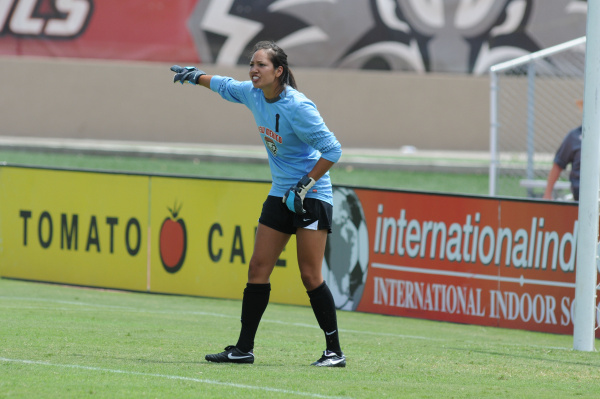
Lead Lobo - New Mexico Keeper Kelli Cornell Should Again Be One Of The Safest Pair of Hands In The West
It’s an exciting time for the eight members of the Mountain West who’ve spent much of the last decade getting beaten up by BYU, who turned themselves into the bullies of the league as of late. The Cougars have departed for the greener pastures of the WCC, and Utah, who kind of slid downhill towards the end of their MWC run, has also packed up and headed for the newly christened Pac-12. The exit door hasn’t totally closed yet either, with TCU making an abrupt move to the Big East after this season.
The Horned Frogs’ departure would have left the Mountain West with only six soccer playing members (Colorado State does not offer soccer), which makes the additions of Fresno State and Nevada to the league next season a relief for the conference which will hop back up to eight soccer playing members after this year’s brief seven team interlude. If you’re getting “Back to The Future” vibes, it might be because the eight members of the new Mountain West were all members of the WAC at some point in time, with most of the schools having competed together in the league at the same time before the Mountain West was created.
The inevitable question of league quality has to crop up with BYU and Utah’s exit. The Mountain West has been in a position to garner at-large consideration in many seasons, including last year, when New Mexico earned their inaugural Big Dance ticket through the at-large route. That’s one area in which the Cougars, always a threat nationally, had helped out, boosting the league’s RPI. But with they and Utah now gone, one wonders how much the Mountain West’s RPI will suffer, if at all. Fresno State and Nevada aren’t exactly giants, but that’s something to ponder over next season.
This year, it could be up to New Mexico and San Diego State to fly the flag for the league. The Lobos are coming off their most successful season ever and look set to pull off a potential encore, such is their talent. The Aztecs went through a relative nightmare season but could be back to contender status if all their pieces stay healthy and on form. The rest of the league? Well…
UNLV certainly has a bit of potential and had their moments last year. Boise State were just finding their feet in the WAC in recent seasons. Air Force, TCU, and Wyoming? Well, there’s room for improvement with the league shrinking, so there’s that. One thing’s for sure: The newly crowned heavyweights of the league will desperately be hoping that the league’s smaller teams can perform in non-conference play so as to not completely scuttle the league’s at-large bid chances come November.
(Teams listed in order of final 2010 RPI ranking.)
It took a while, a long while if you’re being picky, but NEW MEXICO finally arrived in 2010 and cashed in on its burgeoning potential in the Mountain West. If you only knew about the Lobos from the rather unfortunate thirty seconds played ad nauseam on ESPN towards the end of the 2009 season, you might have missed the slow development of a a real quality side out in the desert. Not that it’s been easy or quick in coming.
Current Lobos Head Coach Kit Vela came to town in 2001 after John DeWitt’s reign had tapered out with a whimper and was tasked with taking the New Mexico program towards new postseason heights. It looked an astute hire by the Lobos after a few years when Vela got UNM up to 12-8-1 and to the Mountain West Tournament title match. But the Lobos’ development then went into stasis as Vela struggled to build a program with the talent and depth to contend in the upper reaches of a conference dominated by behemoths BYU and Utah.
After a string of relatively innocuous seasons that finished up just above .500, New Mexico looked to finally be making something happen in 2009 after starting out 6-0-0 and going unbeaten in their first ten. But an upset loss in Albuquerque to Northern Arizona eroded at the Lobos’ confidence and their form was largely indifferent through Mountain West play. And then after an opening round win in the Mountain West Tournament against Wyoming, the Lobos ran up against league heavyweights BYU, prompting the unpleasantness that would be fodder for water cooler talk around the nation.
Given that embarrassment to the program and the general lack of success of the Lobos in breaking their long postseason duck, Vela might have been feeling a little heat going into the 2010 campaign. She wouldn’t be a little more than three months later. The Lobos began the new season on a flyer and would never look back. UNM shocked the nation by destroying Nebraska, 3-0, in their second match and drew with fancied Wisconsin-Milwaukee on the road less than a week later. The Lobos would prove they were for real two days later with a gritty, battling 1-0 win over Marquette on the road. Vela’s side would stutter a bit over the next few weeks with draws against North Texas and Baylor and a defeat at SMU, but any questions over their legitimacy were answered as Mountain West play kicked into gear.
The Lobos won their first three league matches to set up a likely conference title showdown against their much hated rivals, BYU. With the attention of much of the nation on Albuquerque for a night as the two renewed hostilities, New Mexico came up with one of the biggest wins in program history in front of a crowd of more than two thousand, knocking off the Cougars in extra time. The title after that win was practically fait accompli as long as UNM didn’t pull a Devon Loch down the stretch. Though they would drop points in a draw at Wyoming on the penultimate day of the regular season, New Mexico knew they just needed to avoid defeat against TCU on the final day of the regular season to lift their first major trophy. That they did, winning the Mountain West title with a 1-1 draw at TCU.
It wasn’t the only first for the Lobos in 2010. Though they still had a conference tournament to play, they were all but assured of an NCAA Tournament berth, their first, after the wins against Marquette and BYU. Vela’s side were still in pursuit of a double though and set up Round Two against BYU with a semi-final victory over UNLV. The Cougars would get their revenge in the final though, beating the Lobos by the slimmest of margins to deny New Mexico a second trophy.
New Mexico still garnered an at-large bid though and would go dancing for the first time in their history. Given the right matchup, the Lobos seemed a very difficult task for someone. Notre Dame in South Bend was not the right matchup. New Mexico ran headlong into a pissed off Irish side and were put through their paces rather easily in a 3-0 defeat.
2010 was potentially a program changing season though, especially now with BYU and Utah having packed for greener pastures. The Lobos suddenly find themselves not as scrappy underdogs but as conference figureheads for the Mountain West going into the new campaign. Vela’s side excelled last season through making the most of a smothering defense, statistically one of the best in the country last year. The truly scary part for rivals is that last season’s backline was perilously young and has plenty of room to improve over the next couple of seasons.
New Mexico tentatively returns last season’s starting defense intact, with big senior full-back Roxie McFarland likely to be the group’s leader once again. A two-year starter for the Lobos, McFarland was everpresent in the UNM lineup last season and is also a threat to get up the line to help out the attack. Elizabeth Nare and Brooke Ellison both held their own in the lineup as freshmen and should continue to improve with more experience this season. Finally, Lauren Irwin stepped up as a sophomore, growing into a starting role and ending up in the starting lineup for all twenty of New Mexico’s matches. With the entire starting backline back for more, it’s safe to say this Lobos defense still has some very sharp teeth.
The Lobos are also strong in goal with standout junior Kelli Cornell returning to Albuquerque for 2011. A big, rangy keeper for the Lobos, Cornell built on an impressive redshirt freshman season by turning into one of the best keepers in the region last year. Cornell’s strong play in goal earned her Mountain West Defensive Player of the Year honors, and the San Clemente, California native’s size and potential should make her one of the top goalkeeping prospects for the 2013 WPS Draft. Considering Cornell was playing in front of a backline still trying to come together as a unit last season, her glittering statistics from last season could improve further this year. The backup is untested true freshman Cassandra Ulrich.
Offensively, the Lobos also boast a potent offensive force in livewire forward Jennifer Williams. A dangerous player up front for the Lobos since her freshman season in 2008, the jet heeled Williams followed up a ten goal, seven assist sophomore campaign with another fine effort in 2010. The speedy striker grabbed four goals and four assists in the league, good enough to lead the Mountain West in points, and had eight goals and seven assists overall for the Lobos. Once again, she’ll be one of the most dangerous offensive players in the league and the straw that stirs the drink in attack for UNM.
The big challenge for Vela and the Lobos this season is finding an attacker to complement Williams going forward. The team’s second leading scoring threat, midfielder Rachel Fields departs, as does big forward Kate Wyrick. Fields grew into an invaluable asset in midfield for the Lobos over the course of her college career, turning into an all-action midfielder who was capable of scoring goals and breaking up opposing attacks in equal measure. Fields saved her best for last with seven goals and two assists in her senior season, starting every match for the Lobos.
Wyrick also came into her own as a senior, going from reserve to starter and adding some huge goals for the team, with all three of her scores going down as match winners last year. A couple of key reserves from last season, Jordan Craig and Natalie Jenks, will be among those battling for a spot up front beside Williams. Jenks should be all the way back from ACL surgery in the Spring of 2010 and could make a big breakthrough this year.
In midfield, the offense might come through tricky seniors Zaneta Wyne and Jael Fanning. Wyne had nine goals in her first two seasons and will be looking to improve on last season’s two goal haul. Fanning had six assists in 2009 and can also drop in an odd goal or two. A whole fleet of newcomers will be looking to contribute on both sides of the ball for the Lobos, with Californian Alexis Leyba a contender for some immediate time in the midfield.
Unsurprisingly given their defensive record last year, the Lobos also have more than their fair share of bite in the middle of the park. Senior Amanda Collins was an unsung hero last season, excelling despite an absence of eye-popping stats. Vela will also be hoping for the return of Australian midfield hammer Gianna Cavuoto who missed all of last season after starting every match for the Lobos in 2009.
The Lobos should be in a good position to go from strength to strength in 2011. Vela’s assembled a core as good as any in the league or really any in mid-major DI soccer in Albuquerque. The defense could be just as miserly with all the key pieces back and Cornell ready to shine again in goal. Replacing the production of Fields and Wyrick in attack might be a little worrying, but the cupboard is far from bare with Williams ready to go out with a bang as a senior. New Mexico should be in the mix for Mountain West silverware again, and given a kinder draw by the selection committee could very well be in position to win a game or two come November in the Big Dance.
At the end of the 2009 season, SAN DIEGO STATE and Head Coach Mike Friesen had every reason to be anxiously awaiting the beginning of the 2010 campaign. After more than a decade in the Mountain West wilderness, it appeared as if the Aztecs were finally in a position to get back to the heights the program scaled in the middle of Chuck Clegg’s reign as boss in the late nineties, highlighted by two league titles, three conference tournament titles (in the WAC and Mountain West), and a trip to the third round of the NCAA Tournament in 1999.
Friesen’s team won fifteen matches in 2009 and brought home the team’s first piece of silverware in a decade with victory in the Mountain West Tournament over BYU. Most of the key pieces of that title winning team were coming back for another go at it in 2010, meaning it looked as if SDSU was going to be a real sleeper to make a deep run into the NCAA Tournament. And then things started to go horribly wrong for Friesen and the Aztecs.
There was the bizarre revelation that starting defender Gretel Amman had been arrested for suspicion of public intoxication just hours before SDSU’s regular season match against Oregon State, news that was a surprise to Friesen some two months after the fact. Amman’s scholarship wasn’t renewed for the 2010 season, and the defender later transferred to Sonoma State. Then another starring newcomer, Western Kentucky transfer Hayley Marsh vanished without trace from the roster after impressing in her first season with the Aztecs. Making matters worse after that was the hammer blow that Niki Fernandes, an attacker with All-American potential was transferring back closer to home to conference rival (at the time) BYU.
All of this by itself would have been hard for any team to overcome, but then the Aztecs were rocked by the news that team talisman Cat Walker had once again suffered a torn ACL and that the star attacker would miss the 2010 season. It was not how SDSU wanted the offseason to go with a razor sharp non-conference slate ahead of them in 2010. With all of those unexpected losses, it shouldn’t have been surprising to see SDSU only win two non-conference matches while suffering through winless streaks of four and five matches before Mountain West play began. What was a little more disappointing was draws with clubs like Detroit and Utah State that a program of the Aztecs’ ilk should have been beating, losses or not. Particularly distressing was the weekend before league play where SDSU lost to Cal State Fullerton and Cal Poly, both in San Diego.
The fact that the Aztecs weren’t being blown out by their much more prestigious opponents and had managed a 2-2 draw at Oregon State was the glimmer of hope that supporters clung to to convince themselves that the team would right itself in Mountain West play. In this, they were partially vindicated as the Aztecs beat everyone not named New Mexico and BYU in the league to finish third in the table, an impressive two points away from the top spot. Having won the Mountain West Tournament the season before, the Aztecs earned hosting honors and looked a sneaky pick for a possible repeat of their conference tournament success the season before.
After dispatching Wyoming with ease in the first round, the Aztecs came up against BYU once again but could not find the solution to down the Cougars in the semi-final, falling 2-0 to end their season at 8-10-3. SDSU’s rebound in Mountain West play had been impressive, but the season on the whole had been a far cry from what probably had been expected right after the end of 2009′s dream season.
Thankfully, it appears that the Aztecs’ 2010 offseason has been a much more sedate experience, although the team now has to make up for a handful of departures thanks to graduation. Arguably, the biggest loss comes in attack where the team loses the services of Michaela DeJesus, the team’s scoring leader in 2010 and a player whose point total last season doubled the team’s next leading scorer. It took a while for DeJesus to find her niche with SDSU after transferring from Colorado after the 2007 season, but the senior out of Dublin, California came good last season with five goals and six assists.
Newcomer Hannah Keane from the California Rush club could see immediate time in the rotation as the seeming crown jewel of this class. Of the returnees, Sarah Halverson and Megan Jurado look decent if unspectacular options up front for San Diego State. Halverson has scored three goals in each of the past two seasons, but the club is still waiting for a big breakthrough after the junior was a consistent starter last season. Jurado hasn’t shown quite that strong a record in front of goal, but the San Jose native did manage fifteen starts last year. The team also adds in Arizona transfer Jensen Skinner. Skinner was a highly touted recruit who started fourteen matches for the Wildcats, including much of the league season, and who could make an immediate impact for SDSU this year.
The Aztecs figure to get most of their scoring from midfield in any event. That’s because Walker, seemingly recovered from her ACL tear, gets a sixth year of eligibility from the NCAA and returns for the Aztecs’ 2011 campaign. Walker, who also might moonlight as a forward, would probably be getting a fair amount of WPS scout love if she had two functioning knees but is still plenty good enough to score a lot of goals at this level if healthy. Walker scored twenty-one goals in a two year span from 2008 and 2009 and was a massive difference maker. If SDSU can keep Walker upright and off the training table, they should have a chance against most sides in the country.
Also looking to make an impact in midfield is sophomore Soledad Gomez who didn’t do much until she got to league play where she was the only Aztec to score more than one goal, netting three times including a pair of match winners. Gomez still has three years to grow and could turn into one of the league’s top midfielders by the end of her career. Also back are starters Marisa Fraticelli and Carli Johnson, who both had a pair of goals last season. The team does lose starter Grace Shevlin but more than makes up for it with a solid transfer. Sophie Metz got lost in the shuffle a bit at UCLA but has a chance to come in and be an immediate factor either in midfield or defense for the Aztecs.
It might be a good thing that Metz can play in defense as well since the Aztecs lose Britney Bennett to graduation and Megan Erskine to factors unknown, made more surprising since Erskine was recalled to the U.S. U20 team in the offseason. The returnees are very talented though. Senior Megan McQueeny is arguably the league’s best defender and could be popping up on WPS radars with another great season in 2011. A starter from day one as a freshman in 2008, McQueeny’s form is critical for the Aztecs’ success this year.
She’s joined on the backline by the Mountain West’s 2010 Newcomer of the Year in Haley Palmer. Palmer started nineteen matches last season and chipped in with five assists for SDSU. If those two weren’t imposing enough, the Aztecs look in position to get Tiffany Hurst back after a lost season last year. Hurst was a fixture in the starting lineup her first two seasons in San Diego and could also slot in in midfield for the Aztecs if need be. The other likely starter is junior Rachael McGlinchy, a steady figure who started every match last season for the Aztecs.
There’s a good bit of depth as well with sophomore Monique Rootsaert having seen a good amount of time off the bench last season. She’s joined by UNC Greensboro transfer Kory Spotts who made seven starts for the Spartans and was a part of UNCG’s double winning team last season. This group is very talented and deep and could very well be the class of the league.
Goalkeeper could be a worry for Friesen after the graduation of one of the most decorated keepers in Mountain West history in Aubree Southwick. Junior Megan Allaire saw whatever minutes were leftover last year and is a tenuous favorite going into camp this preseason. But sophomore Rachel Boaz saw time in a U.S. U18 camp before enrolling at SDSU last season and, along with newcomer Melanie Vaughn, will be a threat to claim the starting job.
After the trials and tribulations of 2010, San Diego State has slipped back from trendy sleeper pick to throughly under the radar once more. And that may be just the way Friesen and his charges want it going into 2011. The Aztecs have a strong defense with Palmer and McQueeny and an offense to match if Walker returns healthy as expected. Said health of SDSU’s talisman and the play of the Aztecs’ goalkeeper should determine their fate this season. With BYU and Utah departing for greener pastures, there’s room at the top of the conference for someone to step into a position of power, and the Aztecs look well positioned to challenge New Mexico for Mountain West supremacy, perhaps even as soon as this year.
That anguished scream you may have heard likely came from TCU‘s accountants at realizing just how much the program’s surprising move to the Big East beginning in 2012 is going to cost the team in travel expenses as the team is forced to travel to numerous destinations on the East Coast. Or from the players who will likely be living out of a suitcase come league season next year. Or perhaps they were from the coaches who must adjust to a massive step up in class as the program jumps from the tricky but navigable Mountain West to the undeniably treacherous Big East.
To be fair, it’s not like TCU leaves much of a legacy behind as they get ready for their farewell season from the Mountain West. The Horned Frogs have been college soccer nomads drifting from the old Southwest Conference right before it imploded, to the WAC for a mostly unsuccessful run, to Conference USA where they bracketed a nice second place finish in 2003 with three indifferent years to their current home of one more season. Along with their new home, TCU got a new boss as they moved into the Mountain West with Dan Abdalla jumping ship from fellow Mountain West school UNLV in time for the 2005 season.
Recreating the success he had at UNLV has been hard for Abdalla though. The Horned Frogs spent their first three seasons in the Mountain West near the bottom of the league. Hope did bloom in 2008 though as TCU enjoyed a brilliant 14-4-2 campaign and finished third in a tough league, ending up on the fringe of the NCAA Tournament at-large bid discussion. But TCU couldn’t replicate that success in 2009 with a sixth placed finish in an eight team league. It was up to Abdalla to prove that 2008′s success wasn’t a fluke heading into 2010.
The non-conference season revealed little at first about TCU, other than the fact that the Horned Frogs could put up big numbers against small schools. And then TCU went to Memphis and destroyed a much ballyhooed Tigers team, 3-0. That should have helped thrust TCU towards being competitive in the Mountain West, but it just didn’t work out that way. A horribly damaging loss in Fort Worth to Texas State in their last non-conference match seemed to suck all of TCU’s confidence away, and the Horned Frogs never recovered. They managed to beat Abdalla’s former club UNLV in their second Mountain West match but failed to win any of their final five league matches. The end result was a dead last finish in the league and many questions ahead of the program’s final year before the big move.
First and foremost is going to be who among this group is going to be providing the offense for the Horned Frogs. Last year’s bunch scored plenty of goals but really only against vastly inferior opposition for the most part. It really wasn’t supposed to be that way. TCU had 2008′s Mountain West Freshman of the Year in Jordan Calhoun who banged home fifteen goals in her debut season. That dropped to eight goals and six assists in 2009, but TCU still expected a season approaching double digit goals from Calhoun in 2010. Instead, it was easily her most disappointing season of her collegiate career, with only six goals and three assists. Most disappointingly, Calhoun was stymied in league play, scoring twice in the win against UNLV but then being held pointless in the other six conference matches. Despite the limited production, Calhoun somehow rode her reputation to First Team All-Mountain West honors.
All of that would have been a little more tolerable had TCU’s other expected offensive force produced. Instead, Kim Castleberry is well on her way to becoming perhaps the biggest recruiting bust of all time. Ranked by some as the #1 prospect coming into 2009, Castleberry washed out of Texas A&M; with nary a trace of goals, only to arrive at TCU in what could have been considered a serious boon for the Horned Frogs. Except that Castleberry still wasn’t hitting the back of the net with regularity. She may have been second on the team with five goals, but only one was in league play, and the former prized recruit wasn’t even an automatic first choice for Abdalla’s team.
With little offense coming in, it’ll likely be up to TCU’s misfiring duo to get on the right track if the team has any hopes of keeping their heads above water in the Mountain West. The hope has to be that either Kristen Halverson or Brittany Slyman, who both had three goals last season but none in league action, can put it together this season and up their goal count.
The Horned Frogs might have more trouble with the team losing two midfielders, but fifth year senior Kaylie Garcia returns after tying for the team lead in assists with five last year. Garcia made fifteen starts last season and is really the only sure thing in a midfield in flux. Kristen Barg and Kaitlin Hellmann were heavily involved as reserves, but it remains to be seen if they can step up into starting minutes this season. So Cal Blues midfield recruit Natalie Werner could also push for major minutes early as a freshman this year in many positions, such is her versatility. Abdalla also gains a big addition in the form of Mexican international Monica Alvarado, who escaped the purgatory of Mississippi State before featuring for El Tri in this year’s Women’s World Cup in Germany. Odds are, she’ll be needed in this season’s midfield as well in her new club home.
While most of the worries TCU has are on the attacking side of the ball, they do have defensive worries as well, including how to replace starting goalkeeper Kelsey Walters. Kira Michelson-Bartlett started three matches last year, and the junior figures to have a leg up in being 2011′s starter, although challenges from Ashlea Bullington and recruits Alicen Wright and Ryan Smith could also see the job swing another way.
The backline playing in front of the new keeper should be quite experienced, with three senior starters coming back. Katie Taylor and Alex Mechalske are both three year starters, while Chelsey Wilgenburg recovered well from injury to take her place on the starting backline. Additionally, there are plenty of experienced reserves, with sophomore Kelly Johnson a favorite to earn starting minutes after six starts as a rookie. Given a lot of the uncertainty around the rest of the team, the Horned Frogs’ defense might have to carry them this year.
It’s make or break time for Abdalla. His teams have been massively disappointing for the most part, and the good will 2008′s success brought him can only last so long. It figures to be an unpredicatble season though with two wild cards entrusted with the goal scoring and a new keeper being broken in behind them. But if TCU doesn’t show at least some improvement in what could be a down year for the Mountain West, the program may just opt to make a clean start as it prepares for life in the Big East.
The faintest ripples from the furthest corners of the college soccer world can still impact programs half a continent away as UNLV found out first hand last season. What started with a new coaching vacancy at Georgia ended with Head Coach Kat Mertz making the rather stunning decision to take a new position as an assistant at Texas under Chris Petrucelli. UNLV, needing a swift replacement, promoted assistant Jennifer Klein, making the Arizona alum one of the youngest head coaches in Division I, the former Wildcat having just ended her collegiate playing career in 2005.
In truth, a change may have been needed before Mertz pulled up and left town. Current TCU Head Coach Dan Abdalla delivered the program’s first title in 2004 before heading down to Fort Worth, and Mertz came in and continued the good times with two Mountain West Tournament titles and another league title in 2007. But UNLV began to plummet down the standings in Mertz’s final two seasons, sinking to mid-table before 2009′s 5-9-5 disaster, the Rebels’ worst mark in their history.
Under Klein’s rule, UNLV started out positively in 2010, with three wins in a row to start the season. However, those victories came against dubious competition, and a subsequent loss to Drake on neutral ground raised doubts. It was then that the Rebels opened some eyes with consecutive wins over Colorado and Oregon, breathing new life into their season. With Cal State Northridge and Long Beach State coming to Vegas, Klein’s team had a great chance to put themselves right in the mix for an at-large berth in the NCAA Tournament with two wins. Instead, the Rebels lost a pair of one goal games, although they recovered well with three straight wins over more questionable foes before Mountain West play started. League play was a cavalcade of misery for UNLV.
Blowout losses to New Mexico and TCU had Klein’s team in a spot of bother before UNLV evened their conference record with wins over Wyoming and Air Force. A shock draw in Provo against BYU proved that for their inconsistencies, this Rebels teams still had some bite left in it. In true UNLV fashion though, the Rebels were run off the pitch against Utah and San Diego State though, dropping them to fifth in the final standings. Klein’s charges were able to get revenge on the Utes though, crushing them in the opening round of the Mountain West tournament, 4-1. That’s where the payback would stop for the Rebels though, as they fell once again to New Mexico, although they made a better game of it than in the 4-0 regular season defeat in Las Vegas.
Klein has a major rebuilding job on her hands though entering into 2011. UNLV had a plain and clear Achilles’ heel last season, specifically, they had the worst defense in the league by some way, giving up two goals a match. The group returns mostly intact with LaChere Anglin the only starter leaving Las Vegas. The leading light for the Rebels could be senior Brittney Flores, who started every match for UNLV last season and would end up leading the team in assists with five. She could easily play in either defense or midfield this year for UNLV. Caitlin Allen and Justine Sauder also return after starting almost every game last season and give this backline a good deal of experience. Joining a couple of experienced reserves are freshmen Faith Johannes and Kristin Sankey, who were impressive in ECNL play for Neusport and Arizona Sting respectively and could see major minutes right off the bat.
Sophomore Kylie Wassell held down the starting spot at goalkeeper for the whole year despite being challenged by no less than three rivals and should be better with a year of experience under her belt. Junior Ashlee Dela Cruz looks like the backup at the moment, with Mexican youth international Nicole Cipriano also potentially fighting for time.
With such a bad defense, the Rebels had to have a potent offense to keep themselves afloat. Unfortunately, most of the key pieces to last year’s offense have departed, leaving a major void in attack for Klein to deal with. Ashleigh Shoughro went goal crazy after an injury plagued 2009 season, hitting for fourteen goals and three assists in all competitions, including five match winners. But she’s gone, and so are Amanda Forrester, a star in midfield who had six goals and four assists, and Colette Jepson, who bailed for BYU after scoring six goals herself.
The void in offense is enormous, with the only other player to table more than two goals last year junior Macy Jo Harrison. Harrison only scored one goal in league play though and is listed as a midfielder, so it’s not quite a certainty that she’ll be the answer in attack. Harrison is really the only midfielder returning with starting experience if Flores plays indefense. Courtney Botelho and Julie Owens will need to step up from reserve roles, or UNLV might need an instant boost from promising midfield freshman Erica Meier.
Flores and Katherine Orellana had five and four assists respectively, although most of their hard work was done in non-conference play. Orellana might be the best hope for offense up front, but she has little history in three seasons so far of being a goal scorer. Then again, neither do any of the other returning players who functioned mainly as reserves last year and didn’t move the needle offensively. Unless a freshman comes from nowhere or someone has a breakout season, goals could be very hard to come by for the Rebels.
The offense has truly been gutted by heavy losses, which is hardly a good omen considering just how bad the defense was last year. With no proven goal scorers returning and a full scale renovation coming on offense, the Rebels might be lucky to get back to eleven wins this year. There’s not a lot separating most of the teams in the Mountain West though after Boise State’s entrance and BYU and Utah’s exit, which means if Klein can coax some of her talent to overachieve, they might not do so bad for themselves in the Mountain West standings come the end of the season.
You might forgive long serving BOISE STATE coach Steve Lucas for perhaps feeling a little frustrated by the program’s move to the Mountain West for all sports beginning with the 2011-12 athletic season. After quite a few years of toiling away in obscurity, the Broncos finally seemed to be coming around towards the end of the decade in the WAC. Keep in mind that this was a program that didn’t win a postseason game until 2008′s WAC Tournament win over San Jose State.
In 2009 though, the Broncos finally broke through. While the non-conference season didn’t reveal much about the success to come, one might have suspected that the Broncos might have had something cooking after winning their final three regular season matches to net a third place finish in the league heading into the league tournament. Luckily for them, they drew hosting duties and proceeded to go on a possible program changing run of three wins in four days to win the WAC Tournament title and the conference’s automatic bid to the NCAA Tournament.
The Broncos may have been rudely greeted by UCLA in the Big Dance, but they came into 2010 with real hopes of capturing more silverware, including the program’s first ever league title as a bit of a going away present before departing the WAC. Trouble signs emerged early last season though. A loss to Oregon wasn’t surprising but setbacks to teams like Air Force, Utah Valley, and Idaho State should have sent alarm bells ringing in Boise. But maddeningly, the team also showed it’s talent in decisive wins over strong teams like Colorado College and Seattle. A four match winless streak entering WAC play, including a draw with an abysmal Montana team was a bad omen though.
Inconsistency dogged the Broncos throughout league play, with big wins over the weaker teams in the conference being countered by dropped points elsewhere. After a 1-0 win over title contender Idaho though, there was hope that a good run in the Broncos’ final two matches might see them as title contenders or at the very least see them with a bye in the WAC Tournament first round. But Lucas’ side went 1-1-1, dropping them to a disappointing fifth place in the league at the end of the regular season. The Broncos managed to beat tournament hosts Louisiana Tech in the first round to advance to the semi-finals but were outclassed there by league co-champs San Jose State. All in all, after the success of 2009, Boise State’s WAC swansong was a unmitigated disappointment.
At least Boise State’s odds of winning trophies has risen technically in the new look Mountain West. The Broncos’ new home with only seven members may make league matches more critical than ever, but it also gives Boise State better odds of both qualifying for the postseason and for bringing home silverware. To get to the top of the mountain in Boise’s first season in their new home, they’ll have to not just replace the team’s leading scorer but also a club legend in Shannon Saxton. Saxton sits alone at the top of most offensive categories in the Bronco record book after an illustrious four year career. Saxton took a while to get warmed up last year but saved her best for league play, scoring all three of her goals in WAC action. In addition, the only other player on the team to score multiple goals in league play last year, midfielder Cheyenne Jones, also departs.
2009 WAC Tournament heroine Erica Parks was at her best in the non-conference part of the schedule with four goals and an assist but was a bust when WAC play rolled around, only tallying a goal and an assist. Parks will have to be more like her freshman self in 2011 if Boise are to succeed. Depth at forward looks a little iffy as well with the losses. Ebie Harris and Kati Lucas both scored two goals and had an assist each in limited time but will need to ramp up their production if they’re to be the answer Boise needs offensively.
The only other Bronco with more than a pair of goals last year was hulking midfielder Katy Oehring who tallied three goals and three assists but like Parks was mostly silent in league play. The midfield could be the strength of the Boise squad as they return three other starters besides Oehring as well. Senior Chelsea Robinson was on the 2010 WAC All-Tournament Team, while fellow senior Ashley Walsh had a pair of goals and two assists in 2010. Lauren Hickok also started twenty matches after making the move from defender before her sophomore season. The team also makes a nice addition in Crossfire Premier star Shannon Schueren, who could play in central midfield or at full-back this season.
It’s equally promising defensively where the Broncos only lose defensive leader Malia Hendrix. The standouts this season should be left-back Mandy Nader and senior Lindsay Roberts, who had two game winning assists against Hawaii and Nevada last season. The Broncos’ defense was one of the better units in the WAC last year, and even without Hendrix, BSU could still be one of the better defenses in the Mountain West.
The goalkeeping situation looks fairly settled as well, with senior Liz Ruiz likely to do almost all of the heavy lifting between the pipes. After splitting time for her first two seasons with the Broncos, Ruiz stepped into the full-time starting role last time and will likely do the same this year. Junior Megan Blanchard looks to be next in line but has only played sparingly thus far in her career.
The question of course is if the Broncos will have what it takes to score on the likes of New Mexico, San Diego State, and UNLV without the talents of Saxton and Jones to rely on. It would be a bit much to expect a league title from Boise in their first year in the Mountain West, but they should settle into mid-table comfortably. With many of these players also having experience of winning a conference tournament, you wouldn’t count them out in November either.
WYOMING holds one of the more dubious postseason records in modern college soccer, having qualified for twelve conference tournaments but having never won a single postseason match. In fact, the Cowgirls haven’t even scored in the postseason since a 2-1 extra time loss to New Mexico in 2003. Current Head Coach Danny Sanchez was supposed to change that losing culture upon taking charge of Wyoming in 2008. Sanchez had plowed through the competition as boss of DII Metro State, but making the jump to a struggling DI program was another thing entirely.
After three seasons in charge, it’s a little difficult to see where Wyoming’s improved under Sanchez on the pitch. The Cowgirls have finished two of Sanchez’s three seasons in charge below the #200 mark in the final RPI, an unacceptable number for a team in a supposedly mid-level league and a number that was bested easily by Sanchez’s predecessor Anne Moore in her final years with the program. Last year, Wyoming loaded up with some embarrassing matches against the likes of Buffalo, Montana, and Eastern Washington to boost the win count, although the Cowgirls did end up defeating a very good Idaho team as well. Losses to schools like Northern Colorado and New Mexico State in Laramie were less understandable, and few believed Wyoming would be doing anything but making up the numbers in league play in the Mountain West.
No wins in their first four league matches told its own story, and a win over TCU to break the winless streak was only slightly comforting. A shock draw with New Mexico at home was likely the highlight of the season, while another point against Air Force in the regular season finale made sure Wyoming made it back to the postseason for a second year running. But once there, the Cowgirls were thrashed brutally by a San Diego State with home advantage and a defense that kept Wyoming from putting a single shot on goal. It certainly wasn’t a picturesque end to the careers of Wyoming’s six seniors.
Four of those seniors saw major minutes for Wyoming last season which is going to make Sanchez’s job of leading this team into the upper tier of the conference a challenge. Hardest hit is the Cowgirl midfield which loses starters Jules Candelaria, Chelsea Coddington, and Jerrica DiVincenzo. While the group didn’t necessarily provide all that much offense, DiVincenzo was the only Wyoming player to score multiple goals in league play, and in any event, replacing that much experience in the middle of the park is bound to be a headache for Wyoming.
It’s a good thing then that the Cowgirls can call on one of the most promising young midfielders in the league in the form of Australian sophomore Liz O’Reilly. O’Reilly was a big hit during her freshman season in Laramie, coming through with two goals and eight assists in an impressive campaign. With so many losses in midfield, O’Reilly will need to add leadership to her already long list of talents. Another youngster should take up the mantle well for Wyoming, as Jenny Johnson enjoyed a nice season for the Cowgirls in her sophomore season. There’ll also likely be room for more minutes for Kayla Davis, a reserve a year ago as she continues to recover from an injury that ruined her 2009. The team also adds Montana State-Billings transfer Andrea Baytaluke, who started every game in two seasons for the Yellow Jackets, and Sheree Small, the 2010-11 Gatorade Player of the Year for the state of Wyoming.
Wyoming’s other big loss from last year’s squad comes in the form of defensive leader Bostyn Burger. Senior Allison Masumiya looks like the team’s defensive leader after starting for the past three seasons in Laramie. This unit could get a big boost from the return of Mara Cosgrove, who started all but one match as a freshman but who missed all of last season for the Cowgirls. Big junior Sydney Jones will also be in the mix for a full-time role after starting eight matches last year. The team adds San Francisco transfer Ashlyn Mazur, who started thirty-seven matches for the Dons the past two seasons, and could be an immediate challenger for a starting spot. Also incoming is Australian Amy Sarandopoulos, who Sanchez will surely be hoping has the same impact as O’Reilly did last year.
Goals figure to be a big issue for Wyoming in 2011 though. Nobody returning had more than a single goal in league play, and nobody period had more than three goals all season. Four players had three goals a piece, but the only one of that quartet to score in league play was Ellen McCormick who flitted in and out of the starting lineup all season. A wild card in the mix could be forward Nicole Rice who was a bright spot for the team in 2009. Rice should have exhausted her eligibility last year but missed the season with a serious injury and has been granted another season of eligibility due to medical hardship. Carmen Blume started most of last year but was held pointless in league play and will battle with Cassie Sheffield and Olivia Mohtadi for playing time up front for the Cowgirls.
BYU’s departure gives everyone a chance to move up, but it’s hard to see Wyoming joining the top tier of the Mountain West without a few more impact players in the mold of O’Reilly. They’ve lost a whole lot of players from last year’s starting unit, and there’s very little proven production to fall back on. Unless Sanchez has hit the jackpot with some of his transfers or international recruits, it looks like a battle at the bottom again for Wyoming.
While AIR FORCE obviously has greater matters to worry about than putting together a championship soccer team, they would at least like to be able to get off the Mountain West basement every now and then. The Falcons haven’t qualified for the postseason since 2005 (when everyone got a pass into the league tournament) and haven’t won in the postseason since 2004 when they pulled a stunner in beating league runners-up BYU, 2-1. Going into last season, Air Force hadn’t avoided the wooden spoon since a sixth place finish in 2002.
Larry Friend entered his second season after taking over for program patriarch Marty Buckley with hopes that the program could at the very least win its first Mountain West regular season match since 2003 and its first point since 2006 while perhaps making a run at .500 for the first time since 1999′s 11-10-0 season in the first year of Mountain West competition. The season started out promisingly enough with a win over Boise State and a good draw with The Citadel that put the team at 1-2-1 after four matches. Then came a great run that saw the Falcons win five of their final seven before Mountain West play kicked off. This run was highlighted by a 1-0 win against eventual Atlantic Sun Tournament champs Mercer on neutral ground.
Once AF got to league play, they were agonizingly close to breaking that long, long winless streak, losing by a single goal to Utah, BYU, and San Diego State before getting spanked in Vegas by UNLV. Another slim defeat to New Mexico likely had the Falcons tearing their hair out as the final two matches of the season approached. And then on October 24, the long wait ended with a 1-0 win over TCU. The forty-one match conference winless streak and twenty-two match conference losing streak was finally dead. A draw at Wyoming ensured that while Air Force wouldn’t be going to the Mountain West Tournament, they would enjoy finishing off the bottom of the pile, getting the nod over TCU on a head-to-head tiebreaker.
At the very least, the program seems to be moving in the right direction under the stewardship of Friend. The Falcons may have still finished in the relative RPI zone they had occupied in 2006 and 2007, but the more manageable non-conference schedule had at least allowed the team to build some confidence going into Mountain West play which showed in the points picked up late in the season and in the performances in defeat earlier in the league campaign.
Optimism should be high for the Falcons going into 2011, because last year’s improvement came without any seniors, meaning almost all the key components should be back for this upcoming season. The key to contending for a further move up the table in 2011 and possibly challenging to sneak into the Mountain West Tournament is getting the offense firing in league play. Air Force had the weakest offense in the league by far, netting only three times in league matches last year, with nobody scoring more than one goal.
There is some attacking talent on display though for Coach Friend. Bridgett Murphy has been one of the best forwards to come through the Academy in quite some time and was the main provider last season with five assists. She’s still looking to replicate the form of her freshman season though where she scored six times. Also impressive was freshman super sub Megan Dozier who thrived in her role with four goals and three assists. Junior Stephanie Patterson looks like she could be the team’s next big thing up front after scoring five goals and four assists last year and leading the team in game winning goals with a pair. All three were relatively quiet in league play though, with Dozier and Murphy being shut down entirely. If they can start firing in Mountain West matches, AFA might be in business.
The midfield that returns is fairly experienced, despite the loss of Kelly Bieber. Junior Eryn Avjian stepped up into a starting role nicely last year, while Sophia Lockerby was strong in her freshman season, making sixteen starts. Friend will likely be looking for Leah Bratt and Kaleigh Moses to step up and earn more starting minutes after finishing last season as part-time starters. With more experience and some added freshmen to boost the ranks, this midfield could be a strength for AFA in 2011. A little offense could go a long way for the Falcons though as their defense was comparable to the mid-table teams in the Mountain West.
The defense returns senior starters and co-captains Cassie Wilson and Meagan Eissele for the 2011 campaign. Eissele stepped up beautifully into a starting role after two seasons of being a reserve, while Wilson has been a starter ever since she stepped foot in Colorado Springs in 2008. The team does face the loss of starter Kim Koeppen, who’ll be away at Army for an intermilitary student transfer program this season. That loss might necessitate a move back to defense for senior Krystin Shanklin, who featured in midfield last season for the Falcons. The team also adds a nice defensive prospect in freshman Kelsey Orvin, who could see a fair amount of minutes in her rookie campaign.
Big goalkeeper Kelly Stambaugh hardly looked out of place as a freshman and could be the team’s keeper extraordinaire for the next three seasons in Colorado Springs. Her backups are entirely untested, with Utah transfer Hallie Koeppen and true freshman Hannah Schwartz battling for the understudy role.
With Murphy and a handful of other contributors entering their last year of eligibility, the time to make a move is clearly now. The Falcons look to be a tough out in the Mountain West this season and will probably flirt with a spot in the conference tournament if they get a bare modicum of offense in league play.
Projected Order of Finish
* = Projected NCAA Tournament Auto Bid Winner
*1. New Mexico
2. San Diego State
3. TCU
4. Boise State
5. UNLV
6. Air Force
-
7. Wyoming
Non-Conference Strength of Schedule Ranking (From Most to Least Difficult)
1. San Diego State
2. TCU
3. New Mexico
4. UNLV
5. Boise State
6. Wyoming
7. Air Force
Support women's sports and SHARE this story with your friends!
MOST POPULAR ARTICLES & POSTS
September 11, 2011 at 2:20pm
September 12, 2011 at 10:16am
July 31, 2010 at 10:26pm
September 13, 2011 at 12:08am
September 14, 2011 at 1:51am
September 14, 2011 at 10:45am
August 5, 2011 at 4:32pm
September 10, 2011 at 1:16pm
LATEST ARTICLES & POSTS
Fri at 12:49am
Fri at 12:46am
Thu at 11:30pm
Thu at 6:24pm
More on:
All White Kit offers coverage of women's soccer around the world from a fan's perspective. AWK will feature the latest news, analysis, and commentary ...
full profile
For more, visit jennaawk's Full Profile
RECENT COMMENTS
Great stuff Lisa - first timers should also know that they will be REALLY sore the next day!!...more
posted 09/15/11 at 1:37pm
on What You Should Know Before You Spar

If the football superconfernces do indeed form (and all indications are that is imminent) then one c...more
posted 09/14/11 at 5:57pm
on Another season of college sports scandals--and now what?

Thanks Liz!...more
posted 09/05/11 at 12:36pm
on Meggan Franks Race Recap: 3rd overall, 1st female at Ridgeland 5K Run for St. Jude

Hey! Congratulations on the race!! Awesome job, Meggan! ...more
posted 09/05/11 at 10:53am
on Meggan Franks Race Recap: 3rd overall, 1st female at Ridgeland 5K Run for St. Jude
Thanks for the response. With Women's hockey in it's infancy, was curious how the proponents of the ...more
posted 09/04/11 at 2:46am
on Is Hockey Becoming Football?


No one has commented on this yet. Be the first!