


I meant to say "contract plus endorsement dollar range" above. ...more
posted 08/11/12 at 6:54pm
on Harper, Wells, Jones: Controversy or Media hype?




posted by All White Kit
Friday, August 10, 2012 at 8:50am EDT
All White Kit offers coverage of women's soccer around the world from a fan's perspective. AWK will feature the latest news, analysis, and commentary on the women's game. Match reports, scores, schedules, standings and opinion pieces will be on share. We aim to become a resource for any follower of women's soccer.
Support women's sports and SHARE this story with your friends!
“The most important thing in the Olympic Games is not to win but to take part, just as the most important thing in life is not the triumph but the struggle. The essential thing is not to have conquered but to have fought well.” - The Olympic Creed
Growing up, I used to listen to WFAN out of New York in pretty much all my spare time. It was one of the first sports talk radio stations in an era where ESPN offered little in the way of commentary (just highlights). Looking back, I don’t know what drew me to it, or what draws so many people to it today.
What doesn’t the manager play so-and-so? That guy stinks, we should trade him. The referees are clearly against our teams.
Just soooo much negativity.
As I got older, and not so coincidentally became a reporter and coach myself, I nearly completely stopped tuning in to sports radio. I try to stay clear of commentary shows with people spouting opinion that are clearly designed more for ratings and to get a rise out of people than actual analysis.
Before I come off as Mr. High and Mighty, as hard as I tried, the negativity never really left me. It’s easy to make fun of athletes when they fail or when they make mistakes, both on and off the field. Sometimes criticism is needed to be a proper journalist and not just a fan. The proliferation of Twitter has made it even easier to do that, complete with amateur humor.
I’m not here to cry, “Oh, those poor athletes.” They are in the public eye, they should be able to handle it to some extent. Of course, there is fair criticism, and then there Is what I think is overkill.
After Carli Lloyd yanked a penalty kick high after missing the target several other times at the World Cup, the next day at my camp anytime someone shot high it became known as “pulling a Carli Lloyd”. I remarked that the fact that everyone knew who Lloyd was and was watching the World Cup final was a victory onto itself, which was true, but I’m sure it didn’t make Carli feel any better.
There’s a more important lesson about negativity here, though, and it is has to do with the team who didn’t win the gold medal. While they weren’t quite as bizarre as they were against Canada, the U.S. was the beneficiary of a couple of breaks, most notably a pretty blatant Tobin Heath first-half handball in the penalty area.
Japan can also say they probably had the better chances in the second half, they could have won with a break or two, they were that close.
You know what, though, folks, you can say that about almost every big game in almost every sport. A break here, a break there, a call here, a call there. Small margins, as I’ve said (with credit to Zonal Marking) many times are the difference.
As time went on, and I got older, I started to understand that those callers to WFAN just didn’t get that. The manager – who would be out of a job if he didn’t win enough games – clearly thought that the player was the best option he had. The referee, even if they were wrong, made the best call they could at the time it was made.
In the end, there’s not much you can do to change any of that. Robot referees? Robot players? Mistakes, the uncertainty of it all is why we watch, isn’t it?
The Japanese, who played as cleanly as you could possibly play and still do it on a high level, understand that, it seems. When the final whistle blew, there were tears, they thought they were going to make history by winning major tournaments in back-to-back years, a goal they had surely made their whole focus for the last few months. They came up short.
But by the time the medal ceremony came around minutes later, the Japanese were mostly all smiles. They didn’t cry foul, didn’t begrudge the Americans the gold, weren’t masking their true feelings with smiles, they were generally appreciative of what they had accomplished.
And why not? They had just played another amazing match in front of 80,000 people at Wembley Stadium. Their style of play, and – more importantly – their attitudes had won world-wide praise.
If they were a New York sports team, I’m sure someone would have called in and said they didn’t want it enough. After all, you have to be mean and talk trash and run around with an angry look on your face to be an elite athlete and get the edge over your opponent, whom you must hate with all your might. That’s what all the commercials tell me. That’s what all the media tells me.
(The South Africa game still leaves a bitter taste in my mouth, yes, but I’m willing to let it fade into the background for now.)
I’m sure there are some who think that athletics involves combat and that means things like mindgames and bad blood and hard feelings between everyone involved. I don’t.
So thank you, Japan. Thank you for showing the world that you can be just as classy in defeat this summer as you were in victory last. Thank you for showing giving your all doesn’t mean you have to give up on sportsmanship or a cordial relationship with your opponent.
Notice I didn’t say enemies. There was a time not so long ago when the players on these teams might have considered themselves enemies. It was 67 years ago Thursday that the second of two atomic bombs was dropped on Japan by the United States, and no matter what your politics are, I think you can agree that we hope that’s the last time anyone has to deal with something like that.
This was only a soccer game after all. Japan most certainly fought well, and if the most important thing in life is the struggle, then both teams have every reason in the world to be smiling ear to ear on the podium.
And all of us who watched did as well.
Here’s what else we learned in the United States’ gold medal winning 2-1 triumph over Japan:
1) It’s not talk if you can back it up
I’ve never had a problem with Hope Solo as a goalkeeper, and she showed why in this game. Her save in the first half on Yuki Ogimi was one that no other women’s keeper in the world makes, and she not only waited out Japanese youngster Mana Iwabuchi, but made an acrobatic stop as well to boot. A couple of other times, she had full command of her penalty area. Maybe all of that talk did motivate her after all.
2) Carli Lloyd capped what was an outstanding tournament
I’m not going to kill Carli for saying postgame how much she was motivated by her detractors, even with the whole speech I gave about Japan losing with class. Lloyd has to be given all the credit in the world for being ready to go mentally even though it looked like she might not play a big part. It cannot be overstated how hard that is for an athlete. Thursday, she just looked confident from the opening kick, and we know she can strike a ball. One small note about her second goal that I always try to get across to my young players: as Lloyd ran at Mizuho Sakaguchi, Sakaguchi had to respect her left foot because we’ve seen Lloyd use it on numerous occasions in her career. That gives her just enough room to get her shot off for turns out to be the winning goal.
3) Alex Morgan didn’t score, but she was a handful
Give Morgan some credit on the second Lloyd goal, too, the Japanese defense was very concerned with her, which also contributed to Lloyd having enough time to unleash her shot. I always try to tell any strikers that I’ve coached to just watch Morgan’s movement off the ball for 90 minutes. Obviously, she’s fast, but she never stops moving, never stops getting herself into space, and that just wreaks havoc on a defense, who just gets tired of looking at her. Morgan also seems to understand what her weaknesses are, and that she has to work on them. That could be a problem for the rest of the world.
4) The defense wasn’t great, but did enough
Japan had plenty of chances, its goal was a failure of the U.S. defense to clear, and the second Solo save also came off a Christie Rampone gaffe, but overall, like the rest of the team, the U.S. did just enough. It will be interesting to see what becomes of the U.S. backline, especially if there happens to be a new head coach, but they did the job they had to do at the Olympics: win the gold medal.
5) Shannon Boxx looked fine
It was a little shocking to see Boxx starting over Lauren Cheney when the lineups were announced, and we’ll probably never know how injured Cheney was, but – like the rest of the backline – Boxx made a mistake or two, but didn’t looked slowed by her injury and broke up quite a few Japanese attacks, going a full 90 minutes in the process.
6) Japan – after a rough start – probably played their best game at the Olympics
That was the Japan we saw at the World Cup (with red uniforms this time, though, that looked nice even if it really didn’t seem like Japan), knifing their way through defenses with quick passes, getting their outside backs forward (especially Yukari Kinga), well-timed runs found by well-timed passes. To be honest, that’s the type of play that the United States couldn’t match and still couldn’t in this match. It’s not everything, but it will interesting going forward to see how much the U.S. can develop more of a possession game (and with what kind of personnel?).
7) Yuki Ogimi is a not-so-new star
Ogimi’s goal was her third of the tournament, and she just turned 25 a couple of weeks ago. She plays at Turbine Potsdam, and stands to be Japan’s answer to Alex Morgan going forward, probably with a lot less press, at least in these parts. But she’s quick and – like Morgan – seems to have a knack for finishing that just can’t be taught.
 Not the best day for the Japanese defense, either
They’re still very good – for my money, the best in the world – but they got off to a rocky start that led to the first American goal. Saki Kumagai did not have her best game, although she played pretty well for most of the second half. Kinga is the oldest of the defenders at 28, so you figure they might be intact for at least a run at repeating at the 2015 World Cup, Goalkeeper Miho Fukumoto is also 28, she was very impressive at these Olympics, although slightly overshadowed by Hope Solo today, even if she had a huge save on Rachel Buehler that kept Japan in it. No big mistakes, though, throughout, like we saw from other keepers.
9) Was that the end for Homare Sawa?
Now 33, Sawa was fairly quiet in these Olympics, and it remains to be seen what the reigning World Player of the Year will do. She has a very good game today, and if it was her last major international match, we’ll miss her. But it’s possible we haven’t seen the last of her yet.
10) 23-2-3
The all-time record of the United States at the Olympics. You can say they were slipping a little, but that record is gaudy, and both losses came to Norway, nowhere near this Olympic games. Still the benchmark for everyone else to shoot at for another few years at least.
BONUS
What next?
On so many fronts. We suddenly have a new professional league for next year. But will it keep the U.S. players at home? Can it possibly draw players from overseas? Will all this attention fade away like it did after the last Olympic victory? We shall see, I guess with a bit of cautious optimism. The upcoming tour for the U.S. should also be interesting, both in who plays and who they’re playing against.
DOUBLE BONUS
Ststs, etc.
The U.S. outshot Japan 17-13, 6-5 in shots on goal, while the U.S. had more than twice as many fouls (15-7). Lloyd had three of those shots for the U.S., while Ogimi had three for Japan. Lloyd also committed five fouls, but was fouled three times.
TRIPLE BONUS
Thanks for reading
As always, it’s been fun. Thanks to Jenna, and thanks to all of you for the feedback. We’ll see you soon.
Support women's sports and SHARE this story with your friends!
View Original Post at allwhitekit.wordpress.com

Today on the Women's Sports Calendar:
| Olympic Games Jul 27 - Aug 12: United Kingdom | Olympic Games: Gymnastics Jul 29 - Aug 12: North Greenwich Arena, United Kingdom |
| V Women's Baseball World Cup Aug 10 - 19: Telus Field, Canada | Lake Tahoe's All-Women Sport Camp Aug 10 - 12 |
| Oregon Trifecta Aug 10 - 12: Kirtsis Park | Chicago Bandits vs. Akron Racers August 12: Firestone Stadium |
| USSSA Pride vs. Carolina Diamonds August 12: Fieldcrest Cannon Stadium |
MOST POPULAR ARTICLES & POSTS
August 9, 2012 at 4:47pm
February 15, 2012 at 5:57pm
April 9, 2011 at 11:27am
LATEST ARTICLES & POSTS
Sat at 12:45pm
Sat at 11:07am
Sat at 10:17am
Sat at 10:11am
Sat at 10:09am

More on:

More on:
More on:
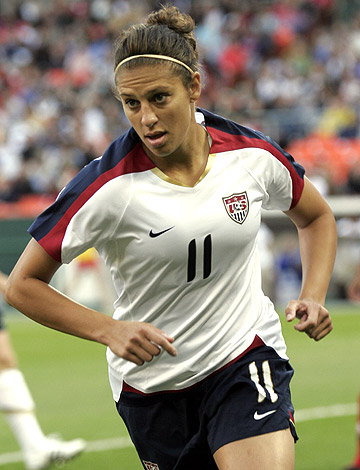
All White Kit offers coverage of women's soccer around the world from a fan's perspective. AWK will feature the latest news, analysis, and commentary ...
full profile
For more, visit jennaawk's Full Profile

RECENT COMMENTS
I meant to say "contract plus endorsement dollar range" above. ...more
posted 08/11/12 at 6:54pm
on Harper, Wells, Jones: Controversy or Media hype?

Hi Joanna, thanks for writing your article, seems like it brought up lots of different topics. It's...more
posted 08/11/12 at 6:51pm
on Harper, Wells, Jones: Controversy or Media hype?
And Terry, I hope I was clear that Kellie would be considered dark skinned according to main stream ...more
posted 08/11/12 at 3:05pm
on Harper, Wells, Jones: Controversy or Media hype?
Let me say that I am not sensitive to Harper and Wells due to my lack of media attention as I made a...more
posted 08/11/12 at 2:19pm
on Harper, Wells, Jones: Controversy or Media hype?

Excellent post by AdGuy. As he said the mainstream sponsor contracts and the associated financial r...more
posted 08/11/12 at 10:16am
on Harper, Wells, Jones: Controversy or Media hype?
No one has commented on this yet. Be the first!