
Since most of us saw the clip without prada outlet...more
posted 07/31/11 at 2:45am
on Vonn Watch: Sports Illustrated Cover is Predictable





posted by MarQFPR, a Women Talk Sports blogger
Thursday, March 24, 2011 at 4:36am EDT
About MarQFPR:
...more
Support women's sports and SHARE this story with your friends!
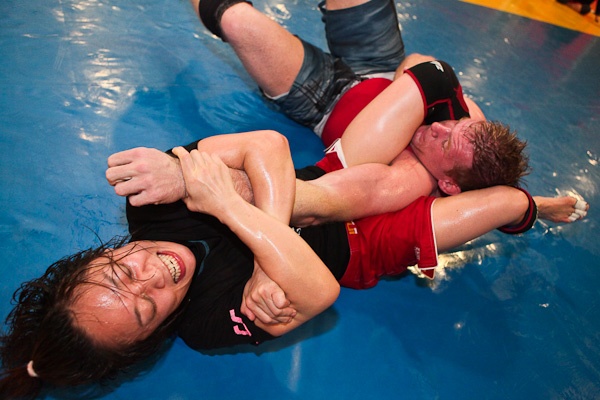
Megumi Fujii training catch wrestling with fighter Josh Barnett
There has been reactions to my first article about how we are talking apples and oranges when it comes to women’s MMA and pro-wrestling; which is half true. To break down the differences and similarities in the two sports, we need to dive into some history.
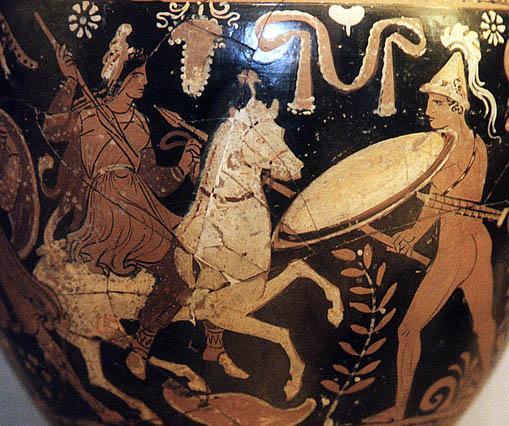
Amazon Warrior on Grecian Urn
Fighting is probably the second oldest sport next to running. Although you’d think males have been fighting longer, think about the motherly instinct. It is something common in most animals, and especially humans. Protection of offspring is something embedded in women’s genetic code. So, you could say that fighting is in women’s blood. Genetics also tell us that women are more flexible and durable in many instances. A recent study also showed that women who have given birth have a higher pain threshold. MMA fighter LaTasha Marzolla said it best, “If you’ve given birth, you can take a punch.”
Female warriors have always been around, no matter how the male gender tried to carry on most of the fighting. From the Greek Amazons, to the Welsh warrior Boudica, and Chinese warrior princess Pingyang, women’s have done their part to prove that women can lead on the battlefield.
Roman tablet depicting Gladiatrixes
Women in combat sports can be traced back to the ancient Greek city-state of Sparta, as women were known to have wrestling tournaments beside their male counterparts. In 200 B.C. in Rome, women gladiatorial fights were just as exciting as the men. In the western hemisphere, one of the oldest hand to hand competitions has been Huka Huka wrestling in Brazil, where women try to take down their opponent.
The first female fight in the modern sports era was a boxing match Elizabeth Wilkinson and Martha Jones in 1720. This was before the Marquess of Queensberry Rules for boxing, and could basically be called the first ever women’s mixed martial arts contest on record; as there were no real rules. Wilkinson would win the fight.
Ad Santel demonstating catch wrestling
It was the late 19th century was when shoot, or catch wrestling started to become popular. The fighting without striking an opponent was a legitimate sport at the time; allowing a combatant to win via pinfall or submission. You could find matches touring with carnivals; and occupying dance houses and stages throughout the world. Although the guys were the main attraction, women also were on the cards as a featured attaction; very similar to how female pro-wrestlers and women's MMA fighters are treated today.
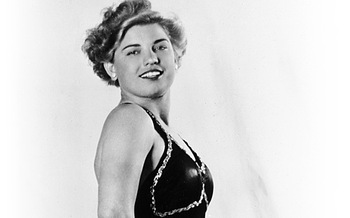
Amateur turned pro wrestler Mae Young
Coming into the 1920’s, the length and dullness of matches led to the kayfabe, or staging of matches. Shoot wrestling continued on in various sources in many countries, but the new “professional wrestling” had taken the spotlight. However, when the all wrestlers, male or female, were trained, they were taught legitimate shoot wrestling – something that stopped during the later half of the 20th century, but we will get to that in the next article.
Linda Lee Cadwell & Bruce Lee
Women had bigger struggles in martial arts. Although women had been trained in certain martial arts in Japan and China for centuries, American women had yet to train in them until Bruce Lee started to train anyone who wanted to learn. His wife, Linda Lee Caldwell, was one of the first American female martial art students.
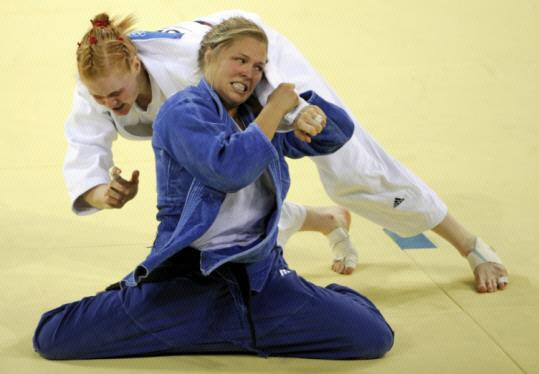
Judoka Ronda Rousey (blue) at the 2008 Olympics
Women’s amateur wrestling and boxing developed in the later half of the 20th century. In 1904, women’s boxing was introduced as an exhibition sport at the Olympics. It took 108 years before it would become a legitimate Olympic sport. It will be making its debut at the 2012 Olympics in London next year. Women’s amateur wrestling had become a sport at the 2004 Olympics. The earliest combat sports for women in the Olympics were judo; which was a women’s exhibition sport in 1988, and became an official sport in 1992; and Tae Kwon Do, which was a demonstration sport in 1980, and an official sport in 2000.
In the next article, we will talk about the origins of women in mixed martial arts, the differences from shoot wrestling, and the divide in marketing and respect between the two sports.
Support women's sports and SHARE this story with your friends!
This article was written by a WomenTalkSports.com contributor. Sign up here to start publishing your own women's sports content.
MOST POPULAR ARTICLES & POSTS
July 30, 2011 at 5:10pm
July 31, 2010 at 10:26pm
January 2, 2011 at 11:42pm
July 29, 2009 at 12:41pm
August 1, 2011 at 10:19am
March 5, 2011 at 1:41am
July 29, 2011 at 4:17pm
LATEST ARTICLES & POSTS
Wed at 2:53am
Wed at 2:47am
Tue at 2:46pm
For more, visit MarQFPR's Full Profile
RECENT COMMENTS
Since most of us saw the clip without prada outlet...more
posted 07/31/11 at 2:45am
on Vonn Watch: Sports Illustrated Cover is Predictable
Josh Thompson of the Pacific Legal Foundation wrote a detailed response to Kristine Newhall's blog p...more
posted 07/29/11 at 2:05pm
on Why Title IX should (and already does) apply to high schools
I read the article and Ben has hit it on the head. Like Miesha tate said, Zuffa is holding a higher ...more
posted 07/27/11 at 4:25am
on Former Strikeforce champ Sarah Kaufman Outboxes Liz Carmouche � Awaits Coenen-Tate Winner

This has nothing directly to do with this post, but saw this article on the front page of cnn.com ye...more
posted 07/26/11 at 9:26pm
on Former Strikeforce champ Sarah Kaufman Outboxes Liz Carmouche � Awaits Coenen-Tate Winner
Debi Thomas wasn't just the first African American woman to win an Olympic medal in figure skating-s...more
posted 07/26/11 at 2:34am
on Figure Skater Debi Thomas Hits The Ice


There are 2 comments on this post. Join the discussion!
Lets give a big shout out of thanks to Title IX, which made womens combat sports possible in our age. When I was a kid, having girls in the wrestling club would have been un-thinkable, but now we have several girls who can hang and bang with the best of the boys.
If we can redifine the concept of "girly" to include confidence, assertiveness and the ability to defend onesself and ones family, we will have a happier, more productive society as well as a card full of really good womens MMA bouts to watch!
Support Girls Wrestling, Womens MMA and your local MMA promotions, who are currently the only ones giving women any real exposure in the sport.
It took decades for the effects of Title IX to trickle down to combat sports, but if we make some noise in support of womens MMA, we can speed up the process and start seeing great girls fights on TV right alongside the mens fights at the UFC, Bellator and whoever comes along to compete with them.
#EqualFights !!
@Sprawl_N_Brawl
Thursday, March 24, 2011 at 11:22am EDT
Absolutely agree with Title IX having an impact in wrestling. Women's wrestling programs are still redeveloping in many states. In my later articles I will talk about women's high school wrestlers, as several are now pro-wrestlers or MMA fighters
Thursday, March 24, 2011 at 7:52pm EDT