Great stuff Lisa - first timers should also know that they will be REALLY sore the next day!!...more
posted 09/15/11 at 1:37pm
on What You Should Know Before You Spar






posted by MarQFPR, a Women Talk Sports blogger
Thursday, March 31, 2011 at 8:01am EDT
About MarQFPR:
...more
Support women's sports and SHARE this story with your friends!
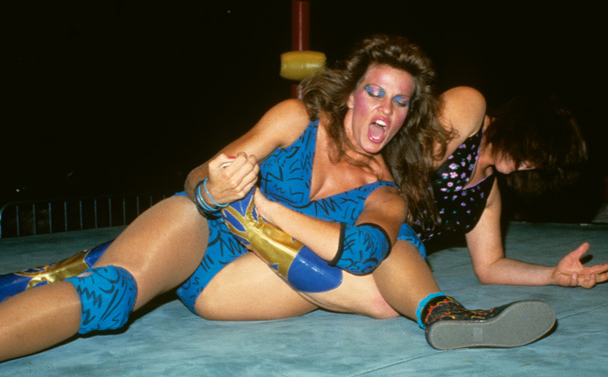
WWE Hall of Famer Wendy Richter
The marketing of women in pro-wrestling and women’s MMA are somewhat different today then they were 15 years ago. This is where the biggest divide occurred and some of the animosity of how each are perceived. Let’s start with the decline of the female shoot wrestler in pro-wrestling, and the rise of the “Diva”.
As the popularity of wrestling in general continued in the late 70’s and early 80’s, more and more schools popped up and with it came short cuts. One being the dropping of shoot fighting to the curriculum. Some amateur wrestling is still taught even to this day, but mainly showy wrestling holds are taught.
Wrestler Wendi Richter (blue) with Cyndi Lauper
Women were a staple of pro-wrestling until the mid 80’s. The most popular point was when MTV and the WWE (then the WWF) joined forces in what was called “The Rock and Wrestling Connection.” Pop singer Cyndi Lauper managed Wendi Richter to a WWE women’s title at the first WrestleMania. After that, the women’s division went into decline, and the WWE dropped the division all together.
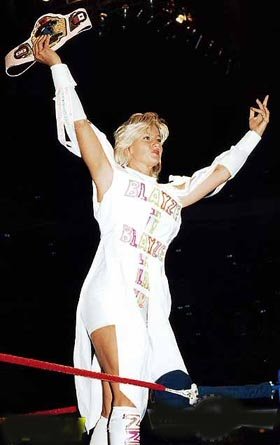
Miceli (as Alundra Blaze) in the WWE
Small organizations keep some of these wrestlers going, with a lot of them heading overseas to Japan, where it was still very popular. Medusa Miceli is one of the best examples. Miceli would be one person to revitalize the WWE’s women’s division in the early 90’s, but again the division was cut in 1995. Miceli would carry the division for a short time in World Championship Wrestling.
Tammy Lynn Sytch The First "WWE Diva"
Around the time of Miceli leaving the WWE, Tammy Lynn Synch, aka Sunny, made her appearance. Synch had some training as a wrestler, but was mainly just eye candy. Vince McMahon, the chairman of the WWE, saw that having a beautiful woman near a ring would a huge marketing tool to the male demographic, and the WWE Diva was born.
A lot of the women the WWE hired were based on looks more often than talent at that time. The Divas were given a few months worth of boot camp training to make them look like they had some sense in the ring. It wasn’t the athleticism more than there looks they were after anyways. There are still wrestling organizations like Pro-wrestling Eve and the WSU who still carry on the practices of giving a quality athletic show and the traditions of shoot wrestling.
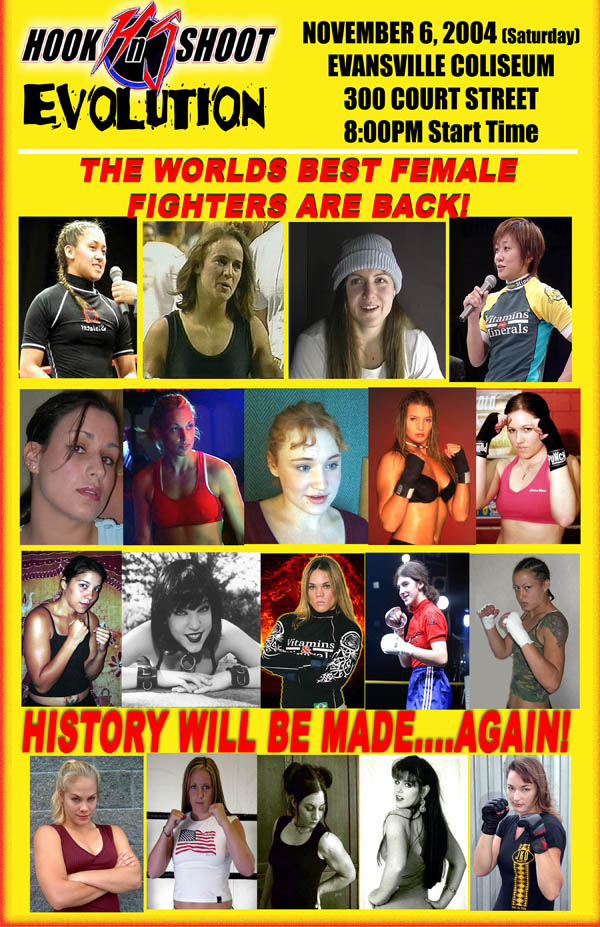
Hook'n'Shoot All Female Card 2004
Around this time, MMA was in its infancy with UFC 1. There may have been women’s MMA fights somewhere in the world, but it wasn’t until 2000 when women started fighting in Japan. Japanese pro-wrestling changed little and they had an appreciation for female fighters. Hook’n’Shoot started to have regular matches in the Midwest region featuring women around 2001, where most of the legends of the sport got started. Names such as Tara LaRosa and Debi Purcell started a phenomenon, as Brazilian jiu-jitsu artist, kickbooxers, and shoot fighters all try to make their mark in the fledgling sport. They may not have been cover models, but they were, and still are, some of the toughest fighters in the game.
Carano (center) on the "Fight Girls" reality show
The kickboxing show “Fightgirls” came out on the Oxygen Network in 2007, which introduced the world to “The Face of Women’s MMA” Gina Carano. With movie star good lucks and a strong kickboxing career, Carano soon turned heads and raised the popularity of the sports. More women pursued the sport, and more women got matches as promoters saw the potential in having females on the card. A lot like the early days of women in pro-wrestling, these were more featured contest than main events.
Cyborg Santos (left) verses Carano (right) at Strikeforce
It doesn’t matter if you look like a fitness model in MMA, it all depends on how much skill you have; and that is where the divide between women’s pro-wrestling and women’s MMA has mainly come from. As much as you can say pro-wrestling isn’t real, these women still take a lot of punishment on their bodies and do shows multiple times a week; so a certain respect does need to given.
Saraya Knight Courtesy Gareth Dutton/Pro Wrestling Eve
However, many female MMA fighters see this as beneath them, stating they would never consider crossing over. This in the light of the fact that Ken Shamrock and Dan Severn both went to pro-wrestling to supplement their incomes in the late 90’s. On the other hand, Brock Lesnar, Bobby Lashley, and Dave Batista have made their way from the wrestling ring to the cage. Will we see the same trend in female pro-wrestlers?
Next week two female pro-wrestlers will talk about their backgrounds and thoughts on MMA, and in the upcoming weeks, we will talk to pro-MMA fighters about their counterparts in pro-wrestling.
Check out the other articles of the series -
Support women's sports and SHARE this story with your friends!
This article was written by a WomenTalkSports.com contributor. Sign up here to start publishing your own women's sports content.
MOST POPULAR ARTICLES & POSTS
September 11, 2011 at 2:20pm
September 12, 2011 at 10:16am
July 31, 2010 at 10:26pm
September 13, 2011 at 12:08am
September 14, 2011 at 1:51am
September 14, 2011 at 10:45am
August 5, 2011 at 4:32pm
LATEST ARTICLES & POSTS
Fri at 3:44pm
Fri at 12:22pm
Fri at 11:58am
For more, visit MarQFPR's Full Profile
RECENT COMMENTS
Great stuff Lisa - first timers should also know that they will be REALLY sore the next day!!...more
posted 09/15/11 at 1:37pm
on What You Should Know Before You Spar

If the football superconfernces do indeed form (and all indications are that is imminent) then one c...more
posted 09/14/11 at 5:57pm
on Another season of college sports scandals--and now what?
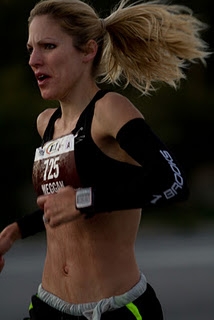
Thanks Liz!...more
posted 09/05/11 at 12:36pm
on Meggan Franks Race Recap: 3rd overall, 1st female at Ridgeland 5K Run for St. Jude

Hey! Congratulations on the race!! Awesome job, Meggan! ...more
posted 09/05/11 at 10:53am
on Meggan Franks Race Recap: 3rd overall, 1st female at Ridgeland 5K Run for St. Jude
Thanks for the response. With Women's hockey in it's infancy, was curious how the proponents of the ...more
posted 09/04/11 at 2:46am
on Is Hockey Becoming Football?


No one has commented on this yet. Be the first!