 Twitter
whoops, sorry for the double post. darn blackberry always seems to send it twice....more
posted Wednesday, December 29, 2010 at 12:45am EST on Tiger loses Gillette; Influence Drops; Hordes Cheer

|

|

|

|

|

|
 |

|

| |
|
| |||
"In all my years traveling around the world, I have witnessed soccer as the one thread that many cultures and people have in common," -Doug Band.
Help bring the World Cup to the United States in 2018/2022! Please visit gousabid.com for more ways you can support the sport- and the country- that you love.




|
posted by Balanced Health and Nutrition Food, nutrition and exercise information blended with a dash of opinion. |

|

|
|
Omega 3 and 6 unsaturated fatty acids receive a lot of publicity for their role in good heart health, but they play a part in providing us with other health benefits as well.
To understand why omegas are praised, we first need to understand that they are part of the “unsaturated fats” group. Unsaturated fats are healthier (in moderation of course), because their chemical make-up allows for them to move through our blood smoothly and not cause build-up and result in blockage in our blood vessels.
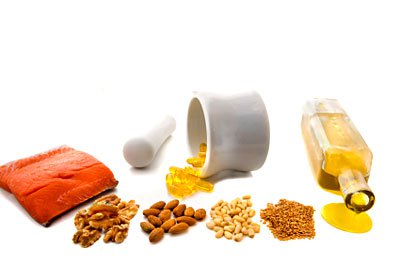
Omega 3′s and 6′s are the essential dietary fats that we consume when we eat things like flax, nuts, seeds, fish and oils. Our bodies can’t make the omega fatty acids, but once ingested, we can convert them into the polyunsaturated fatty acids: alpha linolenic acid and linoleic acid.
Omega 6 fatty acids are mostly found in meat, dairy and oils like sunflower, safflower, corn and canola (found in abundance in the modern diet). Omega 3s are mostly obtained by eating oily fish, which poses a problem for people such as vegans, vegetarians and those that just plain don’t like fish. Luckily, algae consumed by the fish contains high amounts of EPA and DHA, so humans can consume the algae (spirulina or chlorella, which can be purchased at health food stores and added to smoothies) and completely skip the process of converting the omega 3s into the essential EPA and DHA. Soy beans, walnuts and good olive oil may also provide omega 3s.
Supplementation of essential fatty acids is only recommended prior to and during pregnancy due to the importance of DHA for the development of babies’ brains and nervous systems, of course after discussing with your physician.
View Original Post at rebeccascritchfield.wordpress.com | View rebecca's Full Profile
|
|
|
|
MOST POPULAR POSTS
posted by Swish Appeal 12/28/10 at 4:06pm
posted by MarQFPR 12/20/10 at 7:13pm
posted by HoopFeed.com 12/27/10 at 12:09pm
posted by HoopFeed.com 12/27/10 at 12:12pm
posted by Women Undefined 07/31/10 at 10:26pm
posted by MsAkiba 10/11/09 at 2:40pm
posted by ...Because I Played Sports 12/28/10 at 6:20pm
posted by C and R's Stanford Women's Basketball Blog 12/26/10 at 2:08pm
posted by Fair Game News 12/27/10 at 12:15pm
posted by ...Because I Played Sports 12/28/10 at 12:28pm
LATEST WTS POSTS
posted by They're Playing Basketball
Tue at 8:47pm
posted by The Track & Field Superblog
Tue at 8:43pm
posted by Left Coast Hoops
Tue at 6:41pm
posted by ...Because I Played Sports
Tue at 6:20pm
posted by Jessica Mendoza's Blog
Tue at 6:17pm
posted by Girls Riders Organization, Inc.
Tue at 5:32pm
posted by Jayda Evans: Womens Hoops Blog
Tue at 4:29pm
posted by They're Playing Basketball
Tue at 4:25pm
posted by Swish Appeal
Tue at 4:06pm
posted by Run Girl Run
Tue at 1:56pm
RECENT COMMENTS
whoops, sorry for the double post. darn blackberry always seems to send it twice....more
posted Wednesday, December 29, 2010 at 12:45am EST on Tiger loses Gillette; Influence Drops; Hordes Cheer
whoops, sorry for the double post. darn blackberry always seems to send it twice....more
posted Tuesday, December 28, 2010 at 10:42pm EST on Tiger loses Gillette; Influence Drops; Hordes Cheer

For accuracy, the Gatorade deal was severed months before his infamous "car crash", both Forbes and ...more
posted Tuesday, December 28, 2010 at 10:41pm EST on Tiger loses Gillette; Influence Drops; Hordes Cheer

For accuracy, the Gatorade deal was severed months before his infamous %u201Ccar crash%u201D, both F...more
posted Tuesday, December 28, 2010 at 10:37pm EST on Tiger loses Gillette; Influence Drops; Hordes Cheer
I agree with you about it being hypocritical to only cover this ascept of womens baketball but you n...more
posted Tuesday, December 28, 2010 at 9:50pm EST on Why the media needs to back off Taurasi



No one has commented on this yet. Be the first!