
Hey Brianna - Keep up the good work. We'll try to come out and watch you skate in LA later this mont...more
posted 07/02/11 at 1:43am
on Forget being a good skater for a girl. She is just an awesome skater in general.
| It's World Cup Time!! Check out our Coverage and the TV Schedule. |





posted by Fast at Forty
Tuesday, June 14, 2011 at 12:05pm EDT
Fast at Forty was born while I was in the emergency room after crashing defending my title at the 70.3 World Championships in Clearwater, FL. In the midst of my anger over not being able to finish the race and being somewhat delirious from the pain, I decided that in 2010 I would start a campaign to be the first 40 year old woman to win a triathlon World Championship and it would be called “Fast at Forty”. During my recuperation from my injuries, which included shoulder surgery, I realized that this was a fantastic opportunity to inspire women in their 40’s to work through their challenges, overcome obstacles and attain new goals.
Support women's sports and SHARE this story with your friends!
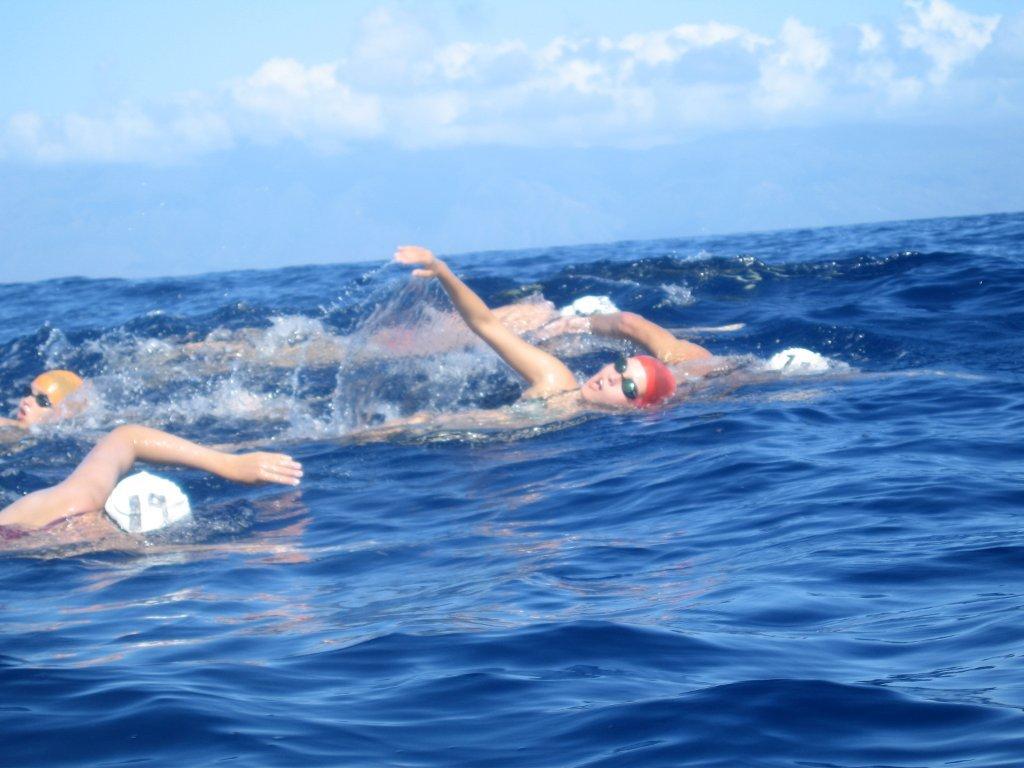 When I was growing up as a swimmer, I was a terrible sprinter. We practiced our fast swimming often and sometimes I even had to swim the sprints in swim meets. I was so bad a sprinter, my 100 meter freestyle time was only a tad faster than what I would do on the first 100 of a 200 meter swim. After one particularly slow and painful 100 on a relay, my coach admonished me, “You are trying too hard and you are spinning your wheels. Your arms are flailing (I don’t know how he could actually tell, since my arms always flail).”
His words did not resonate at all. I blew him off since I knew that my future was in distance swimming and I just really hated sprinting.
When I turned to triathlon, I regretted my laissez-faire attitude about swimming fast. It is true that well swum distance events in the pool are controlled at the start. However, in triathlon, the swim start is frenzied with everyone jockeying for position. One must be able to sprint to establish a good position or at the very least to not get swum over. I revisited the sprinting concept and work hard at honing my speed in a more efficient manner.
This very topic of swimming hard and swimming hard efficiently has been on my mind lately. I have had the pleasure of helping a few struggling swimmers with their stroke. When I asked them to swim hard the words of my former coach suddenly popped into my head. The reason these athletes were swimming so much slower in races than their capability is because they spin their wheels when they try to swim fast. The harder they are swimming, the less efficient they are in the water and they are expending more energy to go slower.
Let me give you an analogy. Imagine you are riding your bike down a steep hill in your small chain ring in your smallest gear and you are pedaling. Your legs are moving very fast but you are producing very little wattage and you are experiencing a lot of fatigue in your legs and you are breathing hard. Suddenly, another ride coasts by in a much bigger gear, seemingly effortlessly.
That is what happens to weaker swimmers and even many strong swimmers during races. They are effectively trying to swim in the wrong gear. There is so much extra energy expended on the swim that it inevitably leads to slower times in not only the swim, but also the bike and run.
Here are some tips to swim faster and more efficiently when you race.
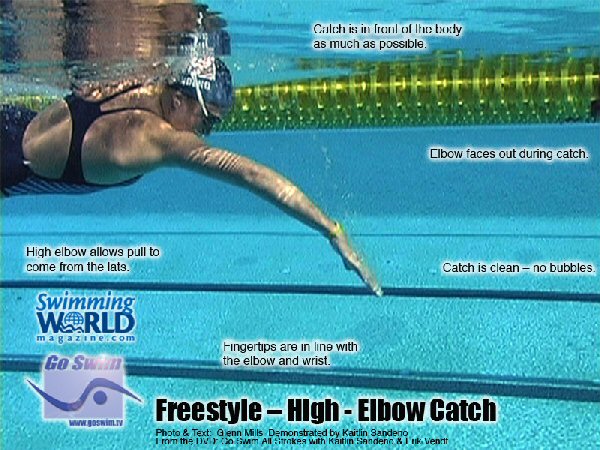
Now, of course, this is not the final word in stroke technique or open water swimming. Most people would benefit from a lesson from an expert to help them determine the shortcomings in their stroke. But, these tips should help you on race day if you practice them.
Support women's sports and SHARE this story with your friends!
MOST POPULAR POSTS
posted by Girls Riders Organization, Inc.
07/01/11 at 9:45am
posted by Women Undefined
07/31/10 at 10:26pm
posted by All White Kit
06/08/11 at 1:39am
posted by From A Left Wing
06/27/11 at 8:06pm
posted by Your Daily Dose of Chocolate
06/17/11 at 1:21pm
posted by After Atalanta
06/28/11 at 5:41pm
posted by MsAkiba
10/11/09 at 2:40pm
posted by anngaff
05/06/10 at 12:26am
posted by Your Daily Dose of Chocolate
06/30/11 at 12:45am
posted by Pat Griffin's LGBT Sport Blog
06/24/11 at 12:18am
LATEST WTS POSTS
posted by Title IX Blog
Today at 10:01am
posted by They're Playing Basketball
Today at 9:50am
posted by All White Kit
Today at 9:46am
posted by MMARising.com
Today at 9:39am
posted by Loree: A Skirt, A Hammer, A Life, and A Dream
Today at 9:35am
posted by A Glam Slam
Fri at 10:49pm
posted by All White Kit
Fri at 9:48pm
posted by Swish Appeal
Fri at 7:24pm
posted by The Track & Field Superblog
Fri at 2:47pm
posted by sallyedwards
Fri at 2:24pm
Fast at Forty was born while I was in the emergency room after crashing defending my title at the 70.3 World Championships in Clearwater, FL. In the m...
full profile
For more, visit joannazeiger's Full Profile
RECENT COMMENTS
Hey Brianna - Keep up the good work. We'll try to come out and watch you skate in LA later this mont...more
posted 07/02/11 at 1:43am
on Forget being a good skater for a girl. She is just an awesome skater in general.

thank you for posting this.i really appreciate it....more
posted 07/01/11 at 9:25pm
on Forget being a good skater for a girl. She is just an awesome skater in general.

If you want to see photos of the duel between Michelle and Jill, see my facebook album at: http://w...more
posted 07/01/11 at 6:13pm
on Michelle Carter Throwing to Win the Women�s Shot Put
Nicely done. I used to root for the Super Falcons but now will wholeheartedly root against them. ...more
posted 06/30/11 at 3:52pm
on 2011 World Cup: France & Nigeria

Thanks for raising this issue in a balanced way. You're so right that it's too easy to blame less-de...more
posted 06/30/11 at 5:57am
on Nigerian Women�s Soccer Coach to Team: �No Lesbians Need Apply.�


No one has commented on this yet. Be the first!