
You had me going until that ignorant use of the word Homophobia.
Being opposed to people stea...more
posted 05/26/13 at 3:08am
on Scary Lesbian Kisses Threaten WNBA Viability





posted by The Rabbit Hole
Monday, July 11, 2011 at 4:11pm EDT
Blogger Courtney Szto is a Master's Student studying the socio-cultural aspects of sport, physical activity and health (or as some call it Physical Cultural Studies). Bachelor's in Sport Management. Former tennis coach & ropes course facilitator.
Support women's sports and SHARE this story with your friends!
Bioethics is not something that I have done much research on but I find it an extremely intriguing subject. I was first introduced to the topic at a sociological level in a graduate course taught by Dr. Michael Atkinson. Our class was discussing technology in sport and Dr. Atkinson said something to the effect of - "if you don't believe that technology has a place in sport then what about something as simple as a running shoe, because that is a technology designed to make you run faster/longer/better etc." The discussion then morphed into the effects and implications of doping and technology in sport and THAT got me thinking!
Bioethics is the study of the ethical and moral implications that accompany genetic engineering. When discussing bioethics in sport it pertains to the use of substances to enhance athletic performance. I would like to discuss bioethics (admittedly, superficially) to grow the dialogue surrounding two of the larger issues: doping in sport as it relates to fair competition and doping as an unhealthy practice.
Some, such as Dr. Thomas Murray, argue that the line drawn between doping and technology is - where the true meaning and nature of that sport lies. In other words, separating what enhances human performances and what undermines it? An example he uses is that adding rollerblades to marathon running will decrease marathon times but that would also undermine the purpose of marathon running. Makes sense, but I find this a provocative line in the sand because it assumes that there is a "truth" to every sport, that there is an "essential" version of hockey, lacrosse, bowling etc. and I'm not entirely convinced that is accurate. Can we say that tennis today is not TRUE tennis because it is markedly different from the tennis that was played 50 years ago? Some might argue that, but I find it shaky ground. I think like most things we give sport meaning and that meaning changes through time. 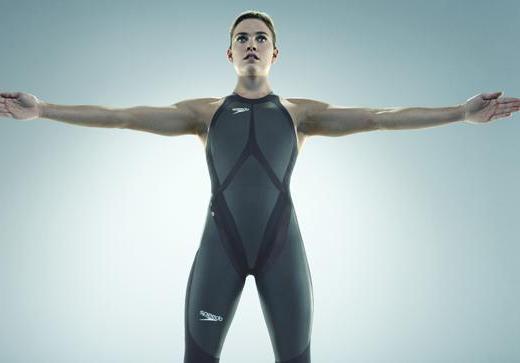
Photo from besportier.com
Argument #1 - Doping is unethical because it gives an unfair advantage to certain athletes. To that statement I argue that technology always gives certain athletes unfair advantages. Fastskin swimsuits, designed by Speedo, were designed to mimic the skin of sharks, therefore reducing drag in the pool. They were debuted at the 2000 Sydney Olympics and exactly 10 years later were banned by FINA (swimming's international body) because records were being broken left and right by those wearing the suits. The Fastskin suit altered competitive swimming, just like the graphite composite tennis racquet changed tennis from the serve and volleying style of the past to the power groundstroke game we have today. Moreover, athletes who train at state-of-the-art facilities have advantages over those who do not. Skill and talent may equalize certain technologies (e.g. Pete Sampras can still serve 140 mph with a wooden racquet) but technology is in itself an advantage. So how can we realistically say "you cannot take human growth hormone (HGH) because it gives you an advantage over other competitors" when other competitors may have access to better coaching, conditioning, equipment etc.? What does "fair competition" look like?
Argument #2 - Doping is unhealthy. My rebuttal would be that sport, in many ways, is unhealthy. Lets use hockey for example. The players are bigger and stronger, they skate faster and check harder. The discussion surrounding concussions and head shots is almost a daily commentary. Many argue that the new elbow pads and shoulder pads are the reason for increased concussions. In other words, the technology of equipment has, arguably, led to debilitating injuries but the NHL's reaction was not to ban equipment but to change the rules. (Personally, I believe that the rise in concussions is partly due to equipment and partly due to the culture of hockey but that is for another blog). Also, what about designing skis that will shoot you down a mountain faster, or making luge tracks faster to break world records, which turned out to be a fatal decision for the Vancouver 2010 Olympics. I can hear some people arguing - this is a maybe versus inevitable outcome, you MIGHT get a concussion playing hockey but you WILL mostly likely do irreparable damage to yourself on steroids or other drugs. Agreed, but what about boxing or mixed martial arts! The point of these sports is to knock the other person unconscious or render them unable to compete in EVERY fight. There are definitely debates surrounding the civility of boxing and MMA and I think that the individual choice to take performance enhancing drugs should be discussed in the same breath.
Dr. Murray explains that "Athletes' decisions are far from free and unconstrained." Presumably, the coercion towards doping and the seemingly "natural evolution" of technology have divided the discussion, but as Dr. Mehlman questions - why focus on the enhancements rather than the risks?
If everyone has to use enhancements to be competitive, enhancement will not offer anyone any advantage. If an enhanced weightlifter can bench-press 50 extra pounds, everyone who uses enhancements will be able to as well, but their relative abilities will stay the same. The use of enhancements will be unavoidable but pointless, like an athletic version of the nuclear arms race. No one will be in any different position from using enhancements than if no one used them. But everyone will have to, and everyone will be exposed to the health hazards.
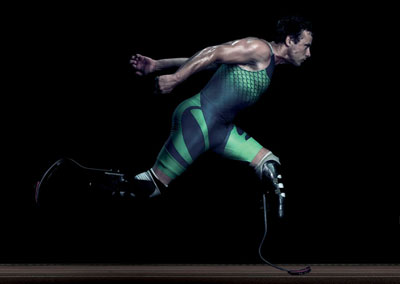
Oscar Pistorius wearing his Cheetah prosthetics.Returning to Dr. Murray's example of adding rollerblades to marathon running, I then ask where does Oscar Pistorius (the "fastest man on no legs") fit into this conversation? Does Pistorius running with able-bodied people undermine the essence of the sport or does it merely enhance his ability to join the crowd? Are his artificial limbs any different from the newest Speedo swimsuit or Nike runners? Should he compete with runners who are doping in order to "level the playing field"?
I have no answers but I do welcome discussion.
For more information on bioethics in sport check out Professor Andy Miah's blog.
Support women's sports and SHARE this story with your friends!
MOST POPULAR ARTICLES & POSTS
LATEST ARTICLES & POSTS
Tue at 9:12am
Tue at 9:10am
Mon at 9:36pm


Blogger Courtney Szto is a Master's Student studying the socio-cultural aspects of sport, physical activity and health (or as some call it Physical Cu...
full profile
For more, visit Resident_Badass's Full Profile

RECENT COMMENTS
You had me going until that ignorant use of the word Homophobia.
Being opposed to people stea...more
posted 05/26/13 at 3:08am
on Scary Lesbian Kisses Threaten WNBA Viability

She is one of the best player in basket ball and is really good.
http://www.coomberlaw.com/bu...more
posted 04/30/13 at 3:56am
on The Chicago Sky Selects Elena Delle Donne Second Overall in 2013 WNBA Draft
The worst kept secret in all of professional sports is that the majority of WNBA ballers are lesbian...more
posted 04/24/13 at 11:41am
on Brittney Griner's way of coming out is progress in the sports world

In terms of sport figures, I'm sure a Pat Summitt statue is in the works.
...more
posted 04/15/13 at 10:11pm
on Statues of Female Leaders?

I'm not a big Stanford fan, but at least they have a legitimate program and did it largely without t...more
posted 04/10/13 at 5:50pm
on Why Cal is my new favorite team

Women Talk Sports Podcast - March 5, 2013
In the March edition of the "Women Talk Sports" podcast, Cara and Stephanie use their running background to explain the Dayton 500 and break down the ...[Listen/Download for iTunes]
Women Talk Running Podcast - March 5, 2013
In the March edition of the "Women Talk Running" podcast, Cara and Stephanie wrap up the Millrose Games, give you more Mary Cain news, give our respon...[Listen/Download for iTunes]
Women Talk Sports Podcast - January 28, 2013
In the January 2013 episode of the Women Talk Sports podcast, Cara and Stephanie share several points that will leave you feeling hopeful about the Na...[Listen/Download for iTunes]
There are 2 comments on this post. Join the discussion!
Doping in unethical because it is violating the rules of the sport. Participants adhere to certain rules of the sport through national governing bodies and the world anti-doping administration. People who choose not to adhere to those rules, cheat, take banned substances, are not adhering to the rules of the sport, which is why it giving them an unfair advantage. An excellent documentary to watch on this subject is one called: "Bigger, Faster, Stronger" (it is available on instant play on Netflix). It explores these ethical issues of doping, in a very personal way - as it walks a man and his family with their history of steroid use and sport. It is very well researched, has a ton of interviews of professionals, and is very funny as well. It is must see, in my opinion.
Monday, July 11, 2011 at 4:29pm EDT
Have to disagree with comparing doping and sports shoes. I see the point you are making and yes, in some senses, comparisons can be drawn. But the damage done to health by doping is far greater than that which any new technology could cause. And in many cases the athlete does not want to take steroids etc but does so under intense pressure from coaches or sponsors. David Millar's book - http://www.guardian.co.uk/books/2011/jul/03/cycling-books-roundup-david-millar - gives a great insight into this world. It is a topic we need to face up too but IMHO accepting doping is not the way to go. Like you, I don't know where we should draw the line but I do think we need to have one. Thought-provoking post
Monday, July 11, 2011 at 7:40pm EDT