
Great article but really not true; there are many players involved in the NPF that are not from the ...more
posted 08/26/14 at 1:28pm
on Softball Standouts Plourde and Prezioso Represent Atlantic 10, Exemplify Mid-Major Potential at Next Level





posted by The Rabbit Hole
Sunday, December 2, 2012 at 7:18pm EST
Blogger Courtney Szto is a Master's Student studying the socio-cultural aspects of sport, physical activity and health (or as some call it Physical Cultural Studies). Bachelor's in Sport Management. Former tennis coach & ropes course facilitator.
Support women's sports and SHARE this story with your friends!
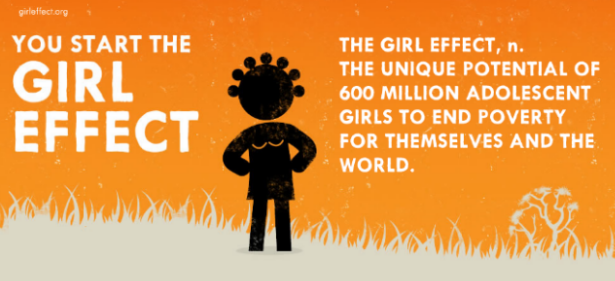 Nike Girl EffectThe whole world seems to be behind the idea of "empowering" young women. Nike has the Girl Effect, Plan has Because I am a Girl, and Dove has the Self-Esteem campaign. Add sport into the mix and your program is sure to attract some fundraising dollars. Even the United States State Department has an Empowering Women and Girls through Sport initiative. Many development agencies, corporations and governments alike have begun touting the development of women and girls as the "cause of the century" (Scrivener, 2009) based on the idea that each year "countries lose billions of dollars because of failing to invest in girls and young women (UNGEI, 2009). Thus gender equality is seen as a vital component of overall development.
Sport for development and peace (SDP), a relatively new tool for international development, uses sport and play programs to assist in the development of personal, social and life skills, and it has shown great support for enhancing the integration of women's opportunities into society. Notable SDP programs aimed at increasing opportunities for girls and women include: The Goal Programme in India, the Mathare Youth Sports Association, and Moving the Goal Posts both in Kenya. However, the rapid influx of girls empowerment programs have been based more on enthusiasm than comprehensive planning; hence, now we are learning about the unintended consequences of these programs. Unfortunately, the use of sport to enhance acceptance of women and reduce violence against them has unwittingly brought about more violence and stigma. It has been observed to be a societal reaction when the development of women supersedes the development of the community. A colleague of mine recently shared an article, titled "A Dangerous Game for Women: Football and Corrective Rape", which highlights how corrective rape has become all too common for young female football players in South Africa.
Sihle Sijoki, 19-yr old lesbian soccer player, brutally murdered on November 9th, 2012.Female footballers have been inspiring women and girls in communities all over the world.
Women's football has been reaching heights of popularity and a global following that is unprecendented in women's sports.
The recent London Olympic Games saw an incredible following as the women's tournament was one of the most viewed finals...
In developing nations, NGOs frequently use football as a vehicle to educate, empower and help girls with cultural bridgebuilding, HIV/AIDS awareness, birth control, substance abuse and addiction awareness, violence against women and girls awareness and homophobia.
Recently, one of the most troubling phenomenons of violence and hatred has reached the women's football community of South Africa.
On November 9th, Sihle Sijoki, a female football player with the local Winnie's women's football, was out of with friends and attacked. The skilled 19-year old was speared in the chest and succumbed to her injuries.
Sihle was attacked because she was a lesbian. She and other footballers were senselessly murdered, and victims before her were victims of "corrective rape."....
Women footballers have been attacked regardless of their sexual orientation.
Many of the victims are footballers in clubs in South Africa. Unfortunately, there has become a misinformed and draconian link between playing sports and homosexuality.
The idea that women and girls may be out playing a physical sport and keeping active renders the conclusion that they must be "dykes" and therefore they must be "corrected".
Their association with sport renders them to be possible victims. It is a terrifying reality....
This is a huge setback for many agencies and organizations relying on involvement in sport to reduce differences and discrimination through an interest in football.
It is simple to assume that a good deed is a good deed and nothing else, but as they say "the road to hell is paved with good intentions." The feminist movement has drastically changed the role of women in society but the flip-side of that transformation is the fact that the role of men has remained largely stagnant. Men still wear pants, are expected to be physically strong. and still need to work. For every reaction there is an opposite and equal reaction. In this case, empowered and athletic women become victims of corrective rape and other horrendous acts because no one took the time to ask the men (and other women) in the community what they thought about such a, within the local context, radical idea of women playing sports. It's like putting gas in a car with a flat tires; although the two seem completely separate they are still connected. Girls playing sports alter gender norms but not everyone wants those norms to change. As Hayhurst (2011) notes, there is a difference between changing behaviour and shifting gender relations.
Hayhurst's (2011) research on martial arts programs for young girls in Uganda identifies that many SDP programs are focused on changing young women in order to achieve gender equality: making them more confident, altering self-perceptions about their bodies, giving them employable skills. While not necessarily problematic in and of itself this method can cause issues by "ignoring the need to enlist men and boys in accomplishing this same feat" (p.146). Messner (2002) argues that excluding boys from girl-specific-programming enforces the North American idea that sport should be sex segregated and "delivers a powerful message that boys and girls are as naturally and categorically different as Barbie Girls are from Sea Monsters" (p.143). What changes with these types of SDP programs is not how boys and men view and/or treat the women of society but how women and girls react and resist to their taunts and abuse (Hayhurst, 2011). Perhaps, one of the most significant observations from Hayhurst's research is that the boys excluded from this particular martial arts program constantly requested their own marital arts sessions and inclusion to the program.
Martial arts was the activity of choice for this program because of how one young woman in the Ugandan village managed to defend herself from a number of potential rapists with her tae kwon do skills. Once news spread martial arts seemed like a good way for the girls of the village to protect themselves. Only problem is that adding martial arts does not inherently make rapists disappear. It may make them think twice, OR it might just make them bring more friends, or a gun, or a knife.
It may seem like this is a problem for distant lands where we send all of our used sporting equipment but we, in the West, would be foolish to think that we have moved past these issues. Unfortunately, women are raped, beaten, and abused all over the world. So if we use the Dove campaign as an example, why is its self-esteem campaign only aimed at women? Don't men have anything to do with the self-esteem of women? I think women have a lot to do with the self-esteem of the men they encounter. Respect cannot be taken, it must be earned and given; therefore, using sport to teach young women to demand respect is a problematic lesson.
What we need to learn from these examples is that as beneficial as sports may be for developing young women (in any part of the world) it's not good enough. We are only addressing half of the problem. Yes, boys and men generally have ample opportunities for sport but how often do they get to participate with girls and women? How often do they have to operate as equals and in unison? How often do they have to be accountable for each other? These are the values that sport is supposed to teach; they are the values that supposedly transfer better on the field than they do in the classroom. Yet, the older we get the more we divide the two. Arguably, when girls turn into young women and boys turn into young men is the most important time to keep the two groups active with each other.
Works Cited:
Hayhurst, L.M.C. (2011). "Governing" the "Girl Effect" through Sport, Gender and Development? Postcolonial girlhoods, constellations of aid and global corporate social engagement. Unpublished dissertation, University of Toronto. Toronto, ON: Canada.
Messner, M. (2002). Taking the field: Women, men and sports. London, UK: University of Minnesota Press.
Support women's sports and SHARE this story with your friends!
MORE ABOUT THIS AUTHOR:
Blogger Courtney Szto is a Master's Student studying the socio-cultural aspects of sport, physical activity and health (or as some call it Physical Cu...
full profile
For more, visit Resident_Badass's Full Profile
LATEST ARTICLES & POSTS
Fri at 1:53pm
Fri at 1:51pm
Fri at 1:45pm
Fri at 1:44pm
Thu at 1:53pm
Thu at 1:52pm
Thu at 1:48pm
Thu at 1:47pm
Wed at 12:52pm
RECENT COMMENTS
Great article but really not true; there are many players involved in the NPF that are not from the ...more
posted 08/26/14 at 1:28pm
on Softball Standouts Plourde and Prezioso Represent Atlantic 10, Exemplify Mid-Major Potential at Next Level

What she did I'd fantastic but she was still a good 14 seconds behind the winner and, really, the Ke...more
posted 07/22/14 at 4:04am
on 2 seconds, no finish clock picture, but satisfaction: Molly Huddle breaks her own AR

Does money make champions ! History have taught us that money does not means success overnight . Mos...more
posted 06/20/14 at 8:25pm
on Sparks need a change, but what kind?
congrats to Maria on her French Open win!!...more
posted 06/11/14 at 10:06pm
on Maria Sharapova Named The Face Of Avon Luck Fragrances
| SAUCUONY 500 MILE CHALLANGE |
| Daily Workout |

No one has commented on this yet. Be the first!