
She is one of the best player in basket ball and is really good.
http://www.coomberlaw.com/bu...more
posted 04/30/13 at 3:56am
on The Chicago Sky Selects Elena Delle Donne Second Overall in 2013 WNBA Draft





posted by The Rabbit Hole
Sunday, April 14, 2013 at 6:36pm EDT
Blogger Courtney Szto is a Master's Student studying the socio-cultural aspects of sport, physical activity and health (or as some call it Physical Cultural Studies). Bachelor's in Sport Management. Former tennis coach & ropes course facilitator.
Support women's sports and SHARE this story with your friends!
After all, people care a lot more about how they look than how much they exercise or eat right. And this is for good reason - strangers don't judge us by how often we go to the gym or whether we eat five servings of fruit and vegetables every day; they do judge us, however, by our appearance.
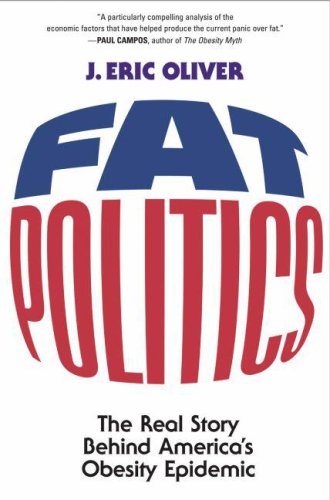
I recently read J. Eric Oliver's book, Fat Politics: The real story behind America's obesity epidemic. It is a book aimed at lay people but translates more technical and theoretical research that exists about the conspiracy that is the obesity epidemic. Overall I think it's worth a read. I haven't checked into a lot of the research that he cites so I would take some of the studies with a grain of salt, as I would suggest with almost everything, but Oliver offers a lot of *ahem* food for thought regarding what we are led to believe about fat, obesity, and health by the media and the medical community. I have included excerpts and quotes but I apologize for not including page references because I read this book on an e-reader so the pages don't exactly translate.
The myth is that obesity is a disease that kills 400,000 Americans every year. Obesity costs the United States 100 billions dollars annually in health care costs and is a dire health "crisis". In 1980, only 1/3 of Americans were considered overweight and only 13 percent were classified as obese but in the last 25 year those numbers have jumped by more than 40 percent:
Today, more than 60 percent of Americans are considered overweight and one in four is obese - a two-fold increase in less than three decades. Even more alarming is the rise in juvenile obesity; today, 15 percent of American children are considered obese, more than twice as many as in 1980. As a result of their weight, today's teenagers will be, according to some projections, the first generation in modern American history to live a shorter life span than their parents.
However Oliver argues that, although "Americans do face many health challenges, few of these arise from [the nation's] increasing weight." In his book he contends that weight is merely symptomatic of changes in the American lifestyle and that weight is not the cause of America's health woes. Below I have listed some of what I found to be Oliver's more pertinent points.
1.) Being thin doesn't mean you will live longer: In 2004, the Journal of the American Medical Association and the Centers for Disease Control and Prevention (CDC) released a report stating that obesity kills 400,000 Americans every year. Although heavier people tend to die more frequently than people in mid-range weights, it is by no means clear that their weight is the cause of their higher death rates. That 400,000 person statistic was, according to Oliver, bsed on poor research and errors in calculations. His claim is supported by the fact that the CDC was forced to investigate their own report and ended up amending their findings. The very next year, a different set of CDC researchers released a study that found that moderately "overweight" people actually live longer than those at a "normal weight" and the new estimate of obesity related deaths dropped from 400,000 to 26,000. Unfortunately, the panic from the first report had already started and the amendments were lost in the shuffle. Evidently, obesity has not been found to be a primary cause for medical conditions such as heart failure, hypertension, diabetes, depression, deep-vein thrombosis etc. Medically speaking, Oliver contends that we have confused fatness as a cause as opposed to an effect or associated trait.
2.) Body weight has become a barometer of wellness (aka thin = healthy): The 'obesity epidemic' originates from the BMI (body-mass-index), which was created first by a Belgian astronomer, Adolphe Quetelet, who was trying to graph what an 'average man' was from physical statistics. "Quetelet believed that deviants, criminals, or troublemakers could be identified by their physical abnormalities. By calculating how far someone deviated from "average weight", the more someone could be pegged as socially deviant and marked for social monitoring, institutionalization or control. BMI gained further popularity when it was used by the insurance industry. In an attempt to predict early deaths, Louis Dublin, a statistician at the Metroplitan Life Insurance Company (Met Life) started charting the death rates of its policyholders in the 1940s by using a height-to-weight index. He concocted ranges for "ideal" body weight in relation to mortality rates. By the 1950s, the Met Life table became the method for determining who was "over" weight, but
It it important to remember, however, that up until this point, BMI was never intended to be a gauge of someone's heatlh. When Adolphe Quetelet came up with the BMI, he was simply trying to classify the population and not make any predictions about death or disease...Dublin did not specify why heavier people would die earlier, not did his model account for genes, diet, exercise, or many other influences on mortality...But as a result of his use of the statistics, people came to think that body fat caused early death, an idea that Dublin himself propogated. Ultimately, the most influential factor in determining what Americans considered to be overweight was not based on criteria of health but criteria of profit and measurement within the insurance industry.
What I found particularly interesting was that BMI ranges have changed over time and always seem to move downwards. Because of a decision made in a board room overnight 37 million Americans suddenly became 'overweight' because the weight ranges were re-assigned on the BMI scale, not because anything in the science had changed. Science did not dictate that people were suddenly obese and unhealthy; the 'obesity epidemic' was caused by a handful of 'experts' locked away in a room. Oliver also emphasizes that if weight were a cause of diseases such as diabetes or hypertension then there would be a uniform point on the BMI scale where these diseases would present themselves, but this does not exist because these diseases are too individualized and dependent on more factors than just body mass.
3.) The very same people who have proclaimed that obesity is a major health problem also stand the most to gain from it being classified as a disease: The International Obesity Task Force (IOTF) was created with the purpose of obesity awareness and to persuade governments to act on this 'epidemic'. The IOTF just happens to be funded by Hoffman-La Roche (makers of the weight loss drug Xenical) and Abbott Laboratories (maker of weight-loss drug Meridia). The original goal of the IOTF was to lower BMI standards, which would increase the potential market for weight-loss drugs. Thus, connecting the dots from point #2, the IOTF successfully increased its potential market by 37 millions consumers overnight by sliding the scale downwards. Oliver explains "It is difficult to find any major figure in the field of obesity research or past president of the North American Association for the Study of Obesity who does not have some type of financial tie to a pharmaceutical or weight-loss company.
4.) The American health care system is oriented around treating symptoms rather than alleviating causes:
Some of the greatest expansions in medicine have come in the treatment of everyday maladies; thus, backaches are treated with Oxycontin, anxiety with Xanax, depression with Zoloft, impotence with Viagara and so on. Today, nearly one in two American adults is taking some type of prescription medication. This cornucopia of pharmaceutical treatments is changing the very way we understand health. Living well and healthy means the absence of symptoms or painful conditions often achieved with a constant regime of medication.
 Photo from Is it worth the weight.As part of this symptom oriented system, the weight-loss industry makes approximately $45 BILLION dollars annually from Americans alone. The weight-loss industry is solely predicated on preying on those who desire thinness, rather than those who desire improved health. The two largest components of the weight-loss industry are diet pills and weight loss surgeries (aka bariatric surgery), both methods that deal with the symptom of fatness without addressing the cause(s). According to Oliver, bariatric surgery is one of the fastest growing areas in American medicine despite the fact that "these surgeries do not guarantee any weight loss or improvement of health". Additionally, there is no definitive proof that weight loss surgeries cure other ailments such as diabetes or high blood pressure. This further supports Oliver's point that weight is an associated trait but is not the cause of such diseases such as diabetes because if weight were the issue then once the weight was eliminated so too would the associated diseases. Some might be thinking, "but I know people who lost weight and then were able to go off their diabetes medications etc." It is important to differentiate between a change in behavior and a change in mass as the cause. If people change their diet and start exercising more this means a healthier lifestyle, which is usually what the medical experts are after but it becomes shrouded in "weight loss" rhetoric. A healthier lifestyle commonly leads to weight loss as a side effect of the change in behaviour.
5.) Size-based discrimination (or fatism, if you will) is one of the last bastions of socially acceptable bias in American life: Don't believe him? When is the last time a celebrity has gotten away with making a racist, anti-feminist or anti-gay joke/comment in public? (Think about the reactions to: Michael Richards racist tirade at a comedy club or Seth McFarlane's boob song at the 2013 Oscars). Now think about the last time you heard a fat joke on television? How many times does the fat joke come from the 'fat' person themselves? It remains socially acceptable to make fat jokes and marginalize 'overweight' people because we commonly assume that weight is a personal choice, whether heavy or thin. Oliver cites a study that revealed "more than a quarter of college students believe that becoming fat is the worst thing that could happen to a person." Contrary to North American ideals, most of the world still thinks of the fatness as a positive trait linked to wealth, power and high social status. Ironically, in North America fatness is associated with the exact opposite traits: poverty, laziness and low social status.
Oliver links the origins of fat shaming/fatism to, partly, the medieval Catholic Church which associated fatness with the deadly sins of gluttony and avarice. "Overeating, like many sins of the flesh, was considered immoral because it was associated with animal impulses and indicated a weakness of reason and self-restraint." He also partly links fat shaming/fatism to Protestantism and the values of cleanliness, discipline, hard work and order. For the Protestants,
thinness also came to be a marker of social status, which was particularly important given the expanding and urbanizing character of America's middle class. As millions of Americans climbed the social ladder and flocked to new cities, traditional markers of social position, such as family name or pedigree became less relevant. Instead, physical cues, including speech, manners, clothing, and the body became even more crucial as indicators of one's social position...thinness...became a necessary condition to indicate that one had the moral standing of a high-status person."
Oliver additionally credits the commercialization of clothing as a contributor to fatism. Once clothing became commericialized and made for the masses it was no longer made to fit the individual. Thus, if you used to make your own clothes and, naturally, you made them to fit your own body, size wouldn't be a marker of comparison. But once everything started coming from The Gap (as an example) it forced us to find something to fit our bodies, not the other way around. Size became an identity; "[our] bodies [became] standarized to a national market [which] fostered greater bodily awareness, particularly among middle-class women who were the primary consumers of ready-to-wear clothing."
6.) Thinness is valued by the white middle-class: In a study conducted by Oliver for the book he found that 64% of Americans believe that overweight people exist because they lack self-control, and "more than 70 percent ranked individual laziness as the most important cause of obesity." Oliver believes that "Americans dislike fatness because they think it indicates a person's unwillingness to be responsible and self-monitoring: as with the poor, if someone is fat, they only have themselves to blame"; accordingly, thinness becomes a badge of honor for middle-class people to "assert their moral superiority and boost their self-image, it also serves to rationalize the social inequalities that exist between various social groups." He also found that, given the same body weight, whites are five times more likely than Latinos and blacks to feel ashamed of their size, despite the fact that Latinos and blacks have a higher propensity to be "overweight". Oliver says,
Our bodies remain one of the last areas where we feel that we should be able to exercise some autonomy - a view that is only stoked by the diet, fitness, and cosmetic industries. Yet the fact that we continue to gain weight despite all our dieting, nutrition advice, and working out belies just how little control we may actually have.
7.) For white women in American culture, fatness has unstintingly negative connotations: Most white American women see themselves as overweight, even if their weights are below the official classification of overweight (a BMI of 25). This self-perception increases among college educated white women. For white American women they must live within a 'tyranny of slenderness', which has arguably become the last bastion of female oppression. Oliver articulates, "by establishing an impossibly low ideal weight, our culture puts white women in a position of perpetually policing themselves and their own food behavior...Dieting is the most potent political sedative in women's history." In other words, if you are more concerned with your weight and physical appearance you will be too occupied to 'rock the boat' with regard to more significant social issues.
8.) We aren't eating more, we are snacking more: Despite the myth that Americans are gaining weight because meal portions have grown, according to Oliver, Americans have not really been consuming more (per meal) than they did 30 years ago, rather the increase in calorie consumption comes from snacking. Oliver believes that food (particularly the snack) "has become our drug of choice" because food no longer serves as a mechanism of survival anymore. We use it to relieve our stress, boredom, and depression.
Snacking has no prerequisites of cooking equipment, heat, or cutlery. It supercedes all culinary conventions and allows the individual to be the sole judge of when and how food should be taken. It allows the individual the fullest liberty in satisfying his or her own hunger, irrespective of the demands or constraints of society. Snacking has liberated eating in America, giving our meals the individualistic tenor on which this country is based.
But, in doing this, snacking has become a means to satisfy our psychological needs as opposed to our biological needs. Oliver then connects this with the rise in diabetes, cancer and heart disease, which are not caused by body mass itself but rather are consequences of how and what we eat.
9.) Dieting is unpatriotic: I think this is perhaps one of the most honest evaluations as to why dieting has failed America time and time again. Oliver says
Any approach to obesity that tries to make Americans "eat less and exercise more" is bound to fail because it contradicts the core principles of [American] liberal, democratic society. Limiting choices may work for a religiously defined community such as the Amish, who voluntarily isolate themselves from a secular, consumer-oriented society, but it is not going to have any success in a liberal democracy whose central tenet is giving its citizens as much discretion as possible.
This explains the strong resistance to Mayor Bloomberg's ban on large sugary drinks in New York City because, despite the fact that people continue to make the 'wrong' choices, to take away an American's choice is fundamentally un-American. Consequently, in the eyes of Oliver it is the very core of American life that is causing America's increase in weight.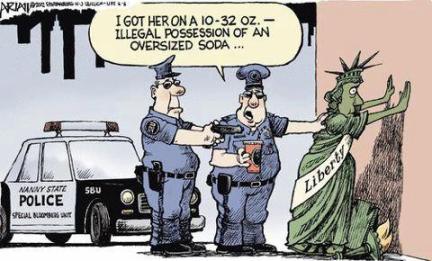 Photo from Brant Standard.
10.) Fat biases cause the most harm: Ultimately what Oliver's entire book attempts to do is change our social perceptions of fatness. He argues that the harm from obesity does not come from the physiological effects but from the social stigma. His suggestion for change is for us to understand that "not only do these prejudices distort our understanding of body weight and health but they are also fueling a public hysteria over our recent weight gains and how we should respond. We must let go of the idea that fatness is a reflection of a person's character."
***
In this book Oliver explains snacking as the main cause of weight gain, more so than the fast food industry, urbanization, poor school food choices, and general inactivity. Personally, I feel America's/North America's rise in weight is a culmination of all of these factors. I think he provides some valid insights into how the purpose of food has fundamentally changed but as he highlights in his book numerous times, weight gain and loss is a very individualized process. Therefore, it is problematic to pinpoint one smoking gun as the cause for everyone. I do, however, agree with his premise that the social stigmas against fatness cause far more harm than the fear of diabetes or heart disease. For a society where celebrity has more value than money we should not be surprised that our preoccupation with weight stems not from a concern for health and wellness but from prejudices of assumed character. It would appear that we have made a mountain out of the proverbial mole hill. So next time you hear your friend/partner/co-worker say, "I need to lose some weight" or "I'm watching my weight" ask them why. It's time we actively reflect on the difference between appearing healthy and actual health.
Support women's sports and SHARE this story with your friends!
Today on the Women's Sports Calendar:
| NCAA DI Tennis Championships May 16 - 27: Khan Outdoor Tennis Complex | Women's Leadership Symposium May 16 - 17: Omni Severin Hotel, Indianapolis, IN |
MOST POPULAR ARTICLES & POSTS
LATEST ARTICLES & POSTS
Fri at 8:44pm
Fri at 8:41pm
Thu at 10:23pm


Blogger Courtney Szto is a Master's Student studying the socio-cultural aspects of sport, physical activity and health (or as some call it Physical Cu...
full profile
For more, visit Resident_Badass's Full Profile

RECENT COMMENTS
She is one of the best player in basket ball and is really good.
http://www.coomberlaw.com/bu...more
posted 04/30/13 at 3:56am
on The Chicago Sky Selects Elena Delle Donne Second Overall in 2013 WNBA Draft

The worst kept secret in all of professional sports is that the majority of WNBA ballers are lesbian...more
posted 04/24/13 at 11:41am
on Brittney Griner's way of coming out is progress in the sports world
In terms of sport figures, I'm sure a Pat Summitt statue is in the works.
...more
posted 04/15/13 at 10:11pm
on Statues of Female Leaders?

I'm not a big Stanford fan, but at least they have a legitimate program and did it largely without t...more
posted 04/10/13 at 5:50pm
on Why Cal is my new favorite team

Ooh, is that bitterness I smell wafting up from Palo Alto? It almost seems like you are bashing Cal...more
posted 04/10/13 at 4:20pm
on Why Cal is my new favorite team

Women Talk Sports Podcast - March 5, 2013
In the March edition of the "Women Talk Sports" podcast, Cara and Stephanie use their running background to explain the Dayton 500 and break down the ...[Listen/Download for iTunes]
Women Talk Running Podcast - March 5, 2013
In the March edition of the "Women Talk Running" podcast, Cara and Stephanie wrap up the Millrose Games, give you more Mary Cain news, give our respon...[Listen/Download for iTunes]
Women Talk Sports Podcast - January 28, 2013
In the January 2013 episode of the Women Talk Sports podcast, Cara and Stephanie share several points that will leave you feeling hopeful about the Na...[Listen/Download for iTunes]
No one has commented on this yet. Be the first!