
Great article but really not true; there are many players involved in the NPF that are not from the ...more
posted 08/26/14 at 1:28pm
on Softball Standouts Plourde and Prezioso Represent Atlantic 10, Exemplify Mid-Major Potential at Next Level





posted by Tucker Center for Research on Girls & Women in Sport
Tuesday, February 15, 2011 at 5:56pm EST
Welcome to the Tucker Center for Research on Girls & Women in Sport blog. The Tucker Center–the first and only one of its kind in the world–is an interdisciplinary research center leading a pioneering effort to examine how sport and physical activity affect the lives of girls and women, their families, and communities.
Support women's sports and SHARE this story with your friends!
Blog written by Kinesiology doctoral student, Emily Houghton.
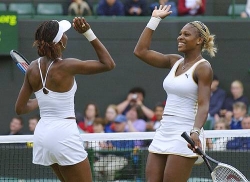
2011 marks the 35th year of Black History Month. During February, sport media outlets offer narratives on Black History Month varying from athlete biographies, to social commentary on sport as a site of racial harmony, to Top 10 lists. While celebrating African American contributions to sport, journalists and sport sociologists have often focused on men. When women are included, attention has been paid to a select group of athletes primarily Wilma Rudolph, Althea Gibson, Venus and Serena Williams. Biographies of these professional African American female athletes do contribute to our understanding of an elite group. Beyond the visibility of a select few professional athletes, however, research has indicated that little scholarship has been dedicated to African American female athletes at the youth, high school or collegiate levels. This is troublesome for several reasons.
Despite significant participation rates in collegiate track and basketball, African American women are underrepresented in leadership positions within NCAA institutions. We also know little about the their experiences (social support, academic achievement, motivation or barriers) as student athletes or sport managers. Furthermore, the constricted media coverage of African American female athletes as well as the small numbers of women in leadership positions has led to fewer positive athletic role models for African American girls. Ultimately, failing to include African American female athletes in sport media coverage or sport sociology sends the message to society that their experiences and achievements are not valued.
How do we change the pattern of exclusion? One idea is for researchers to make a concerted effort to work with African American female athletes. For example, we are presently collaborating with a group of six women who competed in high school or collegiate sport towards the latter part of the Civil Rights Movement here in the Twin Cities. Through interviews, we hope to gain a better understanding of their lived experiences including their relationships with sport and each other, with one goal being to produce some educational pieces that can be utilized by schools. This is our attempt at breaking the pattern and writing African American female athletes into history. What are you going to do?
Support women's sports and SHARE this story with your friends!
MORE ABOUT THIS AUTHOR:
Tucker Center for Research on Girls & Women in Sport
Welcome to the Tucker Center for Research on Girls & Women in Sport blog. The Tucker Center–the first and only one of its kind in the world–is an ...
full profile
For more, visit TuckerCenter's Full Profile
LATEST ARTICLES & POSTS
Fri at 7:35pm
Fri at 1:53pm
Fri at 1:51pm
Fri at 1:45pm
Fri at 1:44pm
Thu at 1:53pm
Thu at 1:52pm
Thu at 1:48pm
Thu at 1:47pm
RECENT COMMENTS
Great article but really not true; there are many players involved in the NPF that are not from the ...more
posted 08/26/14 at 1:28pm
on Softball Standouts Plourde and Prezioso Represent Atlantic 10, Exemplify Mid-Major Potential at Next Level

What she did I'd fantastic but she was still a good 14 seconds behind the winner and, really, the Ke...more
posted 07/22/14 at 4:04am
on 2 seconds, no finish clock picture, but satisfaction: Molly Huddle breaks her own AR

Does money make champions ! History have taught us that money does not means success overnight . Mos...more
posted 06/20/14 at 8:25pm
on Sparks need a change, but what kind?
congrats to Maria on her French Open win!!...more
posted 06/11/14 at 10:06pm
on Maria Sharapova Named The Face Of Avon Luck Fragrances
| SAUCUONY 500 MILE CHALLANGE |
| Daily Workout |

No one has commented on this yet. Be the first!