




Lyn St. James: Motorsports
Future Hall of Famer
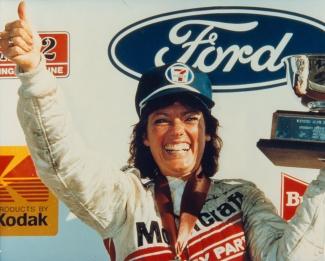
Photo: theglen.com


Lyn St. James, the oldest rookie to ever qualify for the Indy 500 and the second woman ever to qualify for the race, has heard all the comments from men in racing about women in racing. An automotive factory manager told her that if a team hired a woman as a racer, then it would mean that the team must not be very serious about winning. Atop NASCAR executive once told St. James that women just don’t have the strength to handle a car. To which she replied—almost making too much sense—that a car does not know the gender of the pilot, and while it takes a number of physical and mental qualities to be a great racer, none of them are exclusive to a specific gender.
“The car doesn’t know the difference, so it doesn’t go, ‘Oh, you know, I’ve got this woman driving, so I’m going to do [things] differently,’” St. James said in an interview prior to her final Indy 500 race. “So it’s finesse, it’s feel, it’s precision, it’s concentration, it’s focus, it’s eye-hand coordination, it’s technical know how, it’s competitive drive. None of those things are gender-specific. So it’s a gender-neutral sport, and it takes physical strength, it takes physical fitness, but more muscle doesn’t make you go faster.”1
St. James distinguished herself in other forms of closed circuit races before debuting in her first Indy 500 race in 1992, having held 31 international and national speed records over her 20-year career, while also finding success on road courses. St. James twice raced in The 24 Hours of Le Mans in France, the biggest endurance race in the world, and also was a two-time winner in her car division in the 24 Hours of Daytona race. She also won a title in the 12 Hours of Sebring. She was heavily involved in two sports car racing series, the Sports Car Club of America (SCCA), where she participated in 53 Trans-Am races and totaled seven Top-5 finishes, and the International Motor Sports Association (IMSA), where she participated in 62 GT races and totaled six wins, 17 Top-5 finishes, and 37 Top-10 finishes. It was clear that she knew both how to handle a race car and how to win.
Her dream, however, had always been to drive an IndyCar. For years she had been asking former race car driver and team owner Dick Simon to give her a shot. But St. James knew that she needed more experience in order to get her shot at driving an IndyCar. “So I thought if I could go to Talladega and set a record with a turbocharged four-cylinder engine, which I currently was racing with Ford Motor Company, that would give me turbo experience and oval track experience so that I could then talk about doing IndyCar stuff,” St. James said. “We set the record as we went over 200 mph in a Ford Pro, but I couldn’t get any other doors to open.”2
St. James continued to focus on her racing in the SCCA and IMSA circuits, and then she decided to go once again to Talladega, where she set another track record with a Thunderbird at an average speed of 212 mph. Still, she couldn’t get anyone to listen until Dick Simon gave her a call. “Finally, [Simon] called me one day—it was after the end of the season. And he goes, ‘Hey kid, you want to drive an IndyCar? Be at Memphis tomorrow.’ And he hung the phone up,” St. James said. “I got to drive that IndyCar at that race track and I thought I had died and gone to heaven—it was so cool. It was the most powerful, most precise, most perfect race car I had ever been in. And I did so well that Dick said to me at the end of the day—he said to me, ‘We can do this.’ And that was the key, he didn’t say ‘I could do this,’ he said, ‘we could do this.’ So he bought into the idea and the concept that we could do this.”3
Her biggest obstacle lay in finding a team sponsor. St. James had been down that path many years before when, in 1981, she was able to secure Ford as a sponsor for her IMSA team after numerous failed attempts. She credits her experience from the late 1970s and early 1980s in dealing with the desperation of convincing potential sponsors for her resolve in not quitting. “At the time I thought, ‘I have nothing to lose, I have absolutely no reason to not do this. I’ve been down this path before of trying to convince people that they needed to say yes,’” St. James said. “I was a little smarter. I was not just selling me as a want-to-be because I now had an established driving record.”4
Four years and 151 companies later, St. James had found a company willing to be a sponsor for her Indy 500 debut in 1992 when retail store JC Penney got on board. She would go on to earn the highest finish of her Indy 500 career with a 12th-place showing. She also was the 1992 Indianapolis 500 Rookie of the Year. She would compete in seven Indy 500 races, including six consecutive starts from 1992 to 1997. She would go on to race in 15 Indy Races, tallying two Top-10 qualifying spots and one Top-10 finish. In 1994, she qualified in the sixth spot for the Indy 500, the highest ever for a woman at the race until Danica Patrick qualified in the fourth spot in 2000.
“I did a mighty good job with limited amount of seat time in an IndyCar,” St. James said. “It would be like going to the Olympics every four years and not competing in between. I am very proud, but also frustrated that I was not able to show what I could do, so-to speak. I was just kind of coming out of my shell, and for that I’m very proud that I was able to get as far as I could and accomplish as much as I did.”5
St. James would run in her final Indy 500 in 2000, and then went on to concentrate on her racing foundation, the Women in the Winners Circle Foundation. The Foundation is active in helping women learn the business side of racing, specifically in being able to gain sponsorship dollars. It took St. James four years and 150 companies before JC Penney, on the 151st try, became her sponsor for her first Indy race, and she is currently working to make it easier for future women in racing. She is aware that women are becoming more involved in racing from the grassroots levels to the more organized leagues, but finding sponsorship money has still been an area where women struggle.
Currently, two of the most prominent women in IndyCar racing have been through St. James’s program, and she is now a mentor to both. Both Danica Patrick and Sarah Fisher are making strides for women in racing. St. James is proud to have had both of them go through her program, which has attracted more than 250 racers, and is certain about their appreciation for the women who paved the way for them. “I think they’re both very honored and appreciative of where they’re at,” St. James said. “I think they’re starting to even understand their own legacy that they’re starting to leave in the world of racing.”6
All the while, St. James is busy cementing her legacy as both a pioneer and ambassador for women in racing. Through her Foundation, she is creating driving opportunities and educating women about the business of racing. “Attitudes prevent people from providing opportunities, but it’s getting better—slowly. Not nearly at the pace I think it should,” St. James said. “What I want to see is an equal opportunity for an openly competitive environment. I also think that if you pursue something strong enough and hard enough then you can get it done.”7
Notes
1. Jim Clash, (2000). The Adventurer. http://www.youtube.com/watch?v=ACd-tcMhqko.
2. Ibid.
3. Ibid.
4. Lyn St. James, interview with the author, June 20, 2008.
5. Ibid.
6. Clash, The Adventurer.
7. Lyn St. James, interview with the author, June 20, 2008
This excerpt was written by Horacio Ruiz.
IN SEASON:
Tue, Oct 1 at 12:03pm
Fri, Sep 6 at 9:32am
Fri, Nov 8 at 9:29pm
Fri, Nov 1 at 4:39pm
Today at 9:09am
Today at 9:04am
Sun, Nov 10 at 6:59pm
Thu, Nov 7 at 9:08pm
LATEST ARTICLES & POSTS
posted by Swish Appeal
Mon at 9:13am
posted by Swish Appeal
Mon at 9:11am
posted by All White Kit
Sun at 6:42pm

-
The body of this profile is an excerpt from 100 Trailblazers: Great Women Athletes Who Opened Doors for Future Generations.
This book is available on Amazon.com: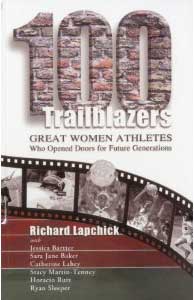
This book was written by Dr. Richard Lapchick, chair of the renowned DeVos Sport Business Management Program at the University of Central Florida, along with several of his students in the renowned program:
- Sara Jane Baker
- Jessica Bartter
- Catherine Lahey
- Stacy Martin-Tenney
- Horacio Ruiz
- Ryan Sleeper
The DeVos program offers students the opportunity to earn their Masters in Sports Business Management and a Masters in Business Administration. Focusing on ethics, diversity, leadership, and community service, the DeVos Program attracts some of the brightest and most committed students from across the country and across the globe.
-
This profile was built by:
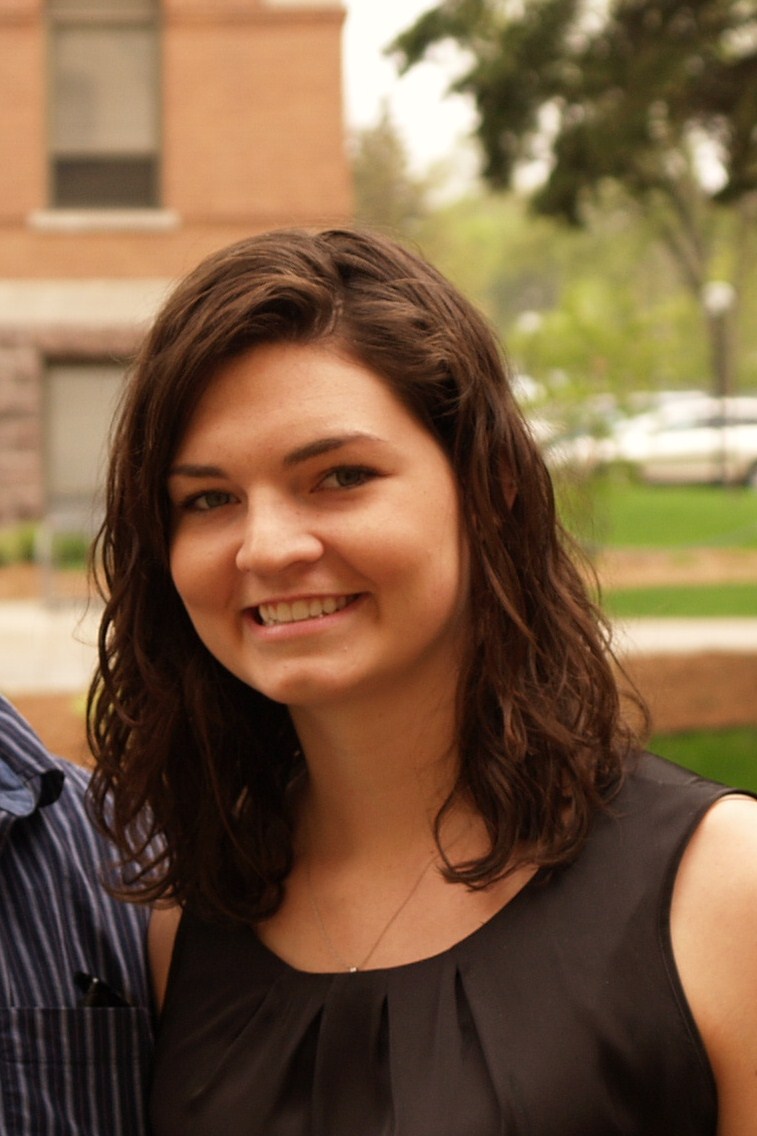
Elizabeth Schulz
Orlando, FL
About Elizabeth:
Originally from Little Falls, MN Elizabeth is currently pursuing her MBA and Master's in Sport Business Management at the University of Central Florida. At UCF she is a graduate assistant for The Institute for Diversity and Ethics in Sport. Elizabeth is currently working with the Orlando Magic and has experience working for the Fargo Force and Alexandria Blizzard.