




Carol Mann: Golf
American Star of the Women’s International Sports Hall of Fame
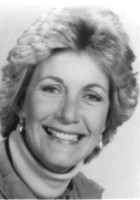
Photo: http://www.golfpodium.com/Carol_Mann.htm


Carol Mann was born February 3, 1941, in Buffalo, New York. Shortly thereafter, her middle-class parents who both worked for Chevrolet packed up and moved the family to Baltimore, Maryland, where Carol would grow up. Both of Carol’s parents were golfers and they got her involved in the game when she was just nine years old by purchasing a set of golf clubs for her. While her mother was very supportive of her growth in the sport, Carol was initially not
very intrigued. In fact, the driving force behind her desire to play golf was to spend time with her father. Carol’s father, Rip, was always away working during the week, and spent most of his time off on the weekends golfing. Carol recalls, “I only got to see my father on the weekends; since he was a golfer I figured this would be a good way to be with him.”1 Thirteen-year-old Carol’s golf game really began to take shape when her father was transferred to Chicago, Illinois. Being that the only time she got to share with her busy father was on the golf course, she got into a regular routine of playing the game with him for fun. Though her game was taking off, at the age
of 19, Carol still had issues with her confidence and did not enjoy competing.
“Competing and beating people are not easy for me,” Mann said. “I played in the 1960 Women’s U.S. Amateur, and in the third round I played a woman on her birthday; when she won at the 17th hole, I said, ‘Happy Birthday,’ and I felt she should win. I had played a pregnant woman in the second round—it was a wonder I didn’t lose to her—as I had felt badly about winning.” In addition to her kindhearted demeanor on the links, Mann questioned her ability to compete with the professionals. After earning her first tournament win at the 1958 Junior Women’s Western Open, Mann was paired with one of her idols, Mickey Wright, at the Western Open. “I was scared to death and didn’t do well. The women were terrific, fun, smart, and very nice to me. I knew I wanted to be a professional, but I wasn’t good enough.”2 In 1960, Mann actually administered a survey to the tour professionals asking them whether or not they thought she should turn professional.
It is unknown what her colleagues suggested, but Mann’s worth was not questioned once she joined the tour later that year. During her 22-year-long career, she amassed 38 tournament wins, including the Western Open title in 1964 and the U.S. Women’s Open championship in 1965. Mann was also the lowest average scorer taking home the Vare Trophy in 1968, as well as being the Ladies Professional Golf Association (LPGA) Tour money leader in 1969. Other highlights from her career include winning multiple tournaments in eight of her 22 years on Tour, winning 10 tournaments in 1968, and averaging a score of 72.04 in 1968, a record that stood for 10 years before Nancy Lopez broke the mark in 1978. These achievements
culminated in spots in the LPGA, World Golf, and Women’s Sports Foundation halls of fame. “During a period of near total domination by Kathy Whitworth, Mann was the only golfer to break through and best Whitworth in wins.”3
While Mann’s achievements in the game are certainly admirable, her true legacy would be left as a powerful president of the LPGA and later as an outspoken advocate for women in sports. Mann became president of the LPGA in 1973, and one of her first responsibilities was to deal with the Jane Blalock cheating scandal. Blalock had been observed in several tournaments moving her ball closer to the hole. She initially denied the allegations but later issued an apology that many of the other players considered an admission
of guilt. These players eventually signed a petition calling for Blaock’s suspension, which the LPGA ultimately issued to Blalock for a period of one year. However, courts found that the LPGA was in violation of antitrust laws, which led to the LPGA disallowing players
to rule on other players. Due to this turmoil, Mann responded by hiring the organization’s first commissioner, Ray Volpe, of hockey marketing prominence. The period of Mann’s LPGA presidency was perhaps that of the most growth in the organization’s history and
brought the “modern era” to the LPGA. Mann oversaw executive leadership changes in the LPGA and the transition to a more professional, businesslike organization. The sweeping changes Mann implemented not only cleaned up the LPGA and increased the organization’s positive exposure, but they also dramatically improved the size of the purses in tournaments because of the increase in corporate partnership.
In addition to Mann navigating the LPGA through its most tumultuous time, she joined the Women’s Sports Foundation (WSF) as a trustee during a controversial time in women’s sports. In 1981, the affair between tennis-star Billie Jean King and Marilyn Barnett was a very hot topic in the media. “The press presented the situation as a scandal that could adversely affect the future of all women’s sports.”4 Mann took a stand in Women’s Sports magazine:
I’m especially concerned with the public reaction to King’s admission. In recent years it’s been gratifying to see how much more acceptable it is for girls and young women to
pursue sports as amateurs and professionals. It would be a terrible injustice if parents didn’t continue to encourage such active lifestyles.
Participating in sports is probably the most valuable experience girls can have while growing up. What they discover on the field, court and course spills over into the rest of their personal lives. They learn how to win, how to lose, how to rely totally on themselves and how to work together with a team. They come to understand defeat without being devastated by it, and how to channel their energy and anger.
I’ve done a lot of thinking lately about the value of being an athlete and about the golf tour’s success story. I wouldn’t trade my experiences for anything in the world.5
Toward the end of her term with the Women’s Sports Foundation, Mann once again found herself speaking out against discrimination. After nearly a decade since her article in Women’s Sports magazine, she was outspoken in 1990, when the PGA Championship was moved from Shoal Creek Country Club in Birmingham, Alabama, because they did not admit African-American golfers. Mann had this to say about the incident:
Playing a game professionally is a very narrow existence. These players have little breadth of experience or knowledge of the real world. They live inside the ropes. Frankly,
you almost have to have a narrow outlook to succeed at this. They don’t see it, but golf and society have changed this week. Who you hire and who you promote, who you accept
and where you socialize, are all eventually going to be different. Through humanizing straight talk, we’re about to learn we have things in common. The ripple is going to be long and wide.6
Carol Mann came a long way from a shy, 19-year-old who questioned her belonging in the LPGA, to arguably the most influential and outspoken woman golfer the tour has ever seen. The ripples of her impact are still being felt throughout golf and society today.
Notes
1. Time Magazine, “How About That Mann?” May 17, 1968, http://www.time
.com/time/printout/0,8816,838366,00.html# (accessed May 23, 2008).
2. Jackie Williams, Playing from the Rough: The Women of the LPGA Hall of Fame
(Las Vegas: Women of Diversity Productions, 2000), 132.
3. Brent Kelley, About.com: Golf, “Biography of Golfer Carol Mann,” http://golf
.about.com/od/golferswomen/p/carol_mann.htm (accessed May 23, 2008.)
4. Williams, Playing From the Rough, 137.
5. Ibid., 138.
6. Ibid., 139.
The exerpt above was written by Ryan Sleeper
IN SEASON:
Tue, Oct 1 at 12:03pm
Fri, Sep 6 at 9:32am
Fri, Nov 8 at 9:29pm
Fri, Nov 1 at 4:39pm
Today at 9:09am
Today at 9:04am
Sun, Nov 10 at 6:59pm
Thu, Nov 7 at 9:08pm
LATEST ARTICLES & POSTS
posted by Swish Appeal
Mon at 9:13am
posted by Swish Appeal
Mon at 9:11am
posted by All White Kit
Sun at 6:42pm

-
The body of this profile is an excerpt from 100 Trailblazers: Great Women Athletes Who Opened Doors for Future Generations.
This book is available on Amazon.com:
This book was written by Dr. Richard Lapchick, chair of the renowned DeVos Sport Business Management Program at the University of Central Florida, along with several of his students in the renowned program:
- Sara Jane Baker
- Jessica Bartter
- Catherine Lahey
- Stacy Martin-Tenney
- Horacio Ruiz
- Ryan Sleeper

The DeVos program offers students the opportunity to earn their Masters in Sports Business Management and a Masters in Business Administration. Focusing on ethics, diversity, leadership, and community service, the DeVos Program attracts some of the brightest and most committed students from across the country and across the globe.
-
This profile was built by:

Anna Florzak
http://tenniesandtutus.tumblr.com/
@eleanorflorzak
Kansas City, Mo & Orlando, Fla