




Danica Patrick : Motorsports
Future Hall of Famer
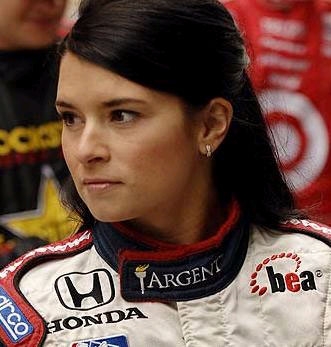
Photo: http://www.infotainmentnews.net


There she was on May 29, 2005, with just seven laps to go, not simply contending to win one of the most famous car races in the world. Danica Patrick was seven laps away from beating the boys and winning the Indianapolis 500. The people in the stands watched her go by, hollering and raising their arms for her, some claiming that after decades of attending the race, it was her lead that for the first time ever gave them goose bumps at the track. On television, the announcers’ voices were full of excitement—history was being made before a world audience on ABC. But the announcers wondered to the watching world if Patrick had enough fuel in her car to finish the race. Then, in an instant, eventual winner Casey Wheldon passed Patrick, who was indeed racing on fumes and whose tires were badly worn down. Patrick would finish fourth, the highest ever for a woman, while also becoming the first woman to lead a lap at the Indy 500, leading a total of 19 laps for the day. It was a momentous day in sport for women, and it forever changed the racing expectations of a gender. On that day, when the world was ready to celebrate a woman and her race car like never before, Patrick’s celebrity skyrocketed.
In the following week’s Sports Illustrated, it was Patrick and not Wheldon who appeared on the cover. A few weeks after that, Wheldon, apparently stung by the attention given to Patrick, wore a shirt reading “I actually won the Indy 500.” At an autograph session, the demand for Patrick was so great that the Indy Racing League, the governing body of the U.S. open-wheel racing circuit, created a separate line for Patrick. Three other racers, including Wheldon, were expected to participate, but boycotted the autograph session because of the special set-up created for Patrick.
The boys she nearly beat late in May were suddenly getting defensive. One driver suggested her 5-foot-2 and 100-pound frame gave her an unfair advantage compared to all the other men in the racing circuit. One magazine article, while defending Patrick from the ridiculousness of her unfair “size advantage” still rang up a head- line reading “Why Danica Patrick is Overrated.” The article went on to say that while Patrick, in her rookie year in 2005, was indeed attaining a certain amount of success, she was doing so in a watereddown racing league beset by collective bargaining disputes and a lack of quality drivers. The article wondered if Patrick would have been as successful a decade earlier, when it claimed she would have been competing against superior drivers.
The funny thing is Patrick didn’t achieve her level of success by accident or because of inferior competition. She started her racing career as most drivers do, by racing go-karts. Patrick won her first Grand National Championship by the age of 12 and progressed to different classifications while winning two more national titles and 10 regional titles. In 1996, she dominated her class, winning 39 out of 49 feature races. She also began attending a driving school run by Lyn St. James, a former IndyCar driver and the first woman to win the Indy 500 Rookie of the Year Award. St. James took a special interest in Patrick, helping her meet owners and other influential people in the racing circuit and taking her to the Indy 500 as her intern.
“Out of 200 that have gone through my program, no more than 10 set themselves apart that I’ve gone out of my way to help behind the scenes,” St. James said in an interview with the San Jose Mercury News. “They have to be exceptional. It’s not good enough to just be good. The reality is you have to be extraordinary. I saw Danica as extraordinary.”1
Patrick left her home in Roscoe, Illinois, at the age of 16 to pursue her racing career in Europe. Once overseas, she would race Formula One cars and competed in what she called the Harvard of racing. In England’s Formula Ford Festival, she finished second, the best finish ever for an American driver. After spending more than three years overseas, she returned to the United States after catching the eye of former Indy 500 champion and team owner Bobby Rahal, who said Patrick endured “the most intense training ground there is in motor sports” and succeeded. “I saw a girl who was willing to make the most difficult of choices, who had the absolute commitment and desire and willingness to sacrifice,” Rahal said. “I saw that and the tremendous strength of hers. I think going to England to race always takes commitment and dedication and sacrifice, but for a girl to do it, it makes it doubly so. Forgetting the fact that she did very well over there, just the fact that she was even there spoke volumes in my mind. That’s what really convinced me that it was worth giving her an opportunity.”2
But since splashing onto the racing scene in 2005, Patrick had been dogged by questions of whether she would ever win. Many of her critics said that because of her gender and commercial appeal she had been given more opportunities to win than is afforded most drivers. For the IndyCar driver, taking on the burden of being the most successful woman ever on the open-wheel racing circuit, the task at hand has not been easy for Patrick. The truth is, when you’re racing cars at metal-twisting speeds for your paycheck, nothing ever comes easy. Not even tears of joy.
On April 19, 2008, Patrick took her first lead of the race at Twin Ring Motegi in Japan with two and a half laps remaining. On television, the announcers wondered aloud once again if she had enough fuel to finish the race in first, and this time she did, becoming the first woman ever to win an IndyCar race. “Boys, move over, the lady is coming through,” one of the announcers said. “Danica Patrick wins at Twin Ring Motegi!”
Patrick stopped her car, stood up in the cockpit, and took off her helmet and racing mask to wipe away tears. There was no smile. She hugged her husband and mother while shedding some more tears and letting out muffled sobs as she buried her face into her husband’s embrace. No doubt the tears she wiped away contained muted amounts of joy, but more than anything, they contained a sense of justification. “I feel like a wuss crying, but it’s a long time coming. Finally,”
Patrick said on the track. “Thank you to Andretti-Green, thank you to all my teammates, and . . . finally,” she said once more with a sigh. If at the Indy 500 she was giving people goose bumps, at Twin Ring Motegi she was giving people a reason to cry with her.
On that day, Patrick proved herself capable of winning, but she has always been attractive enough to capture the spotlight from all the men, by far, even without victory. So even as her professional career develops on an upward slope on the grandest stage, many drivers, possibly envious, wonder whether all the attention is warranted. Patrick has one definite and undeniable advantage over the rest of the field—she is beautiful and fully capable of displaying her beauty. To that, there is no fast-enough car or gutsy-enough maneuver that other racers can perform to either take away her beauty and fame or to capture it. She has appeared in magazines modeling bikinis and other outfits, not shying away from the attention given to a woman succeeding in a sport dominated by men. Patrick also has been a major marketing force for the Indy Racing League (IRL), which has struggled to find a consistent audience but has gained an increasing amount of interest since Patrick joined the league.
Even with the success and publicity she brings to the sport, there will be racers like Formula One driver Jenson Button, who once said in reference to Patrick, “A girl with big boobs would never be comfortable in the car. And the mechanics wouldn’t concentrate. Can you imagine strapping her in?”3 Patrick once gave a quote of her own relating to drivers like Button: “I need to beat them, belittle them, and make them feel small. Trying to run them off the road at 170 mph isn’t sweet and kind.”4
The male drivers who might have been envious at the attention garnered by Patrick had an easy out before she won at Twin Ring Motegi. Now everyone knows she can win and the track may be finally leveled. The fans are loving it and media attention has been raised. We have reached a new era for women in the motor sports industry.
Notes
1. Danica Patrick, racecar driver, Current Biography, October 2005.
2. Tom Gardner, “Danica Patrick Drives a Toyota, Envisions a Ferrari,” The AP. June 19, 2003.
3. http://en.wikipedia.org/wiki/Danica_Patrick
4. http://www.askmen.com/women/models_250/292_danica_patrick.html
The exerpt above was written by Horacio Ruiz
Articles Tagged with "Danica Patrick " on WomenTalkSports.com:
- NASCAR’s Danica Patrick is Back-to-Back Winner of Nick Kids’ Choice Award
- Danica Patrick First Woman to Win Daytona 500 Pole
- Race Against Danica Patrick in new Sega Game
- Danica Patrick Is No Longer A Rookie: She Just Races Like One
- ESPY's 2012 Fashion Roundup - Jennie Finch, Danica Patrick, Maria Sharapova, Lindsey Vonn and more
- Danica Patrick Takes On NASCAR’s Daytona 500
- espnW: Danica Patrick limps into the offseason
- Judge Danica Patrick for work on track
- Danica Patrick burning up a new track with NASCAR move
IN SEASON:
Tue, Oct 1 at 12:03pm
Fri, Sep 6 at 9:32am
Fri, Nov 8 at 9:29pm
Fri, Nov 1 at 4:39pm
Today at 9:09am
Today at 9:04am
Sun, Nov 10 at 6:59pm
Thu, Nov 7 at 9:08pm
LATEST ARTICLES & POSTS
posted by Swish Appeal
Mon at 9:13am
posted by Swish Appeal
Mon at 9:11am
posted by All White Kit
Sun at 6:42pm

-
The body of this profile is an excerpt from 100 Trailblazers: Great Women Athletes Who Opened Doors for Future Generations.
This book is available on Amazon.com: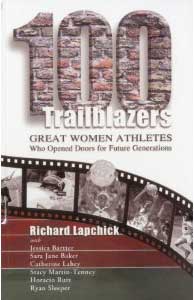
This book was written by Dr. Richard Lapchick, chair of the renowned DeVos Sport Business Management Program at the University of Central Florida, along with several of his students in the renowned program:
- Sara Jane Baker
- Jessica Bartter
- Catherine Lahey
- Stacy Martin-Tenney
- Horacio Ruiz
- Ryan Sleeper
The DeVos program offers students the opportunity to earn their Masters in Sports Business Management and a Masters in Business Administration. Focusing on ethics, diversity, leadership, and community service, the DeVos Program attracts some of the brightest and most committed students from across the country and across the globe.
-
This profile was built by:
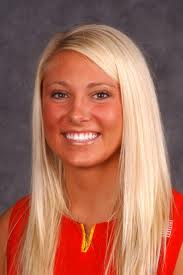
Anna Florzak
http://tenniesandtutus.tumblr.com/
@eleanorflorzak
Kansas City, Mo & Orlando, Fla