




Nancy Lieberman : Basketball
Future Hall of Famer
Website: http://www.nancylieberman.com/


I was speaking at a luncheon in Dallas in 1986 introducing the National Consortium for Academics and Sports (NCAS) to a group of business and educational leaders in the Dallas-Fort Worth area. I talked about the difficulty of balancing athletics and academics for the student-athlete and how the NCAS was going to give athletes who did not finish their degrees a second chance to return to school.
The idea of the NCAS was new then and the audience listened politely. Then a woman in the audience raised her hand and asked to intervene. I instantly recognized that it was Nancy Lieberman, the great basketball star. It was an E. F. Hutton moment as everyone turned to listen. She said, “I wish this program was available when I played at Old Dominion University. College athletes have so many demands on them that it is hard to finish the degree in four years. The NCAS will be a great complement to what student-athletes need.” Nancy was an iconic figure then and ended up getting us a great deal of support, which helped build the success of the NCAS.
I was lucky enough to be in Virginia when Nancy Lieberman played for Old Dominion University (ODU). As a New Yorker myself, I knew of her legendary accomplishments in high school and in international competition. At a time when Title IX was new and the National College Athletic Association (NCAA) had yet to take over women’s sport, Nancy Lieberman was a headline act who lit up the landscape with her game and her New York attitude. You knew that there was change about to happen and it was exciting to be around it. I was a real fan but did not get to know her until that day in Dallas. We have been good friends ever since.
Born in the basketball-crazed environment of New York, Lieberman developed a deep love and passion for the game. Although she had obvious talents on the court at an early age, stereotypes about women’s sports were everywhere. Women and girls alike were discouraged from playing competitive sports, and those who decided to play sports were perceived as “tomboys.” The stereo-types did not stop Lieberman’s goal of becoming a professional basketball player. Her confidence kept her on task.
She took her game to the outdoor courts and gyms of Harlem and competed with some of the best young players in the city. Lieberman dominated the competition with a rugged and tough style of play that differentiated her from other players in the city. Playing hard and playing tough became second nature for Lieberman. Standing at 5-foot-10-inches, Lieberman was able to tower over her smaller opponents and use her physical style of play to outmatch and overpower them. By her sophomore year of high school, Lieberman was one of the best basketball players in the city and was invited to the American Basketball Association USA’s National Team trials. As a 15-year-old high school student, Lieberman was named to the U.S. National Team. She helped the U.S. National Team win gold and silver medals in the World Championships and Pan American Games of 1975 and 1979, respectively. She was the youngest basketball player in Olympic history to ever win a medal when she helped the U.S. team win the silver medal even before she ever set foot on a college campus.
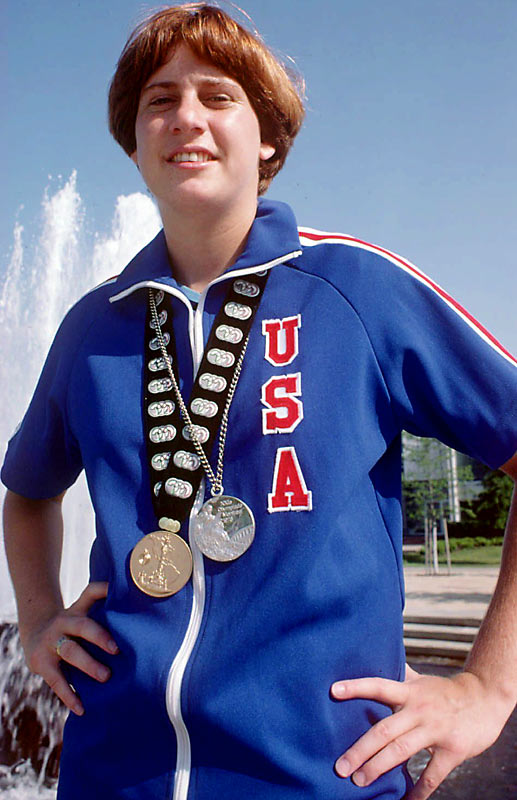
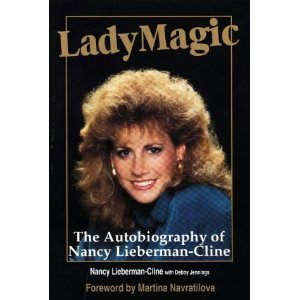
Lieberman became known as “Lady Magic” for her flashy passes and brilliant scoring drives. She helped grow ODU’s women’s basketball program into a national powerhouse. She led them to a National Women’s Invitational Tournament Championship in 1977–78 as well as back-to-back Association for Intercollegiate Athletics for Women (AIAW) National Championships in 1978–79 and 1979–80. The team went 72-2 in her final two seasons at Old Dominion. She was a two-time winner of the Wade Trophy, which honors the nation’s best women’s basketball performer for their academic, community service, and on-court performances, along with the Broderick Award, which awards the nation’s best collegiate female athlete. After college, Lieberman was regarded not only as one of the best female athletes to ever play college basketball, but also one of the best collegiate basketball players ever on a men’s or women’s team.
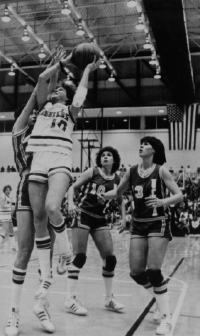
Lieberman hoped to play on the U.S. women’s team in the 1980 Olympics in Moscow but was stopped by the boycott of President Jimmy Carter. Although she was disappointed about the missed opportunity, Lieberman agreed with the decision to with- draw from the Games because of the Soviet Union’s invasion of Afghanistan. In 1980, Lieberman entered the Women’s Professional Basketball League (WBL) draft and was selected by the Dallas Diamonds. In her first season with the Diamonds, Lieberman lead them to their first and only championship series appearance.
Lieberman took a leave of absence from the Diamonds to train tennis-great Martina Navratilova. Lieberman returned to the Diamonds in the 1984 season as a member of the newly formed Women’s American Basketball Association (WABA). In the 1984–85 WABA season, Lieberman led the team to the championship while earning MVP honors, averaging 27 points per game.
Lieberman was again leading by example on the court for women playing at the highest levels of sport. She wanted to show women, young and old, that they could make a good living in sports. In 1986, Lieberman made history once again by becoming the first woman to join a men’s professional basketball team. She played an entire season with the Springfield Fame of the United States Basketball League (USBL) and then played for the Long Island Knights the following season. In 1988, Lieberman made her final move as she joined the Washington Generals on a World Tour with the storied Harlem Globetrotters. Such sports career decisions were unprecedented and played a very significant role in promoting the visibility of women playing professional sports in the United States.
In 1988, Lieberman became the color commentator for NBC during the Olympic Games in Seoul covering the Women’s Olympic basketball team on their way to winning a second Olympic gold medal. Lieberman would later go on to write two books, one on her life story as an athlete, and the other on the evolution of women’s basketball with Robin Roberts of ESPN and ABC. As a player, Lieberman was a pioneer for women’s sports. As an analyst at the Olympics Games, Lieberman promoted women’s sports and in 1993 she was rewarded by becoming the first woman inducted into the New York City Basketball Hall of Fame. Not long after, Lieberman was inducted into the Naismith Basketball Hall of Fame for her great accomplishments on the court.
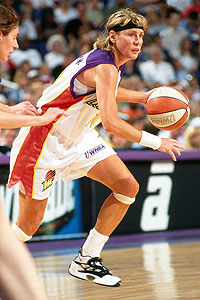
In 1997, with the conception of the Women’s National Basketball Association (WNBA), Lieberman felt that this was the league that she had dreamt of as a child and wanted to be a part of the inaugural season. At age 38, Lieberman decided to return to the court and take part in the historical opening season of the WNBA. She was the 15th overall selection in the WNBA draft by the Phoenix Mercury and entered the season as the oldest player in the league. Her experience and leadership on and off the court paid dividends for the Mercury as she helped lead them to the regular season Western Conference Championship and the semifinals of the WNBA playoffs. The home fan attendance of the Mercury also was evidence of Lieberman’s ability to attract fans to women’s sports just as she had done her entire life. The Mercury achieved a league high average of 13,000 fans per game.
The following season, Lieberman decided to move into the front office as general manager and head coach of the expansion WNBA Detroit Shock franchise. Lieberman was very successful in this endeavor as well, leading the Shock to a winning record in its first season and a coveted trip to the WNBA playoffs.
Throughout her illustrious career as an athlete, analyst, coach, and executive, Lieberman has been very successful, not only for herself, but for the advancement of women’s sports as a whole. The growth of women’s sports, particularly basketball, can be directly linked to her courage and desire to achieve more for women within the world of sports.
Nancy Lieberman has continued her role as a broadcaster for ESPN during WNBA and NCAA women’s collegiate games. Lieberman also hosts basketball camps and clinics for young girls trying to improve their athletic abilities and teaches them they can make a career of playing the sport they love. Through her lifetime of success on the court, as well as her commitment to women’s opportunities off the court, Lieberman has fulfilled her early age promise of making history in sports.
Her game on the court was eye-popping. But Nancy Lieberman never stopped speaking up for what she believed in, whether it was for expanded opportunities for women and girls in sport, social justice for people of color, or balancing academics and athletics. I was the lucky beneficiary that day in Dallas, but thousands of people have benefited from her speaking out. Her voice was amplified by the greatness of her game, but I have no doubt that she would have been a force in this world if she had never picked up a ball. Lucky for us that she picked it up and spoke out.


Articles Tagged with "Nancy Lieberman " on WomenTalkSports.com:
IN SEASON:
Tue, Oct 1 at 12:03pm
Fri, Sep 6 at 9:32am
Fri, Nov 8 at 9:29pm
Fri, Nov 1 at 4:39pm
Today at 9:09am
Today at 9:04am
Sun, Nov 10 at 6:59pm
Thu, Nov 7 at 9:08pm
LATEST ARTICLES & POSTS
posted by Swish Appeal
Mon at 9:13am
posted by Swish Appeal
Mon at 9:11am
posted by All White Kit
Sun at 6:42pm

-
The body of this profile is an excerpt from 100 Trailblazers: Great Women Athletes Who Opened Doors for Future Generations.
This book is available on Amazon.com: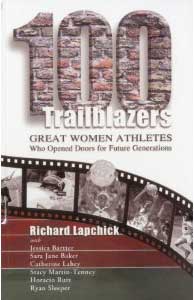
This book was written by Dr. Richard Lapchick, chair of the renowned DeVos Sport Business Management Program at the University of Central Florida, along with several of his students in the renowned program:
- Sara Jane Baker
- Jessica Bartter
- Catherine Lahey
- Stacy Martin-Tenney
- Horacio Ruiz
- Ryan Sleeper
The DeVos program offers students the opportunity to earn their Masters in Sports Business Management and a Masters in Business Administration. Focusing on ethics, diversity, leadership, and community service, the DeVos Program attracts some of the brightest and most committed students from across the country and across the globe.
-
This profile was built by:
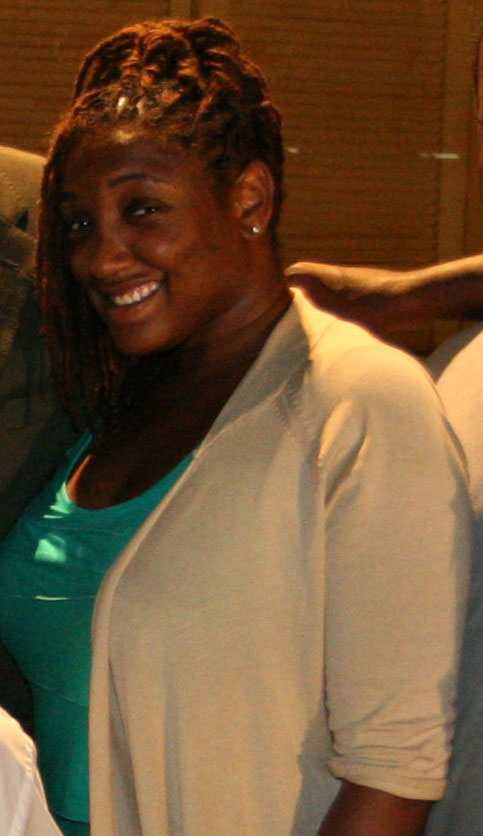
Taunita Stephenson
About Taunita:
~*Member of the DeVos Sport Business Program (Top 4 Sport Business Programs in the Nation!), Class of 2012*~ ~*Class of 2009, Delaware State University Graduate-Making My Mark on the World!" ~*I am enthusiastic about equality and diversity and hope to begin a career in Player Development or Diversity Initiatives!*~ God, Family, Friends, Career Goals, Jay-Z, Lakers, Fashion-In that order! What I Live By: "Vision without action and a plan is an illusion"