
Great article but really not true; there are many players involved in the NPF that are not from the ...more
posted 08/26/14 at 1:28pm
on Softball Standouts Plourde and Prezioso Represent Atlantic 10, Exemplify Mid-Major Potential at Next Level





posted by The Rabbit Hole
Thursday, January 17, 2013 at 9:53pm EST
Blogger Courtney Szto is a Master's Student studying the socio-cultural aspects of sport, physical activity and health (or as some call it Physical Cultural Studies). Bachelor's in Sport Management. Former tennis coach & ropes course facilitator.
Support women's sports and SHARE this story with your friends!
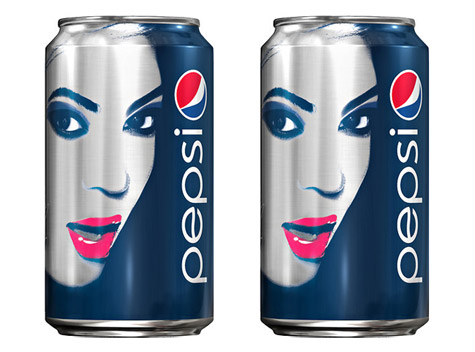 Photo from eurweb.comIt's the beginning of a new year, which means (a) your gym is probably packed with new people who you will see a few times and then never again, or (b) YOU are that person joining a gym. Everyone is talking about health these days, whether attaining it or how we are throwing it away. Last week the New York Times published an opinion piece by food writer Mark Bittman titled, Why Do Stars Think It's O.K. to Sell Soda? It comes at a time when sugary drinks have become number 1 on the foods that make us fat list. I read his article and listened to a radio interview he did with the CBC (Canadian Broadcasting Company). In his article he targets Beyonce for promoting Pepsi, which I suppose by itself is not so bad, but Beyonce is also a supporter of Michelle Obama's Let's Move campaign. Fair enough, Beyonce (or her management team) should probably put a little more thought into the consistency of the image that she wants to portray but where Bittman's piece gets really controversial is when he likens promoting Pepsi to supporting machine guns:
Beyonce Knowles would presumably refuse to take part in an ad campaign that showed her carrying a semiautomatic rifle. But she's eager, evidently, to have the Pepsi logo painted on her lips and have a limited-edition Pepsi can bearing her likeness.
Are sugary drinks that bad for us? Bittman seems to think that the Pepsi's and Coke's of today will soon be held as the Marlboros and Virginia Slims cigarettes of yesteryear. Do sodas (or as we call them here in Canada, pop) really belong in the same sentence as tobacco and semiautomatic rifles? Even Biggest Loser trainer, Jillian Michaels, has stated on her podcast that during a meeting with Coca-Cola executives she argued that having a coke once and awhile was equivalent to having cocaine or heroin once and while, but she also has a penchance for dramatics. In my opinion, I think the jump is a bit drastic but I do think that there is merit to certain aspects of the argument that Bittman as his allies, such as Marianne Nestle put forth, which is that the way in which junk foods and sodas are marketed to us is rather insidious. This again brings me back to the issue of choice as it relates to health. The banning of large sugary drinks in New York City offered a good indication of how protective people are of their freedom to CHOOSE what they put in their body. This was also reflective of the comments posted on Bittman's article. I have chosen a couple of comments that were representative of the overall reaction to Bittman's piece:
Soda, like many other so-called killer products, is an enjoyable treat that is just fine in moderation. What's the problem with Beyonce's endorsement? The blame should rest with consumers who fail to exercise self control and who fail to teach their kids to do the same. (Dale, NYC)
Obesity results from not burning the calories one takes in. From sitting behind a computer working all day. From sitting on a couch watching TV and playing video games. Some neighbourhoods it's not safe to go outside. Some jobs don't allow time for exercise. Some people just have bad habits.
There isn't one simple solution to diabetes. There is no risk with drinking soda in moderate amounts. I see no problem with Beyonce representing a soda. (PHL11, Copenhagen)
Many people share these opinions, that things like Pepsi, Twinkies, heroin, and vodka all exist in the world and it is our choice whether or not to consume these items and in what amount. I agree to a certain point. Ultimately, more often than not we have the ability to "just say no" but these comments fail to account for the human aspect of human beings, or ahem the sociology of the situation. In fact, both Dale and PHL11 state that these items are fine in moderation; thus, acknowledging that they are unhealthy on the whole. So knowing that they are unhealthy why would we even consume them in moderation? We know fried chicken and tequila aren't good for us either but we still consume them. Everyone knows that drunk driving is dangerous but people still do it with either the assumption that nothing bad will happen to them OR they plain don't care. How many times have you personally looked at that piece of cake and said "don't care, I'm eating it" even though you "know" better? Perhaps this is the definition of being human - having the ability to make decisions that knowingly have adverse effects. So how do we account for, according to Dale and company, so many poor decisions?
I found an article published in the American Journal of Public Health titled, Why Education and Choice Won't Solve the Obesity Problem, which I believe does a very succinct job of explaining why all this talk about education and personal choice are just wasted effort and saliva. In the article by Wall, Peeters, Loff and Crammond (2009) the authors explain how the food industry and eating healthy are fundamentally at odds, which was also acknowledged by some commenters on Bittman's article, but far less fleshed out. In a capitalist society, the food industry seeks to increase food consumption, period. Whatever you eat they want you to eat more of it, but health promotion policies seek to reduce overall consumption. It's basically like Beyonce promoting Let's Move and Pepsi at the same time. Perhaps it is a fortunate self-fulfilling cycle where drinking soda makes you gain weight and therefore need to move more. Importantly, what Wall et al. explain is that:
Policies such as disseminating information about and increasing the availability of healthy food options are ultimately intended to reduce the consumption of unhealthy foods. These proposed solutions to the obesity epidemic have gained popularity with the media and the public as well as with health practitioners. Information about good nutrition is primarily provided by health professionals and through social marketing campaigns to increase physical activity and consumption of nutritious food and to decrease portion sized and consumption of sugary drinks. Thus far, the industry's response to these campaigns has been to increase the number of healthy choices available without reducing the selection of unhealthy foods.
These popular approaches seek to provide consumers with the information and options necessary to make healthy choices; a failure to make a healthy choice, by implication, is a failure on the part of the individual (or possibly the campaign). Although education and access to information are fundamental rights and are important in a democracy, they have a negligible impact on obesity. Further, increasing choice is little more than a ruse, more likely to increase consumer confusion than to promote healthy eating. (emphasis added)
Consequently, we have people, supposedly, getting unhealthier by the day and food executives with their hands in the air pleading 'not guilty' because YOU made the choice. Another important take away from the article is how different demographic groups respond to educational marketing.
Typically, people with already high levels of education respond best to further education; people with lower educational attainment are much less likely to change their behaviour as a result of education efforts. This is consistent across many areas of public health and is particularly relevant in the context of obesity, which, in Australia and other developed countries, is much more prevalent in minority and lower socioeconomic groups, whose members are also likely to have less education.
This speaks loudly to the comments posted on the Bittman article. The people who read the New York Times and the Huffington Post etc. generally hail from the same demographic and educational background. Therefore, we are preaching to the choir a lot of the time and efforts aimed at other demographic backgrounds, evidently, are falling on deaf ears. I am all in favour of a reduction of choices since giving us more choices seems to increase our chances of making the wrong choices.
Some argue that sugary drinks should be taxed to deter people from buying them but studies have shown that this method is not really all that effective. Hall et al, also suggest exploring subsidization of healthy foods, calorie caps on meals and snacks (not really a fan of this one), and to reduce the number of fast-food outlets in lower socioeconomic areas. If we take nothing else from Hall et al's argument I think it should be this:
Proposals for reform that focus solely on individuals - be it on their knowledge, willpower, or decision-making ability - will not be successful in reversing our society's body weight trajectory. We need measures aimed at changing the context, not the individual.
That is, if you believe that we have an obesity problem...
Support women's sports and SHARE this story with your friends!
MORE ABOUT THIS AUTHOR:
Blogger Courtney Szto is a Master's Student studying the socio-cultural aspects of sport, physical activity and health (or as some call it Physical Cu...
full profile
For more, visit Resident_Badass's Full Profile
LATEST ARTICLES & POSTS
Thu at 1:53pm
Thu at 1:52pm
Thu at 1:48pm
Thu at 1:47pm
Wed at 12:52pm
Wed at 12:50pm
Wed at 12:17pm
Wed at 12:16pm
RECENT COMMENTS
Great article but really not true; there are many players involved in the NPF that are not from the ...more
posted 08/26/14 at 1:28pm
on Softball Standouts Plourde and Prezioso Represent Atlantic 10, Exemplify Mid-Major Potential at Next Level

What she did I'd fantastic but she was still a good 14 seconds behind the winner and, really, the Ke...more
posted 07/22/14 at 4:04am
on 2 seconds, no finish clock picture, but satisfaction: Molly Huddle breaks her own AR

Does money make champions ! History have taught us that money does not means success overnight . Mos...more
posted 06/20/14 at 8:25pm
on Sparks need a change, but what kind?
congrats to Maria on her French Open win!!...more
posted 06/11/14 at 10:06pm
on Maria Sharapova Named The Face Of Avon Luck Fragrances
| SAUCUONY 500 MILE CHALLANGE |
| Daily Workout |

No one has commented on this yet. Be the first!